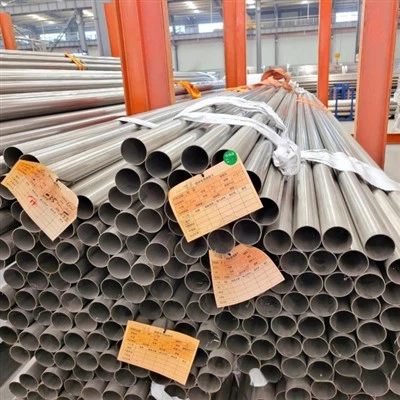
Chemical Plant Piping Overview
Chemical processing plants present some of the most demanding conditions for piping systems. Pipes must contain fluids that may be highly corrosive, at elevated temperatures and pressures, and in many cases toxic or flammable. The consequences of pipe failure in chemical service include process fluid leaks, fires, explosions, toxic releases, and environmental damage. Proper pipe material selection is therefore not just an engineering decision - it is a safety and regulatory compliance imperative.
The design code for chemical plant piping is ASME B31.3 (Process Piping), which provides rules for the design, materials, fabrication, testing, and inspection of piping systems in chemical and petrochemical plants. B31.3 categorizes fluid services into normal, category M (toxic), category D (low hazard), and high-pressure, with increasingly stringent requirements for more hazardous services. Piping must be designed for the most severe combination of pressure and temperature expected during normal operation, startup, shutdown, and any credible upset conditions.
Pipe Requirements by Chemical Media
Different chemical media require different pipe materials based on their corrosivity, temperature, and pressure. For sulfuric acid service, carbon steel is suitable for concentrations above 95% at ambient temperature, but below 95% (especially dilute acid), corrosion rates increase dramatically, requiring stainless steel 316 or higher alloys. For hydrochloric acid, even dilute solutions are highly corrosive to stainless steel, requiring high-nickel alloys (Hastelloy C-276) or non-metallic piping for most conditions. For nitric acid, 304L stainless steel is suitable for most concentrations because nitric acid passivates stainless steel. For organic solvents (hydrocarbons, alcohols, ketones), carbon steel is generally adequate unless the solvent is wet or contains corrosive contaminants.
Chloride environments are particularly challenging because they cause pitting and stress corrosion cracking (SCC) in austenitic stainless steels. Chloride SCC can occur at temperatures above 60°C with chloride concentrations as low as 10 ppm. For chloride-containing process streams, 316L (with 2-3% molybdenum) provides improved resistance compared to 304L, but for severe chloride conditions, duplex stainless steels (2205, 2507) or nickel-based alloys may be necessary. The Pitting Resistance Equivalent Number (PREN = %Cr + 3.3 x %Mo + 16 x %N) is a useful screening tool for comparing pitting resistance: 304L has PREN ~19, 316L has PREN ~25, 2205 duplex has PREN ~36, and 2507 super duplex has PREN ~43.
Common Pipe Materials for Chemical Industry
| Material | Key Characteristics | Typical Applications |
|---|---|---|
| Carbon Steel (A106 Gr.B) | Low cost, good strength, limited corrosion resistance | Non-corrosive fluids, steam, water, hydrocarbons |
| 304/304L Stainless Steel | General corrosion resistance, good weldability | Nitric acid, organic acids, food processing |
| 316/316L Stainless Steel | Mo-enhanced pitting resistance, chemical industry standard | Sulfuric acid (dilute), chlorides (moderate), solvents |
| Duplex 2205/2507 | High strength, excellent SCC resistance | Chloride environments, offshore, heat exchangers |
| Nickel Alloys (Inconel, Hastelloy) | Extreme corrosion resistance, very high cost | HCl, H2SO4 (hot), HF, severe corrosive service |
Corrosion Types & Material Selection
General corrosion is uniform material loss over the entire surface, managed by adding a corrosion allowance (typically 1.5-6.0 mm) to the calculated wall thickness. Pitting is localized corrosion that creates small cavities, measured by the PREN value. Crevice corrosion occurs in shielded areas such as under gaskets and deposits, requiring alloys with higher molybdenum content. Stress corrosion cracking (SCC) is the most dangerous corrosion form - cracking occurs under the combined action of tensile stress and a corrosive environment, often without significant general corrosion. SCC can cause catastrophic failure with little warning. For chloride SCC, materials with higher nickel content (>20%) or duplex microstructures provide resistance. Intergranular corrosion, caused by chromium carbide precipitation at grain boundaries, is prevented by using low-carbon grades (304L, 316L) or stabilized grades (321, 347).
Pressure Rating for Chemical Piping
Chemical plants typically operate at pressure classes from ANSI 150# (2 MPa) to 600# (10 MPa), with special processes such as hydrocracking and polyethylene production operating at 900-2500# (15-42 MPa). The pressure rating selection follows ASME B31.3 design rules, with the minimum wall thickness calculated using the formula: t = (P x D) / (2(SE + PY)). For vacuum service, the pipe must resist external pressure collapse, often requiring heavier schedules than internal pressure alone would dictate. Temperature significantly affects allowable stress - a pipe adequate at ambient temperature may need a thicker wall at 400°C. See our Pipe Pressure Rating Guide for comprehensive calculation methods.
Special Requirements
Chemical pipe often requires special surface treatments. Degreasing removes oil and grease from the internal surface to prevent contamination of the process fluid. Pickling removes mill scale and welding oxides. Passivation (treatment with nitric acid or citric acid) enhances the natural chromium oxide layer on stainless steel, maximizing corrosion resistance. Heat tracing (electric or steam) is applied to pipes that must maintain elevated temperatures to prevent fluid solidification or viscosity increase. Buried chemical pipes require external anti-corrosion coating per ISO 21809 or equivalent - see our Pipe Coating Guide. NDT requirements for chemical pipe vary by fluid service category per B31.3, ranging from 5% of welds for normal service to 100% for category M service - see our
Chemical Piping Standards
ASME B31.3 is the primary design code. ASTM material standards include A106 (carbon steel), A312/A358 (stainless steel), and A335 (alloy steel). API standards relevant to chemical plants include API 610 (pumps) and API 682 (seal systems). For international projects, EN 13480 (European piping code) and GB/T 20801 (Chinese piping code) may apply. The PED directive requirements must be met for equipment installed in the European Union. A full comparison of international standards is available in our Pipe Standards Comparison(59).
How to Source Chemical Pipe
When ordering pipe for chemical service, provide the following parameters: fluid composition and concentration, pH range for aqueous solutions, operating temperature (normal and design), operating pressure (normal and design), applicable code (ASME B31.3 or other), NDT requirements, certification requirements (MTC 3.1 or 3.2), and any special surface preparation (pickling, passivation). ManufacturerPipe supplies carbon steel, stainless steel, and alloy steel pipe for chemical applications, with experience supplying to refineries, petrochemical plants, and fine chemical facilities worldwide.
Need Chemical Industry Pipe?
Contact our engineering team for material selection guidance and competitive pricing on chemical service pipe.
Get a Quote
Product Categories