


What is the hardness of carbon steel flanges? Well, if you're in the market for carbon steel flanges, this is a question you might've asked yourself. As a carbon steel flange supplier, I'm here to break down what hardness means in the context of these essential industrial components.
First off, let's understand what hardness is. In simple terms, hardness refers to a material's ability to resist deformation, indentation, or scratching. For carbon steel flanges, hardness is a crucial property because it directly impacts their performance, durability, and suitability for different applications.
Carbon steel is an alloy primarily made up of iron and carbon, with small amounts of other elements. The carbon content plays a significant role in determining the hardness of the steel. Generally, the higher the carbon content, the harder the steel. However, it's not that simple. Other factors like the manufacturing process, heat treatment, and the presence of other alloying elements also influence the final hardness.
There are several methods to measure the hardness of carbon steel flanges. One of the most common methods is the Brinell hardness test. In this test, a hard ball is pressed into the surface of the steel under a specific load. The diameter of the indentation left by the ball is then measured, and this measurement is used to calculate the Brinell hardness number (BHN). Another popular method is the Rockwell hardness test. This test uses a cone or a ball indenter, and the depth of the indentation is measured to determine the Rockwell hardness number.
So, why does the hardness of carbon steel flanges matter? Well, in industries like oil and gas, petrochemicals, and power generation, flanges are used to connect pipes, valves, and other equipment. These connections often operate under high pressure, high temperature, and corrosive environments. A flange with the right hardness can withstand these harsh conditions without deforming or failing prematurely.

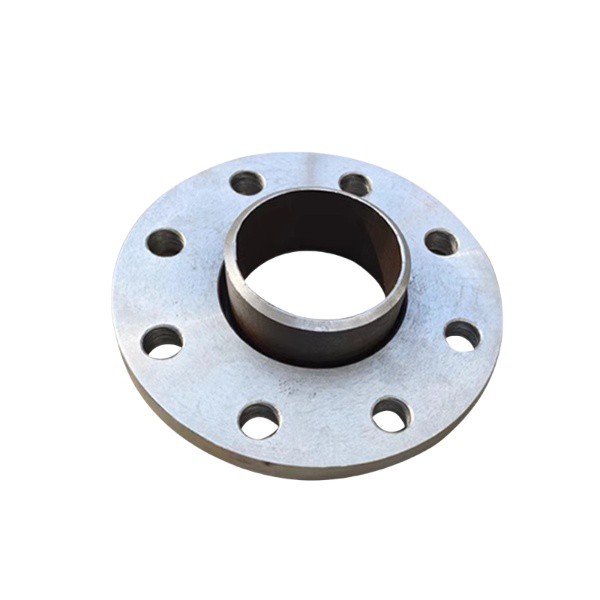
For example, in a high - pressure pipeline, a flange that is too soft might deform under the pressure, leading to leaks. On the other hand, a flange that is too hard might be brittle and prone to cracking. Therefore, it's crucial to select carbon steel flanges with an appropriate hardness for the specific application.
As a supplier of carbon steel flanges, I offer a wide range of products to meet different customer needs. We have Carbon Steel Plate Flange. These flanges are flat and are commonly used in low - pressure applications. They are easy to install and provide a reliable connection.
Our Carbon Steel Threaded Flange is another popular option. These flanges have internal threads that allow them to be screwed onto a pipe. They are suitable for applications where disassembly and reassembly are required.
And then there are the A105 Carbon Steel Flange. A105 is a common grade of carbon steel used in the manufacturing of flanges. These flanges are known for their good mechanical properties, including appropriate hardness for a wide range of applications.
When it comes to hardness, we ensure that all our carbon steel flanges meet the relevant industry standards. We use advanced manufacturing techniques and strict quality control processes to guarantee the consistency and reliability of our products. Our team of experts is always available to help customers select the right flange with the appropriate hardness for their specific needs.
If you're looking for high - quality carbon steel flanges, don't hesitate to get in touch. Whether you're working on a small - scale project or a large - scale industrial installation, we have the products and expertise to meet your requirements. Contact us to discuss your needs and start a procurement process. We're committed to providing you with the best products at competitive prices and outstanding customer service.
In conclusion, the hardness of carbon steel flanges is a critical factor that affects their performance and durability. Understanding the concept of hardness and how it relates to different types of carbon steel flanges is essential for making the right choice. As a supplier, we're dedicated to offering top - notch products that meet your specific needs. So, if you have any questions or need further information, feel free to reach out.
References
- ASME B16.5 – Standard for Pipe Flanges and Flanged Fittings
- ASTM standards related to carbon steel materials and testing


