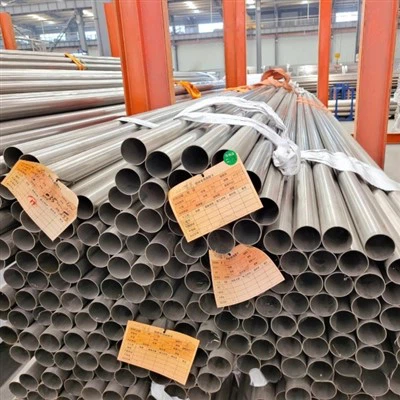
Your Professional Alloy Steel Pipe Supplier
Shuangzhong Steel supplies a comprehensive range of alloy steel pipes including ASTM A335 P91, P22, P11 and A213 T91 for high-temperature and high-pressure applications in power plants and refineries.
Alloy steel pipe outperforms standard seamless steel pipe in every dimension. The key is chromium. By incorporating Cr into the alloy, these pipes deliver exceptional resistance to high heat, extreme cold, and corrosion — capabilities no ordinary steel pipe can match. That's why alloy tube is the preferred choice across petroleum, aerospace, chemical, electric power, boiler, military, and other demanding industries.
Every alloy steel pipe starts with premium raw materials — high quality carbon steel, alloy structural steel, or stainless & heat resisting steel — and is formed through hot rolling or cold drawn to meet exacting specifications.
-
![ASTM A335 P9 Seamless Alloy Steel Pipe]() ASTM A335 P9 Seamless Alloy Steel PipeMaterial Standard:ASTM A335Grade No.:P9Type:seamless steel pipeEnd:Beveled End,Plain End
ASTM A335 P9 Seamless Alloy Steel PipeMaterial Standard:ASTM A335Grade No.:P9Type:seamless steel pipeEnd:Beveled End,Plain End -
![ASTM A335 P11 Alloy Steel Seamless Pipe]() ASTM A335 P11 Alloy Steel Seamless PipeType:Seamless, WeldedOD:1/2-48Thickness:SCH5-SCHXXSLength:0-12M, CustomizedProcess: Hot/Cold Rolled,Hot work,Cold drawn
ASTM A335 P11 Alloy Steel Seamless PipeType:Seamless, WeldedOD:1/2-48Thickness:SCH5-SCHXXSLength:0-12M, CustomizedProcess: Hot/Cold Rolled,Hot work,Cold drawn -
![Titanium Alloy Steel Pipe]() Titanium Alloy Steel PipeStandards: AMS 4942、ASTM B338、B861、B862、AMS 4941、DIN 17 861. Type: Welded / Seamless. Grade Material: CP Grades 1–4, Alloys: Grade 5, 7, 9, 12, 24, 26, 29. Seamless Tube Dimensions:. Outer
Titanium Alloy Steel PipeStandards: AMS 4942、ASTM B338、B861、B862、AMS 4941、DIN 17 861. Type: Welded / Seamless. Grade Material: CP Grades 1–4, Alloys: Grade 5, 7, 9, 12, 24, 26, 29. Seamless Tube Dimensions:. Outer -
![Incoloy 825 Seamless Pipe]() Incoloy 825 Seamless PipeASTM B423 UNS N08825 (Incoloy 825) is a nickel-iron-chromium alloy with additions of molybdenum and copper. It exhibits excellent resistance to stress corrosion cracking, pitting, and crevice
Incoloy 825 Seamless PipeASTM B423 UNS N08825 (Incoloy 825) is a nickel-iron-chromium alloy with additions of molybdenum and copper. It exhibits excellent resistance to stress corrosion cracking, pitting, and crevice -
![ASME A335 P11]() ASME A335 P11ASTM A335 P11 is the part of ASTM A335, the pipe shall be suitable for bending, flanging, and similar forming operations, and for fusion welding.
ASME A335 P11ASTM A335 P11 is the part of ASTM A335, the pipe shall be suitable for bending, flanging, and similar forming operations, and for fusion welding. -
![WB36 Alloy Pipe]() WB36 Alloy PipeWB36 alloy pipe withstands high temperatures and resists corrosion in power plants, chemical plants, and other demanding industrial applications. Its high strength, good ductility, and toughness make
WB36 Alloy PipeWB36 alloy pipe withstands high temperatures and resists corrosion in power plants, chemical plants, and other demanding industrial applications. Its high strength, good ductility, and toughness make -
![C70600 Copper Nickel (90/10)]() C70600 Copper Nickel (90/10)Product: C70600 Copper Nickel (90/10)Material:Copper-nickel alloyStandards: ASTM B466 or ASME SB466Key Properties: Corrosion resistance, stress cracking resistance, high-speed turbulence resistance,
C70600 Copper Nickel (90/10)Product: C70600 Copper Nickel (90/10)Material:Copper-nickel alloyStandards: ASTM B466 or ASME SB466Key Properties: Corrosion resistance, stress cracking resistance, high-speed turbulence resistance, -
![API Spec 5DP S-135 Drill Pipe]() API Spec 5DP S-135 Drill PipeAPI 5DP Drill PipeGrade: E75, X95, G105, S135 Connection: IF, FH, REG, NC Size: 2 3/8, 2 7/8, 3 1/2, 4, 4 1/2, 5, 5 1/2 Length: R1, R2, R3Type: Standard Drill Pipe, HWDP, Drill Collars,
API Spec 5DP S-135 Drill PipeAPI 5DP Drill PipeGrade: E75, X95, G105, S135 Connection: IF, FH, REG, NC Size: 2 3/8, 2 7/8, 3 1/2, 4, 4 1/2, 5, 5 1/2 Length: R1, R2, R3Type: Standard Drill Pipe, HWDP, Drill Collars, -
![Uns N06022 (Din 2.4602) Nickel-Based Corrosion-Resistant Alloy Seamless Tube]() Uns N06022 (Din 2.4602) Nickel-Based Corrosion-Resistant Alloy Seamless TubeName:Uns N06022 (Din 2.4602) Nickel-Based Corrosion-Resistant Alloy Seamless TubeSize:1/8–48 Standard:ASTM B474、ASTM B622、ASTM B619;ASME SB474Wall thickness:SCH5S–SCHXXSLength:Standard length 6m, can
Uns N06022 (Din 2.4602) Nickel-Based Corrosion-Resistant Alloy Seamless TubeName:Uns N06022 (Din 2.4602) Nickel-Based Corrosion-Resistant Alloy Seamless TubeSize:1/8–48 Standard:ASTM B474、ASTM B622、ASTM B619;ASME SB474Wall thickness:SCH5S–SCHXXSLength:Standard length 6m, can -
![ASTM A519 Precision Tubes For Hydraulic Cylinders]() ASTM A519 Precision Tubes For Hydraulic CylindersName:ASTM A519 Precision Tubes for Hydraulic CylindersCaliber:4mm - 120mmThickness:0.5mm-20mmMaterials:1020、1026、4130、4340 Introduction:Mechanical manufacturing: structural components such as drive
ASTM A519 Precision Tubes For Hydraulic CylindersName:ASTM A519 Precision Tubes for Hydraulic CylindersCaliber:4mm - 120mmThickness:0.5mm-20mmMaterials:1020、1026、4130、4340 Introduction:Mechanical manufacturing: structural components such as drive -
![Hexagonal Hollow Steel Pipe]() Hexagonal Hollow Steel PipeName:Hexagonal Hollow Steel PipeDistance to edge: 18 mm, 22 mm, 25 mm, 32 mm, 38 mm, 45 mm, 50 mm, 60 mmThickness:Wall thickness: 1.0 mm (light), 1.5-2.5 mm (medium), 3.0-6.0 mm (heavy)Materials:
Hexagonal Hollow Steel PipeName:Hexagonal Hollow Steel PipeDistance to edge: 18 mm, 22 mm, 25 mm, 32 mm, 38 mm, 45 mm, 50 mm, 60 mmThickness:Wall thickness: 1.0 mm (light), 1.5-2.5 mm (medium), 3.0-6.0 mm (heavy)Materials: -
![Stainless Nickel and Alloy Piping]() Stainless Nickel and Alloy PipingMaterial: Monel /Inconel/ Hastelloy/ Duplex Steel /PH Steel /Nickel Alloy. Type: Seamless, Welded. Grade: Alloy、Inconel、Incoloy、GH、Monel、UNS、Haynes、Hastelloy、Duplex. End: Beveled End, Plain End.
Stainless Nickel and Alloy PipingMaterial: Monel /Inconel/ Hastelloy/ Duplex Steel /PH Steel /Nickel Alloy. Type: Seamless, Welded. Grade: Alloy、Inconel、Incoloy、GH、Monel、UNS、Haynes、Hastelloy、Duplex. End: Beveled End, Plain End.


Why choose us
One-Stop Customized Solutions
We are committed to providing customers with one-stop customized solutions — from alloy steel grade selection, material specification review, and sourcing to precision manufacturing, heat treatment, and quality assurance — to meet the diverse needs of power generation, petrochemical, oil & gas, and chemical industries for high-performance alloy steel piping components.
Certification
We ensure quality through comprehensive system certifications: ISO 9001:2015 quality management system certification and American Petroleum Institute (API) Q1 quality certification. All alloy steel pipes are supplied with full Mill Test Certificates (MTC) per EN 10204 Type 3.1. Third-party inspection (Type 3.2) by SGS, BV, or Lloyds is available upon request.
Sales Market
Our products have been successfully exported to over 100 countries worldwide, including the United States, Canada, Germany, United Kingdom, India, Malaysia, Pakistan, UAE, Saudi Arabia, Egypt, Turkey, Jordan, Russia, and across the Middle East and Southeast Asia. We have earned the trust of overseas customers through consistent quality and reliable delivery.
On-Site Quality Supervision
We dispatch professional quality inspection teams to supervise the full production process of alloy steel pipes. From raw material incoming inspection, through hot rolling and heat treatment, to final dimensional inspection and NDT, we maintain strict quality control. Every pipe is subject to PMI (Positive Material Identification), ultrasonic testing, hydrostatic testing, and visual inspection before release.
Alloy Steel Pipe — High Temperature & Corrosion Resistant Pipes
Alloy steel pipes are designed for high-temperature and high-pressure services, offering superior creep strength and oxidation resistance compared to carbon steel pipes. We supply a comprehensive range of Cr-Mo alloy steel pipes including ASTM A335 P5/P9/P11/P22/P91, ASTM A213 T11/T12/T22/T91, and AISI 4130/4140, widely used in power plants, boilers, superheaters, and petrochemical facilities.
Alloy Steel Pipe Specification Table
|
Category |
Details |
|
Available Standards & Grades |
ASTM A335 (Seamless Pipe): P1, P2, P5, P5b, P5c, P9, P11, P12, P22, P23, P91, P92, P122, P911 |
|
Chemical Composition (Key Grades) |
P5 (5Cr-0.5Mo): C ≤0.15, Mn 0.30-0.60, Cr 4.00-6.00, Mo 0.45-0.65 |
|
Mechanical Properties |
P5/P9/P11/P22: Tensile ≥415 MPa, Yield ≥205 MPa, Elongation ≥20%, Hardness ≤163 HBW |
|
Size Range & Dimensions |
Outer Diameter: 1/2" to 36" (21.3mm to 914mm); NPS 1/2 through NPS 36 |
|
Delivery Condition / Heat Treatment |
P5/P9/P11/P22: Normalized at 900-980°C + Tempered at 650-750°C |
|
Service Conditions |
Max Service Temperature: P11/P22 up to 593°C; P91/P92 up to 649°C (long-term) |
|
Welding Parameters (Preheat & PWHT) |
P11: Preheat 150-200°C; PWHT 680-720°C; max interpass 300°C |
|
Standards Cross-Reference |
P11: ASTM A335 ↔ EN 10216-2 13CrMo4-5 ↔ JIS STPA23 ↔ GB 5310 15CrMoG |
|
Inspection & Testing |
Chemical composition analysis (OES/PMI); Tensile, yield & elongation testing; Hardness (HBW); Flattening, bending, flaring & impact testing; 100% Ultrasonic testing (UT) per ASTM A388; Hydrostatic testing per ASTM A999; Eddy current (ECT) or Magnetic particle (MPI) as specified; Dimensional & visual inspection; PMI on 100% of pipes |
High-Temperature Strength: Alloy steel pipes retain mechanical strength at elevated temperatures up to 600°C, making them ideal for superheater, reheater, and boiler applications where carbon steel (limited to 538°C max) would rapidly weaken and fail under sustained loads.
Creep Resistance: The addition of chromium and molybdenum significantly improves long-term creep rupture strength. At 550°C, P22 offers approximately 2x the creep strength of A106 Gr.B carbon steel, while P91 provides 3-4x improvement, enabling thinner wall designs and reduced total system weight. P92 further improves creep strength by 15-20% over P91 through tungsten addition.
Oxidation & Corrosion Resistance: Chromium content ranging from 1.25% (P11) to 9% (P91/P92) forms a stable protective oxide layer (Cr&sub2;O&sub3;) on the surface. This provides superior resistance to high-temperature scaling, steam oxidation, sulfidation, and hydrogen attack in refinery, boiler, and petrochemical environments. P5 and P9 offer excellent resistance to sulfur-containing environments found in FCC units and coker heaters.
Cost-Effective Performance: Cr-Mo alloy steel pipes offer an optimal balance of high-temperature performance and material cost. While more expensive than carbon steel (approximately 1.5-4x depending on grade), they are significantly more economical than stainless steel or nickel alloys for high-temperature pressure service, providing the best value for operating conditions up to 650°C.
Good Weldability & Fabrication: Alloy steel grades P11, P22, and P91 exhibit good weldability when proper procedures are followed. Key considerations include preheat temperature control, low-hydrogen welding consumables, interpass temperature limits, and mandatory post-weld heat treatment (PWHT). Our technical team provides complete welding parameters for each grade to ensure successful field installation.
Code Compliance & Traceability: All grades meet ASME Boiler and Pressure Vessel Code (Section II Part A, Section I for power boilers, Section VIII for pressure vessels) and major international standards (EN 13480, PED 2014/68/EU). Full traceability is maintained from the steel mill heat number through final shipment, with complete MTC documentation.


Alloy steel pipes are widely used in high-temperature, high-pressure, and corrosive service environments where conventional carbon steel pipes cannot provide sufficient mechanical strength or long-term reliability. Our alloy steel piping products serve customers worldwide across the following industries:
• Power Generation: Main steam pipes, hot reheat pipes, cold reheat pipes, boiler headers, superheater tubes, reheater tubes, economizer tubes, and feedwater heater tubing. P91 and P92 are the preferred materials for ultra-supercritical (USC) power plants operating at 600-620°C and 250-300 bar.
• Petrochemical & Refining: Hydrocracking reactor effluent piping (P22/P91), fluid catalytic cracking (FCC) unit piping (P5/P9), catalytic reformers, hydrogen plants, coker heaters and transfer lines (P5/P9), sulfur recovery units, and delayed coker units.
• Oil & Gas: High-temperature and high-pressure process piping, refinery heaters and furnaces, gas processing plants, high-pressure steam injection lines, and subsea pipeline risers.
• Chemical Processing: High-temperature reactor piping, heater tubes, process lines, and heat exchanger tubing for chemical plants, including methanol and ammonia production.
• Fertilizer Production: Ammonia synthesis loops, primary and secondary reformer tubes, shift converter piping, and high-pressure steam systems in urea and fertilizer plants.
• Heat Exchangers: Feedwater heaters, process heat exchangers, condenser tubes, and air preheater tubing where high-temperature and corrosion resistance are required.
• Nuclear Power: Primary and secondary piping systems, steam generator tubing, and auxiliary system piping complying with ASME Section III requirements.
• Boiler Manufacturing: Water wall tubes, superheater and reheater tube bundles, economizer coils, and connecting piping for industrial and utility boilers.
Manufacturing Process
Alloy steel pipes are manufactured through hot rolling or cold drawing processes with strict control of chemical composition, heating parameters, and heat treatment cycles to develop the required mechanical properties and microstructure. Our manufacturing capabilities cover the full production chain from raw material sourcing to finished pipe delivery.
Hot Rolling & Seamless Pipe Formation
Round billets of verified chemical composition are heated to 1100-1250°C in a rotary hearth furnace and then rotary pierced to form a hollow shell. The shell is elongated and rolled on a mandrel mill (plug mill or continuous mill) to achieve the specified outer diameter and wall thickness. This process produces seamless pipe with consistent mechanical properties throughout the wall cross-section.
Heat Treatment (Normalizing & Tempering)
Low-alloy grades (P5 through P22) are normalized at 900-980°C (above the upper critical temperature to fully austenitize) followed by tempering at 650-750°C to achieve specified tensile, yield, and hardness properties. High-alloy grades (P91/P92) undergo normalizing at 1040-1080°C followed by tempering at 730-780°C to develop the optimized tempered martensite structure essential for high creep strength.
Cold Drawing & Precision Finishing
For tight-tolerance or thin-wall requirements, pipes undergo cold drawing or cold rolling. The pipe is pointed, annealed, pickled to remove scale, and drawn through a die with a mandrel to achieve precise OD and ID tolerances. Cold working improves surface finish (Ra ≤3.2μm achievable), dimensional accuracy, and mechanical properties through work hardening.
NDT, Inspection & Marking
100% of alloy steel pipes undergo ultrasonic testing (UT) per ASTM A388 for internal and surface defect detection. Eddy current testing (ECT), magnetic particle inspection (MPI), and radiographic testing (RT) are performed as specified. Each pipe is then subject to PMI chemistry verification, dimensional inspection, hydrostatic testing, and visual inspection. Pipes are stenciled with full markings per ASTM/ASME requirements including grade, heat number, size (OD x WT), schedule, heat treatment condition, and manufacturer identification.
Our Certificate
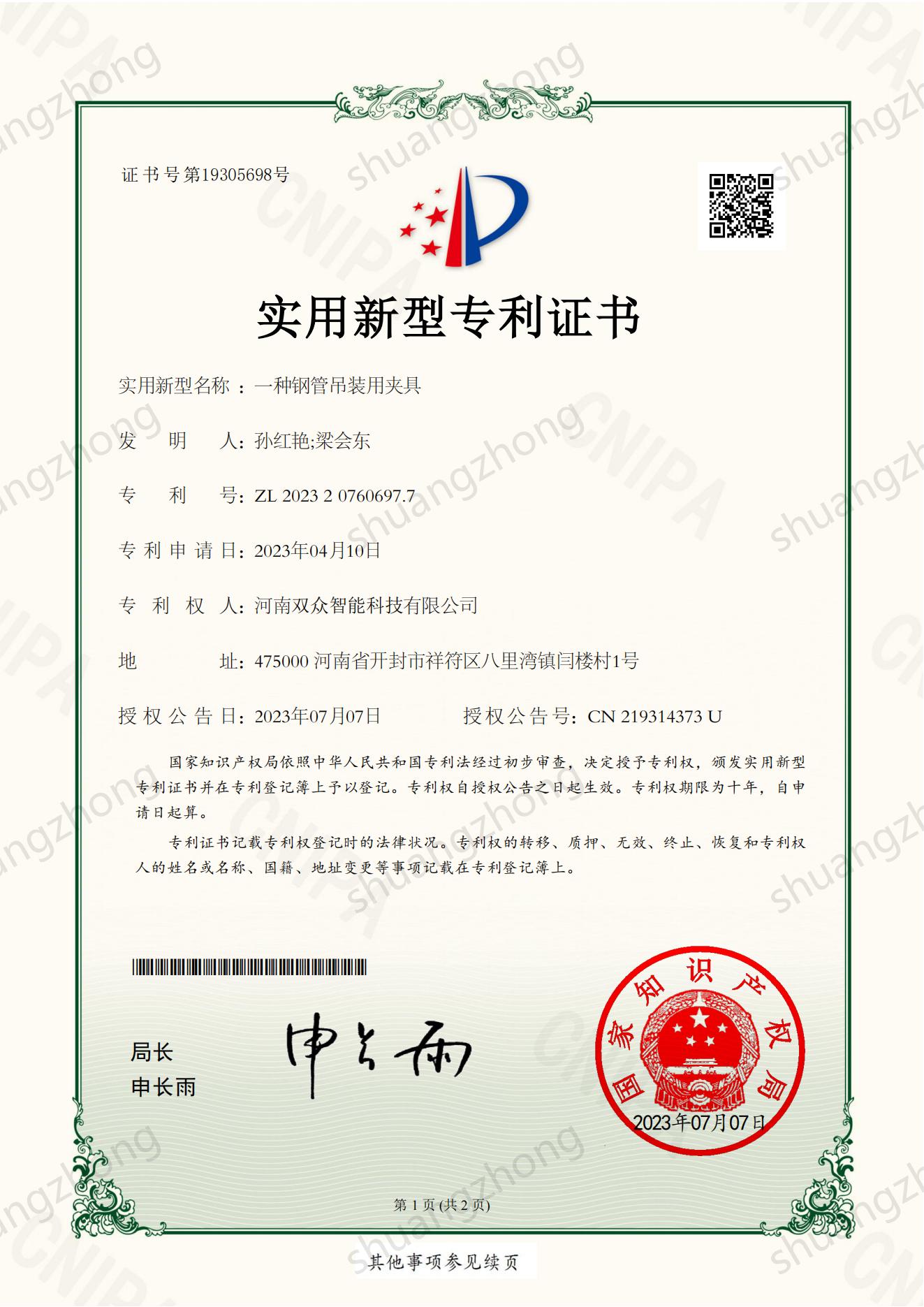

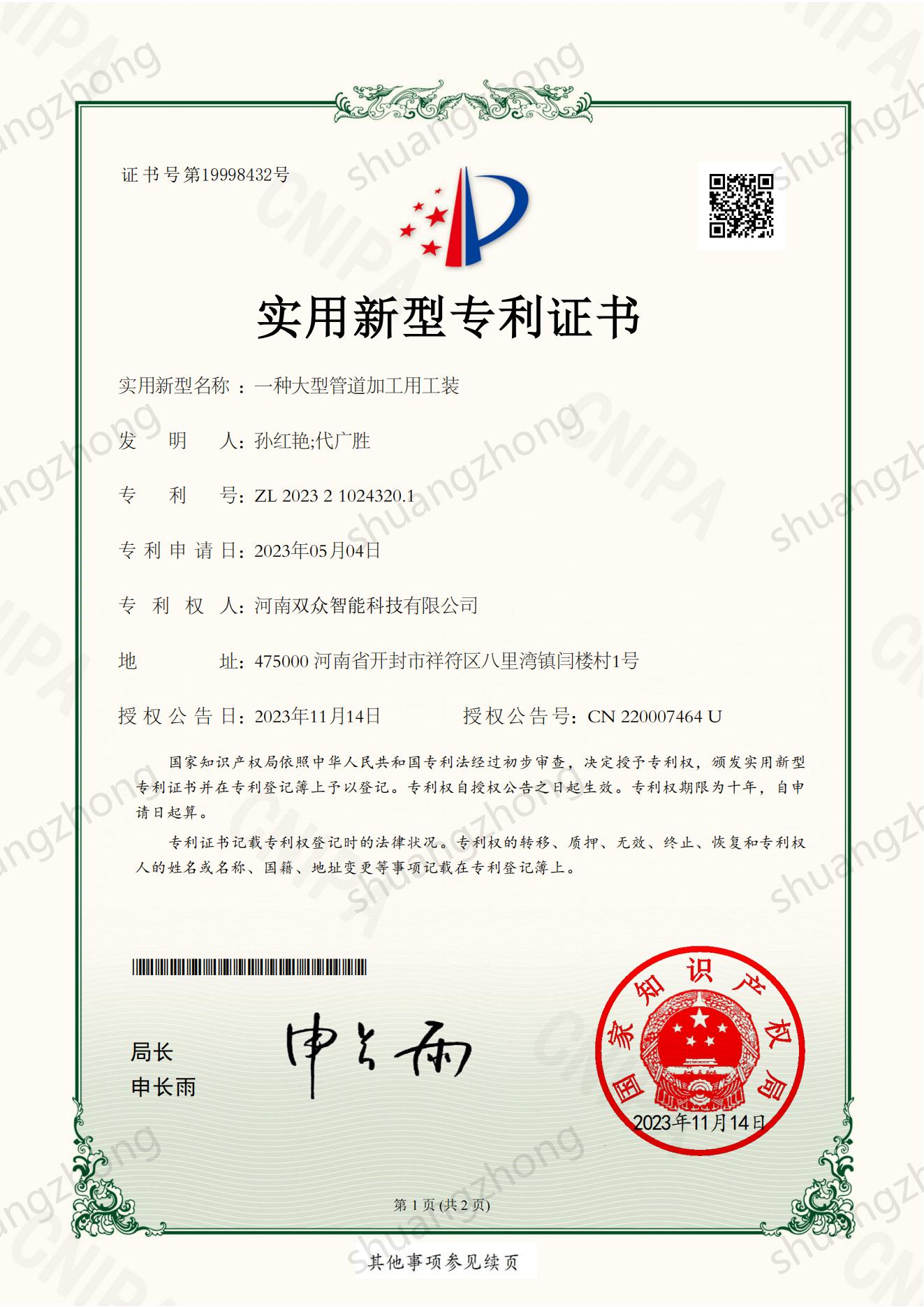

FAQ
As one of the leading alloy steel pipe manufacturers and suppliers in China, we warmly welcome you to buy high quality alloy steel pipe for sale here from our factory. Good service and reasonable price are available.
Popular Products