Product Overview
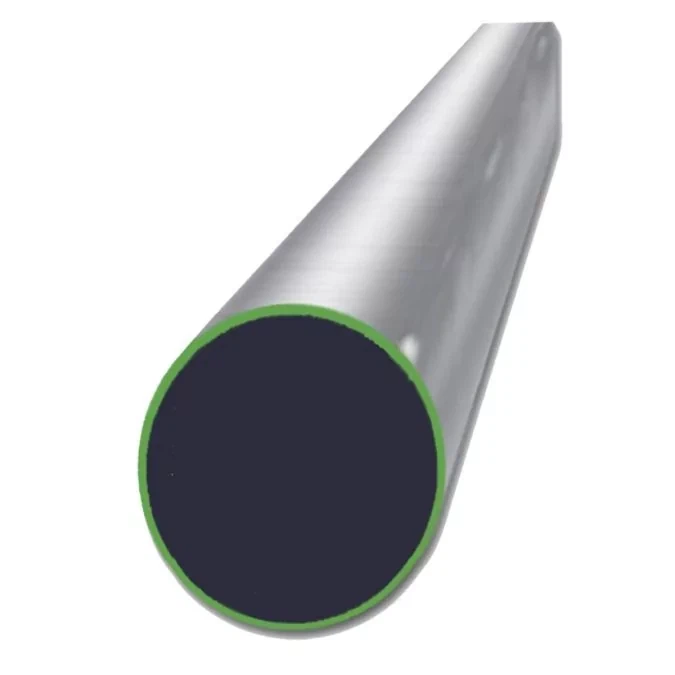
ASTM-A312 Grade TP321 Seamless Stainless Steel Pipe is an austenitic stainless steel seamless pipe manufactured according to ASTM A312/A312M and identified by UNS S32100. TP321 is a titanium-stabilized stainless steel grade designed for high-temperature and general corrosive service.
The addition of titanium helps stabilize the material against chromium carbide precipitation during exposure to elevated temperatures, making TP321 suitable for applications where resistance to intergranular corrosion and thermal cycling is important.
Compared with standard 304 stainless steel, TP321 is particularly valuable in applications involving prolonged elevated-temperature exposure.

Chemical Composition
|
Element |
TP321 |
|
C |
≤ 0.08% |
|
Mn |
≤ 2.00% |
|
Si |
≤ 0.75% |
|
P |
≤ 0.045% |
|
S |
≤ 0.030% |
|
Cr |
17.0–19.0% |
|
Ni |
9.0–12.0% |
|
N |
≤ 0.10% |
|
Ti |
5 × (C + N) min.; 0.70% max. |
|
Fe |
Balance |
Mechanical Properties
|
Property |
Requirement |
|
Tensile Strength |
≥ 515 MPa |
|
Yield Strength, 0.2% |
≥ 205 MPa |
|
Elongation |
≥ 35%* |
|
Hardness |
According to ASTM A312 requirements |
| Standard | Grade |
|---|---|
| ASTM | TP321 |
| UNS | S32100 |
| EN | 1.4541 |
| EN Designation | X6CrNiTi18-10 |
| JIS | SUS 321 |
| BS | 321S31 |
| Item | Options |
|---|---|
| Pipe Type | Seamless |
| Nominal Size | 1/8"–24" or customized |
| Outside Diameter | Customized |
| Wall Thickness | SCH 5–XXS |
| Length | Random / Fixed Length |
| End Type | Plain / Beveled |
| Surface | Pickled / Annealed / Polished |
| Custom Size | Available |
TP321 seamless stainless steel pipe can be supplied according to ASTM A312 and applicable ASME B36.19 dimensions, with customized sizes available according to project requirements.

Heat Treatment
ASTM A312 requires the pipe to be supplied in the specified heat-treated condition.
For TP321, the standard specifies a heat-treatment temperature of approximately 1040°C (1900°F), followed by rapid cooling as required by the standard.
This treatment helps restore the desired austenitic structure and corrosion resistance after manufacturing.
Important: TP321 and TP321H have different heat-treatment requirements. TP321H should not be substituted for TP321 when preparing a product specification.

Key Advantages
Excellent Resistance to Intergranular Corrosion
The titanium stabilization of TP321 helps reduce the risk of chromium carbide precipitation and associated intergranular corrosion after exposure to elevated temperatures.
Good High-Temperature Performance
TP321 maintains useful mechanical and corrosion-resistant properties in elevated-temperature service, making it suitable for heat-intensive piping systems.
Good Corrosion Resistance
With approximately 17–19% chromium and 9–12% nickel, TP321 provides good general corrosion resistance for many industrial environments.
Good Weldability
TP321 has good welding characteristics and is commonly selected for fabricated piping systems exposed to elevated temperatures.
Good Resistance to Thermal Cycling
The stabilized structure makes TP321 suitable for equipment and piping that experience repeated heating and cooling.
Seamless Construction
The seamless manufacturing route provides a continuous pipe body without a longitudinal weld seam, making it suitable for demanding pressure and process-piping applications where seamless pipe is specified.
Manufacturing Process
Our typical manufacturing route for ASTM A312 TP321 seamless stainless steel pipe includes:
Stainless Steel Billet → Heating → Piercing → Hot Rolling → Sizing → Heat Treatment → Pickling → Straightening → Surface Inspection → Dimensional Inspection → Testing → Marking → Packing
For ASTM A312 TP321 seamless pipe, the production process begins with qualified stainless steel billet selection. The billet is heated and pierced before hot rolling and sizing. After forming, the pipe undergoes heat treatment, pickling, straightening and final inspection to meet the specified dimensional, mechanical and surface requirements.

Applications
- Heat Exchangers: Heat exchanger piping, Process piping, High‑temperature tubing
- Chemical Processing: Chemical process piping, Process equipment, Corrosive service piping
- Power Generation: Boiler‑related piping, High‑temperature piping, Thermal equipment
- Petrochemical Industry: Process piping, High‑temperature systems, Refinery equipment
- Thermal Processing: Furnace components, Heating systems, Thermal cycling equipment
Quality Inspection & Certificates for TP321 Stainless Steel Pipe
|
Inspection Category |
Inspection Items |
Issued Reports & Certificates |
|---|---|---|
|
Chemical Analysis |
Chemical Composition Analysis, PMI Testing |
Chemical Analysis Report, PMI Report |
|
Mechanical Performance Test |
Tensile Test, Yield Strength Test, Elongation Test, Hardness Test, Flattening Test |
Mechanical Test Report |
|
Pressure Performance Test |
Hydrostatic Test |
Hydrostatic Test Report |
|
Non-Destructive Testing (NDT) |
Eddy Current Testing, Ultrasonic Testing |
NDT Report |
|
Dimensional & Surface Inspection |
Dimensional Inspection, Visual & Surface Inspection |
Dimensional Inspection Report |
|
Official Material Certification |
Full factory quality verification |
EN 10204 3.1 Material Certificate, Mill Test Certificate |

Why Choose Our TP321 Seamless Pipe?
We focus on supplying ASTM A312 TP321 Seamless Stainless Steel Pipe with consistent material quality and reliable dimensional accuracy.
Our quality control covers the complete process from raw material verification to final inspection. Chemical composition, mechanical properties, dimensions, surface condition and required testing are checked according to the applicable specification and customer requirements.
For demanding projects, we can also provide relevant inspection documents and traceability records to help customers verify product compliance before shipment.
Our goal is to provide TP321 seamless stainless steel pipe with reliable quality, accurate dimensions and stable performance for high-temperature and corrosive industrial applications.
321 vs 304
| Feature | 321 | 304 |
|---|---|---|
| Cr | 17–19% | 18–20% |
| Ni | 9–12% | 8–11% |
| Stabilization | Titanium stabilized | Non-stabilized |
| High-temperature service | Better suited | General service |
| Intergranular corrosion after heating | Better resistance | More susceptible under certain exposure |
| Typical use | High-temperature applications | General industrial applications |
321 vs 321H
| Feature | TP321 | TP321H |
|---|---|---|
| UNS | S32100 | S32109 |
| EN Grade | 1.4541 | 1.4878 |
| Main Alloying Element | Titanium stabilized | Titanium stabilized |
| Carbon | Standard TP321 carbon level | Higher carbon level |
| Main Advantage | Resistance to intergranular corrosion after exposure to elevated temperatures | Improved creep and stress-rupture properties at elevated temperatures |
| Typical Applications | Process piping, heat exchangers, chemical equipment and general high-temperature service | High-temperature pressure piping, boilers, petrochemical and power-generation equipment |
FAQ
What is ASTM A312 TP321 stainless steel pipe?
ASTM A312 TP321 is a titanium-stabilized austenitic stainless steel pipe grade identified as UNS S32100. It is commonly used for pressure-containing applications where corrosion resistance and elevated-temperature performance are required.
What is the UNS number of TP321 stainless steel?
The UNS designation for ASTM A312 TP321 stainless steel is UNS S32100. TP321H is a different grade and is identified as UNS S32109.
What is the difference between TP321 and TP321H?
TP321H has a higher carbon content and is specifically developed for applications where creep and stress-rupture properties are important at elevated temperatures. TP321 is commonly selected for general high-temperature and thermal cycling applications.
Is TP321 stainless steel suitable for high-temperature applications?
Yes. TP321 has good oxidation resistance and maintains useful mechanical properties at elevated temperatures. Its titanium stabilization also helps reduce the risk of sensitization during certain elevated-temperature exposures.
What is the chemical composition of TP321 pipe?
TP321 is primarily an austenitic stainless steel containing chromium and nickel, with titanium added for stabilization. The exact chemical limits should be verified against the applicable ASTM A312 specification and material test certificate.
What is the difference between 321 and 304 stainless steel pipe?
Both are austenitic stainless steels, but TP321 is titanium stabilized. This makes TP321 particularly suitable for applications involving elevated temperatures and thermal cycling, while 304 is widely used for general-purpose corrosion-resistant applications.
Can TP321 seamless pipe be customized in size and length?
Yes. TP321 seamless stainless steel pipe can be supplied in different outside diameters, wall thicknesses, schedules and lengths according to applicable standards and project requirements.
What inspection documents are available for TP321 pipe?
Depending on the order requirements, inspection documentation may include a Mill Test Certificate, EN 10204 3.1 certificate, chemical composition report, mechanical test results, PMI report, dimensional inspection report and applicable NDT or hydrostatic test reports.
Related Products
Stainless Steel 304 Seamless Pipes
A312 TP347H Stainless Steel Seamless Pipe
Heat Exchanger Tubes ASTM A213 TP304 / TP316L
310S Stainless Steel Pipe
Hot Tags: ASTM A312 TP321 Seamless Stainless Steel Pipe, China ASTM A312 TP321 Seamless Stainless Steel Pipe manufacturers, suppliers, factory