


As a carbon steel pipe supplier, I often get asked about the thermal conductivity of carbon steel pipes. Thermal conductivity is a crucial property, especially in applications where heat transfer is involved. In this blog, I'll delve into what thermal conductivity is, the factors affecting the thermal conductivity of carbon steel pipes, and its implications in various industries.
Understanding Thermal Conductivity
Thermal conductivity, denoted by the symbol k, is a measure of a material's ability to conduct heat. It is defined as the quantity of heat (Q) transmitted through a unit thickness (L) in a direction normal to a surface of unit area (A) due to a unit temperature gradient (ΔT). Mathematically, it is expressed by Fourier's Law of Heat Conduction: (Q = -kA\frac{dT}{dx}), where (\frac{dT}{dx}) is the temperature gradient.
The SI unit of thermal conductivity is watts per meter - kelvin (W/(m·K)). A high thermal conductivity value means that the material can transfer heat more efficiently, while a low value indicates poor heat transfer capabilities.
Thermal Conductivity of Carbon Steel Pipes
Carbon steel is an alloy of iron and carbon, with carbon content typically ranging from 0.05% to 2.1% by weight. The thermal conductivity of carbon steel pipes varies depending on several factors, including the carbon content, temperature, and the presence of other alloying elements.
-
Carbon Content: Generally, as the carbon content in carbon steel increases, the thermal conductivity decreases. Pure iron has a relatively high thermal conductivity of about 80 W/(m·K) at room temperature. However, when carbon is added to form carbon steel, the carbon atoms disrupt the regular lattice structure of iron, impeding the flow of heat - conducting electrons. For example, low - carbon steel (carbon content less than 0.3%) may have a thermal conductivity in the range of 45 - 55 W/(m·K) at room temperature, while high - carbon steel (carbon content greater than 0.6%) can have a thermal conductivity as low as 30 - 40 W/(m·K).
-
Temperature: The thermal conductivity of carbon steel pipes is also strongly influenced by temperature. As the temperature increases, the thermal conductivity of carbon steel generally decreases. This is because at higher temperatures, the lattice vibrations in the steel become more intense, which scatters the electrons responsible for heat conduction. For instance, at room temperature (around 20°C), the thermal conductivity of a typical carbon steel pipe might be around 50 W/(m·K). But at 500°C, it could drop to around 35 - 40 W/(m·K).
-
Alloying Elements: In addition to carbon, other alloying elements are often added to carbon steel to improve its mechanical properties, corrosion resistance, etc. Elements such as manganese, silicon, and chromium can also affect the thermal conductivity. For example, chromium is commonly added to form stainless steel, which has a lower thermal conductivity compared to plain carbon steel due to the presence of chromium atoms that disrupt the electron flow.
Applications and Implications
The thermal conductivity of carbon steel pipes plays a vital role in many industries:
-
Heating and Cooling Systems: In heating systems such as boilers and radiators, carbon steel pipes are widely used to transfer heat. The relatively high thermal conductivity of carbon steel allows for efficient heat transfer from the heat source (e.g., a burner in a boiler) to the surrounding environment. For example, Carbon Steel Boiler Tubes are designed to withstand high temperatures and transfer heat effectively from the hot combustion gases to the water inside the tubes.
-
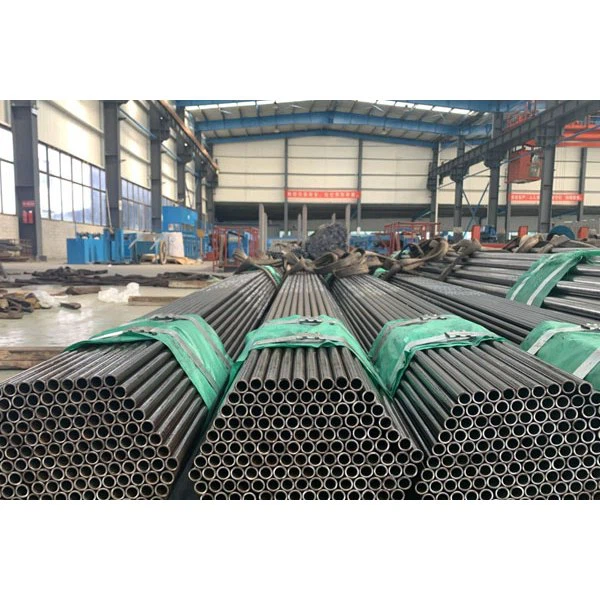
Industrial Processes: Many industrial processes involve heat exchange, such as chemical reactions that require precise temperature control. Carbon steel pipes are used in heat exchangers to transfer heat between different fluids. The thermal conductivity of the pipes determines how quickly and efficiently the heat can be transferred, which is crucial for the overall efficiency of the process.

-
Pipeline Transportation: In the transportation of hot fluids, such as oil and gas, carbon steel pipes are used. The thermal conductivity of the pipes affects the heat loss during transportation. If the thermal conductivity is too high, there will be significant heat loss, which can lead to increased energy consumption to maintain the desired temperature of the fluid.
Comparison with Other Pipe Materials
It's also interesting to compare the thermal conductivity of carbon steel pipes with other common pipe materials:
-
Ductile Iron Pipe: Ductile Iron Pipe has a thermal conductivity similar to carbon steel, typically in the range of 40 - 50 W/(m·K) at room temperature. However, ductile iron has better corrosion resistance in some environments, which may make it a preferred choice in certain applications.
-
Plastic Pipes: Plastic pipes, such as PVC and PE, have much lower thermal conductivity compared to carbon steel. For example, PVC pipes have a thermal conductivity of around 0.16 - 0.2 W/(m·K). This makes plastic pipes suitable for applications where heat insulation is required, but they are not suitable for high - temperature or high - pressure applications.
-
Stainless Steel Pipes: Stainless steel pipes have a lower thermal conductivity than carbon steel due to the presence of alloying elements such as chromium and nickel. The thermal conductivity of stainless steel can range from 12 - 20 W/(m·K), depending on the specific grade. This lower thermal conductivity can be an advantage in applications where heat retention is desired.
Importance in Product Selection
When selecting carbon steel pipes for a particular application, understanding the thermal conductivity is essential. If the application requires efficient heat transfer, a low - carbon steel pipe with relatively high thermal conductivity may be the best choice. On the other hand, if heat insulation is important, a pipe with lower thermal conductivity or additional insulation materials may be needed.
For large - scale industrial applications, Large Diameter Straight Seam Welded Pipe is often used. The thermal conductivity of these pipes needs to be carefully considered to ensure optimal performance in heat - related processes.
Conclusion
In conclusion, the thermal conductivity of carbon steel pipes is a complex property that is influenced by carbon content, temperature, and alloying elements. It has significant implications in various industries, from heating and cooling systems to industrial processes and pipeline transportation. As a carbon steel pipe supplier, I can provide a wide range of carbon steel pipes with different thermal conductivity characteristics to meet the diverse needs of our customers.
If you are in need of carbon steel pipes for your project and want to discuss the thermal conductivity requirements or any other aspects, please feel free to contact us. We are committed to providing high - quality products and professional advice to help you make the best choice for your application.
References
- Incropera, F. P., DeWitt, D. P., Bergman, T. L., & Lavine, A. S. (2007). Fundamentals of Heat and Mass Transfer. John Wiley & Sons.
- ASM Handbook, Volume 1: Properties and Selection: Irons, Steels, and High - Performance Alloys. ASM International.


