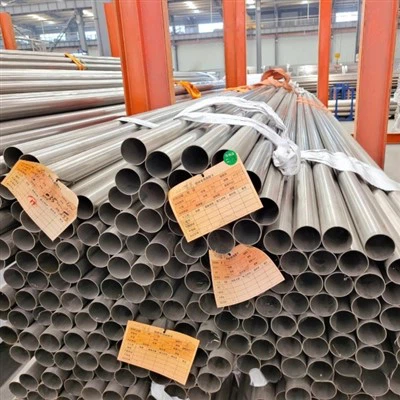
The flow capacity of stainless steel pipes is a crucial factor that determines their efficiency and suitability for various applications. As a leading stainless steel pipe supplier, we understand the significance of this parameter and are committed to providing our customers with high-quality pipes that meet their specific flow requirements. In this blog post, we will explore what the flow capacity of stainless steel pipes entails, the factors that influence it, and how to calculate it.
What is Flow Capacity?
Flow capacity refers to the maximum amount of fluid (liquid or gas) that can pass through a pipe within a given period. It is typically measured in units such as cubic meters per hour (m³/h), gallons per minute (GPM), or liters per second (L/s). The flow capacity of a pipe is essential in many industries, including water supply, oil and gas, chemical processing, and HVAC systems. A pipe with an inadequate flow capacity can lead to reduced system efficiency, increased energy consumption, and even system failure.
Factors Affecting the Flow Capacity of Stainless Steel Pipes
Several factors influence the flow capacity of stainless steel pipes. Understanding these factors is essential for selecting the right pipe for your application.
Pipe Diameter
The diameter of a pipe is one of the most significant factors affecting its flow capacity. Generally, larger diameter pipes have a higher flow capacity than smaller ones. This is because a larger cross-sectional area allows more fluid to pass through the pipe at the same time. For example, a 6-inch diameter pipe can carry more water than a 4-inch diameter pipe. When choosing a pipe diameter, it is important to consider the expected flow rate of the fluid and the pressure requirements of the system.
Pipe Length
The length of a pipe also affects its flow capacity. As the fluid flows through the pipe, it encounters friction with the inner surface of the pipe, which causes a pressure drop. The longer the pipe, the greater the pressure drop, and the lower the flow capacity. Therefore, in applications where long pipe runs are required, it may be necessary to use larger diameter pipes to maintain an adequate flow rate.
Pipe Material and Surface Roughness
The material of the pipe and its inner surface roughness can also impact the flow capacity. Stainless steel pipes are known for their smooth inner surface, which reduces friction and allows for better flow. Compared to pipes made of other materials, such as cast iron or PVC, stainless steel pipes generally have a higher flow capacity for the same diameter and length. The surface finish of the pipe can also affect the flow. A smoother surface finish results in less friction and a higher flow capacity.
Fluid Properties
The properties of the fluid being transported, such as its viscosity, density, and temperature, can significantly affect the flow capacity of the pipe. Viscous fluids, such as oil, flow more slowly through a pipe than less viscous fluids, such as water. Similarly, the density of the fluid can impact the flow rate. Heavier fluids require more energy to move through the pipe, which can reduce the flow capacity. Temperature can also affect the viscosity and density of the fluid, thereby influencing the flow capacity.
Flow Velocity
The flow velocity of the fluid in the pipe is another important factor. Higher flow velocities can increase the flow capacity but also increase the friction and pressure drop in the pipe. Therefore, it is important to find a balance between the desired flow rate and the allowable pressure drop. In some applications, a maximum flow velocity may be specified to prevent erosion, noise, or other issues.
Calculating the Flow Capacity of Stainless Steel Pipes
There are several methods for calculating the flow capacity of stainless steel pipes. One of the most commonly used methods is the Darcy - Weisbach equation:


[h_f = f\frac{L}{D}\frac{V^{2}}{2g}]
where (h_f) is the head loss due to friction, (f) is the Darcy - Weisbach friction factor, (L) is the length of the pipe, (D) is the diameter of the pipe, (V) is the average flow velocity, and (g) is the acceleration due to gravity.
To calculate the flow rate (Q), we can use the relationship (Q = A\times V), where (A) is the cross - sectional area of the pipe ((A=\frac{\pi D^{2}}{4})).
The friction factor (f) depends on the Reynolds number ((Re)) and the relative roughness of the pipe surface. The Reynolds number is calculated as:
[Re=\frac{\rho VD}{\mu}]
where (\rho) is the density of the fluid, (\mu) is the dynamic viscosity of the fluid.
For laminar flow ((Re < 2000)), the friction factor (f=\frac{64}{Re}). For turbulent flow ((Re> 4000)), the friction factor can be determined using the Moody chart or empirical equations.
In addition to the Darcy - Weisbach equation, there are other simplified equations and charts available for calculating the flow capacity of pipes, such as the Hazen - Williams equation, which is commonly used for water flow in pipes.
Applications and Flow Capacity Requirements
Different applications have different flow capacity requirements. For example, in a water supply system for a residential building, the flow capacity of the pipes needs to be sufficient to meet the daily water consumption needs of the residents. In an industrial process, such as a chemical plant, the pipes need to be sized to handle the specific flow rates of various chemicals and fluids at the required pressures.
In the oil and gas industry, stainless steel pipes are often used to transport crude oil, natural gas, and refined products. The flow capacity of these pipes is critical for ensuring the efficient and safe operation of the pipeline system. Large - diameter pipes are typically used to transport large volumes of fluids over long distances.
In HVAC systems, stainless steel pipes are used for the distribution of hot and cold water, as well as refrigerants. The flow capacity of the pipes affects the performance and efficiency of the heating and cooling systems.
Our Stainless Steel Pipe Products
As a stainless steel pipe supplier, we offer a wide range of products to meet the diverse flow capacity requirements of our customers. Our product portfolio includes Stainless Steel 304 Seamless Pipes, Seamless Stainless Steel Tubing, and Stainless Steel Seamless and Welded Pipe. These pipes are made from high - quality stainless steel materials, which offer excellent corrosion resistance, durability, and smooth inner surfaces for optimal flow.
We can provide pipes in various diameters, wall thicknesses, and lengths to suit your specific application. Our technical team can also assist you in selecting the right pipe size and type based on your flow capacity requirements. Whether you need pipes for a small - scale project or a large - scale industrial application, we have the expertise and products to meet your needs.
Contact Us for Your Stainless Steel Pipe Needs
If you are looking for high - quality stainless steel pipes with the right flow capacity for your project, we are here to help. Our team of experts can provide you with detailed information about our products, assist you in calculating the flow capacity, and offer customized solutions to meet your specific requirements. Contact us today to start a conversation about your stainless steel pipe needs. We are committed to providing you with the best products and services at competitive prices.
References
- Crane, D. S. (1988). Flow of Fluids Through Valves, Fittings, and Pipe. Technical Paper No. 410. Crane Co.
- Munson, B. R., Young, D. F., & Okiishi, T. H. (2009). Fundamentals of Fluid Mechanics. John Wiley & Sons.