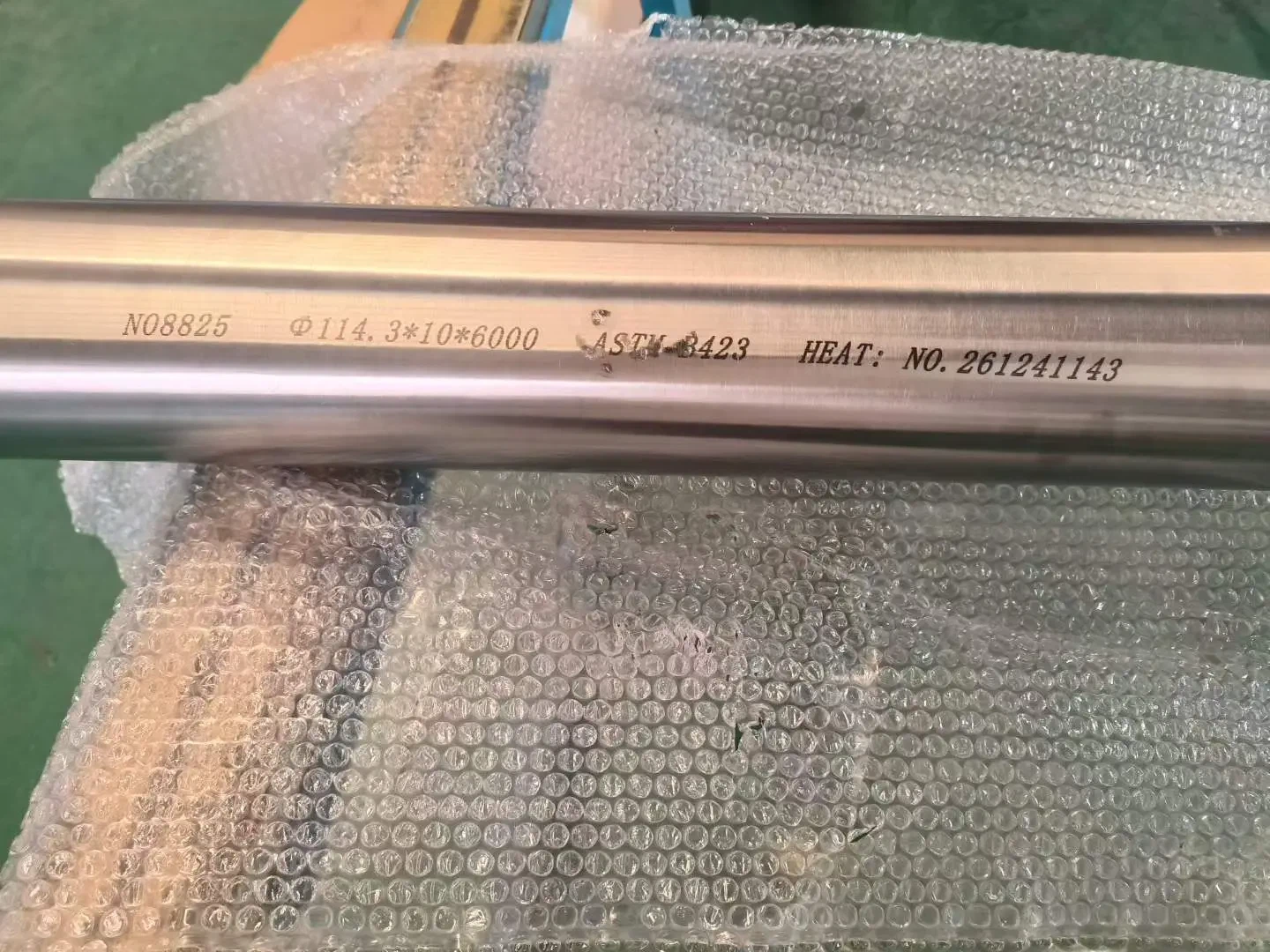
ASTM A312 TP316L 1.4404 Stainless Steel Pipe is a low-carbon variation of 316 stainless steel, offering excellent corrosion resistance, particularly in chloride environments. It is widely used in industries such as chemical processing, marine applications, pharmaceuticals, and food processing.
ASTM A312 TP316L Pipe Key Features:
Material: 316L Stainless Steel (Low Carbon)
Standard: ASTM A312
Corrosion Resistance: Excellent resistance to pitting and crevice corrosion in chloride-rich environments.
Strength & Durability: High strength and good weldability.
Temperature Resistance: Suitable for high-temperature applications.
Available Sizes:
Outer Diameter: 1/8" NB to 48" NB (Seamless & Welded)
Wall Thickness: SCH 5S, SCH 10S, SCH 40S, SCH 80S, SCH 160, XXS
Length: Random, Cut Length, or Custom
Common Applications:
Heat exchangers
Chemical processing plants
Pharmaceutical and food industries
Marine and offshore industries
High-temperature and high-pressure applications

Why 316L Stainless Steel Has Excellent Corrosion Resistance and High Strength?
Understanding Pitting and Crevice Corrosion
Pitting and crevice corrosion are two forms of localized corrosion that can severely damage metal structures, especially in chloride-rich environments like seawater or chemical processing plants.
Pitting Corrosion occurs when small, deep holes form on the metal surface due to the breakdown of the passive oxide layer. This type of corrosion can lead to structural failure even if the overall metal loss is minimal.
Crevice Corrosion happens in narrow gaps, such as at joints, gaskets, or under deposits, where oxygen depletion creates an aggressive localized environment that accelerates metal degradation.
Both types of corrosion are highly dangerous because they are difficult to detect and can lead to sudden failures in pipelines, tanks, and other critical components.
Why 316L Stainless Steel Resists Pitting and Crevice Corrosion
316L SCH 5S Stainless Steel Seamless Pipe is renowned for its superior corrosion resistance, particularly in chloride-rich environments. This is primarily due to its unique chemical composition:
High Chromium Content (16-18%) – Chromium forms a stable and self-repairing passive oxide layer on the surface, protecting the steel from oxidation and corrosion.
Molybdenum (2-3%) – This element significantly enhances resistance to pitting and crevice corrosion by strengthening the passive film and making SS 316L Pipe more resistant to breakdown in chloride environments.
Nickel (10-14%) – Nickel improves overall corrosion resistance, enhances the stability of the passive layer, and increases resistance to acid attacks.
Low Carbon Content ("L" in 316L, ≤ 0.03%) – The reduced carbon content minimizes carbide precipitation during welding, which helps prevent intergranular corrosion.
The combination of these elements allows UNS S31603 SCH 10S Pipe to withstand aggressive chloride exposure, making it ideal for marine applications, chemical processing, and offshore industries.
Why 316L Stainless Steel Has High Strength and Good Weldability
316L Stainless Steel Tube exhibits excellent mechanical properties, including high strength and superior weldability. Here's why:
Austenitic Microstructure – The face-centered cubic (FCC) structure of 316L gives it excellent ductility, toughness, and resistance to mechanical stress.
Work Hardening Capability – 316L can be strengthened through cold working, which enhances its hardness and tensile strength without compromising corrosion resistance.
Low Carbon Content – The "L" designation means a lower carbon percentage, reducing the risk of carbide precipitation during welding. This improves the steel's resistance to intergranular corrosion and ensures better weld integrity.
Good Weldability – 316L can be welded using standard techniques (TIG, MIG, stick welding) without preheating or post-weld heat treatment, making fabrication easier and more cost-effective.
Why 316L Stainless Steel Is Suitable for High-Temperature Applications
316L SCH 40S Round Pipe performs well in elevated temperatures due to its stable microstructure and oxidation resistance:
High Oxidation Resistance – The chromium content forms a protective oxide layer that prevents scaling and deterioration at high temperatures.
Creep Resistance – 316L maintains its mechanical properties even at temperatures exceeding 800°F (427°C), making it suitable for heat exchangers, boilers, and furnace components.
Retains Strength at Elevated Temperatures – Unlike ferritic stainless steels, 316L retains good tensile and yield strength even when exposed to prolonged high-temperature conditions.
Conclusion
SUS316L Stainless Steel Pipe's exceptional resistance to pitting and crevice corrosion in chloride-rich environments is due to its high chromium, molybdenum, and nickel content, which fortify the passive protective layer. Its high strength, good weldability, and excellent performance in high-temperature applications make it an ideal choice for demanding industries such as marine, chemical processing, pharmaceuticals, and food production. When corrosion resistance and mechanical integrity are critical, 316L stainless steel is one of the best material choices available.
Stainless Steel 316L Tube Chemical Composition Standard
|
C |
Mn |
P |
S |
Si |
Cr |
Ni |
Mo |
|
.035 |
2.00 |
.045 |
.030 |
1.00 |
16.0-18.0 |
10.0-14.0 |
2.0-3.0 |
Mechanical Properties of 316L Stainless Steel Pipes and Tubes
|
Grade |
Tensile Str |
Yield Str |
Elong |
Hardness |
|
|
Rockwell B (HR B) max |
Brinell (HB) max |
||||
|
316L |
485 |
170 |
40 |
95 |
217 |