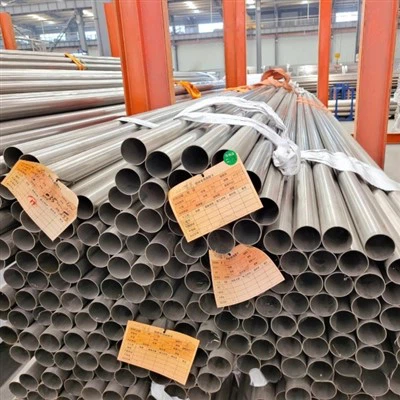
Overview of Three Key Standards
ASTM A106, ASTM A53, and API 5L are three of the most referenced steel pipe standards in the industry. While they share similarities, each standard was developed for a specific service condition and carries distinct requirements. ASTM A106 covers seamless carbon steel pipe for high-temperature service, A53 covers welded and seamless pipe for general service, and API 5L covers line pipe for oil and gas transportation. Understanding their differences is essential for correct specification and procurement.
All three standards have Grade B as the most common grade, and the chemical compositions are broadly similar. However, the subtle differences in chemistry limits, testing requirements, and quality assurance have significant implications for application suitability. This guide provides a detailed comparison to help engineers and procurement professionals make informed decisions.
| Parameter | ASTM A106 | ASTM A53 | API 5L |
|---|---|---|---|
| Full Name | Seamless Carbon Steel for High-Temperature Service | Pipe, Steel, Black and Hot-Dipped, Zinc-Coated, Welded and Seamless | Line Pipe for Oil and Gas Transportation |
| Manufacturing | Seamless only | Seamless or Welded (ERW, FW) | Seamless or Welded (ERW, LSAW, SSAW) |
| Grade System | Grade A, B, C | Grade A, B | Gr.B, X42-X80 + PSL1/PSL2 |
| Primary Service | High-temperature piping | General fluid transport | Oil/gas pipelines |
| Max Temperature | 538°C | 400°C (typical) | Dependent on application |
Manufacturing Process Comparison
A106 is exclusively seamless, produced via hot rolling or cold drawing of a pierced billet. This eliminates any weld seam, which is a potential weak point. The seamless process makes A106 the preferred choice for high-temperature and high-pressure applications where weld integrity cannot be guaranteed. However, seamless pipe is more expensive and limited in maximum diameter (typically 24" for standard production, with some mills capable of up to 48").
A53 allows both seamless (Type S) and welded manufacturing. Welded options include Type E (Electric Resistance Welded, ERW) and Type F (Furnace Butt Welded, continuous weld). Type F is limited to smaller sizes and is less common today. ERW pipe offers a cost-effective alternative to seamless for general service applications. The weld seam in modern ERW pipe is reliable and can achieve high joint efficiencies when properly heat-treated and inspected.
API 5L is the most flexible, allowing seamless, ERW, LSAW (Longitudinal Submerged Arc Welding), and SSAW (Spiral Submerged Arc Welding) manufacturing. This range of processes allows API 5L pipe to be produced from 1/2" to over 80" in diameter. LSAW and SSAW are the primary processes for large-diameter line pipe (24" and above), using formed steel plates welded with submerged arc welding. The choice of manufacturing process depends on the required diameter, wall thickness, grade, and project specifications.
Chemical & Mechanical Properties
While all three standards have a Grade B, the chemical compositions differ in subtle but important ways. The table below shows the key differences:
| Element (max %) | A106 Gr.B | A53 Gr.B | API 5L Gr.B |
|---|---|---|---|
| Carbon | 0.30 | 0.30 | 0.28 (PSL1) / 0.24 (PSL2) |
| Manganese | 0.29-1.06 | 1.20 | 1.20 (PSL1) / 1.40 (PSL2) |
| Phosphorus | 0.035 | 0.050 | 0.030 (PSL2) |
| Sulfur | 0.035 | 0.045 | 0.030 (PSL2) |
| Silicon | 0.10 min | No requirement | No requirement (PSL1) / 0.40 max (PSL2) |
Mechanically, all three standards require minimum yield strength of approximately 240 MPa (35,000 psi) for Grade B and minimum tensile strength of approximately 415 MPa (60,000 psi). API 5L PSL2 has additional requirements including maximum yield strength (to prevent over-matching in weld property design), minimum CVN impact energy values, and stricter tolerances. A106 has explicit allowable stress values in ASME Section II for high-temperature design, which A53 and API 5L lack (though API 5L can be used per ASME B31.3 using its specified minimum yield strength).
Application Scenarios - Which to Choose?
High-temperature service (>400°C): Choose ASTM A106. It is explicitly included in ASME Section II Part D with allowable stress values at temperatures up to 538°C. A106 also contains a minimum silicon requirement (0.10%) which improves high-temperature oxidation resistance. For alloy steel requirements at higher temperatures, see our Alloy Steel Pipe Guide.
General fluid transport: A53 provides a cost-effective solution for water, air, steam, and other general fluids at moderate temperatures. Its availability in both welded and seamless forms provides flexibility for different diameter and pressure requirements. A53 Type E (ERW) pipe is typically 5-10% less expensive than seamless A106.
Oil and gas pipelines: API 5L is the standard choice. It includes fracture toughness requirements (CVN impact testing) that are essential for pipeline integrity against brittle fracture propagation. API 5L is also referenced in US pipeline safety regulations (49 CFR Part 192 and 195). The PSL2 designation adds additional requirements for chemical composition control, NDT, and impact testing.
Interchangeability considerations: A106 Gr.B can typically substitute for A53 Gr.B because it meets or exceeds A53 requirements, but the reverse is not always acceptable because A53 may not meet the silicon requirement or have the same high-temperature allowable stress basis. API 5L Gr.B is chemically similar to A106 Gr.B but may require additional testing (silicon analysis per A106 chemistry). Always verify with the specifying engineer before substituting.
Size Range & Supply
A106 is available in seamless form from 1/4" NB to 48" OD, though standard mill production typically covers 1/2" to 24". Larger diameters (26"-48") are available from specialized mills but with longer lead times. A53 seamless is available from 1/8" to 26", with ERW covering 1/2" to 26". API 5L has the broadest size range due to the availability of LSAW and SSAW processes for large diameters. LSAW pipe is typically produced from 16" to 60" OD, while SSAW pipe extends from 16" to 80" and beyond. ManufacturerPipe supplies all three standards across their full size ranges.
Certification & Standards
Mill Test Certificates (MTC) for A106 and A53 follow ASTM A530/A999 requirements, including heat analysis, mechanical properties, and test results. API 5L MTCs include additional data per API Spec 5L, including CVN impact test results for PSL2 and sour service testing per NACE MR0175/ISO 15156 when specified. All three standards can be certified per EN 10204 3.1 or 3.2 with third-party inspection. For sour service applications (wet H2S), API 5L pipes can be ordered to NACE MR0175/ISO 15156 with additional hardness and SSC (sulfide stress cracking) testing requirements.
Cost Comparison
A106 typically commands a 5-15% premium over A53 due to the more stringent manufacturing requirements (seamless only, silicon content, high-temperature testing). API 5L PSL1 is generally comparable to A53 in cost, while PSL2 adds 10-20% due to additional testing and tighter chemistry control. The cost differential between seamless and welded pipe is more significant than the standard itself: seamless is typically 20-40% more expensive than ERW for the same size and grade.
Selection Decision Tree
Step 1: Determine operating temperature. If >400°C, select A106 or A335 (alloy steel). Step 2: Determine the fluid medium. For oil/gas pipeline transmission, select API 5L. For general industrial fluid transport, A53 is suitable. Step 3: Determine if seamless is required by code or application. For high-pressure or cyclic service, seamless may be preferred. Step 4: Consider if PSL2 requirements (CVN impact, stricter chemistry, NDT) are needed based on risk assessment and applicable regulations.
Why Choose Us
ManufacturerPipe offers one-stop supply for all three standard pipes. We maintain extensive inventory of A106 Gr.B, A53 Gr.B, and API 5L Gr.B through X70 in both seamless and welded forms. All pipe is supplied with complete MTC and can be third-party inspected by SGS, BV, or Intertek at your request. Our engineering team can help navigate the substitution questions and ensure your selected standard meets all applicable code requirements.
Need Help Choosing Between A106, A53, or API 5L?
Contact our engineering team for expert guidance on standard selection and competitive pricing.