What are Pipe Fittings? The Role of Fittings in Piping Systems
Pipe fittings are essential components used in piping systems to connect straight pipe sections, change flow direction, branch, reduce pipe size, or terminate a line. They are available in a vast range of materials, configurations, sizes, and pressure ratings to suit virtually any fluid handling requirement. Fittings play a critical role in maintaining piping system integrity - a properly selected and installed fitting ensures leak-free operation, accommodates thermal expansion, and withstands system pressure and temperature extremes.
The main industries relying on pipe fittings include oil and gas (upstream, midstream, and downstream), chemical and petrochemical processing, power generation (fossil, nuclear, and renewable), shipbuilding and marine engineering, water and wastewater treatment, HVAC, and general industrial construction. Each application imposes unique requirements on fitting materials, connection methods, and dimensional standards.
Pipe Fittings Classified by Connection Type
Butt Weld Fittings - ASME B16.9
Butt weld fittings are welded end-to-end with the pipe, creating a full-penetration weld that provides strength equal to or greater than the pipe itself. They are governed by ASME B16.9 for factory-made wrought butt-weld fittings. These fittings are available in sizes from NPS 1/2" up to NPS 48" and larger on special order. They are the preferred choice for high-pressure, high-temperature, and critical service applications.
Socket Weld Fittings - ASME B16.11
Socket weld fittings feature a recessed socket into which the pipe is inserted, then a fillet weld is applied around the outside. ASME B16.11 governs socket weld and threaded forged fittings, covering sizes from NPS 1/8" to NPS 4", with pressure ratings of Class 3000, 6000, and 9000. Socket weld fittings are popular in high-pressure small-bore piping where butt welding would be impractical.
Threaded Fittings - ASME B16.11
Threaded fittings use NPT or BSP threads to connect pipes without welding, making them ideal for low-pressure applications, fire protection systems, galvanized piping, and no-flame zones. However, they are not recommended for severe cyclic loading, vibration, or thermal cycling conditions.
| Connection Type | Standard | Size Range | Pressure Range | Advantages | Limitations |
|---|---|---|---|---|---|
| Butt Weld | ASME B16.9 | NPS 1/2"–48" | Full Schedule range | Highest strength, inspectable | Requires skilled welding |
| Socket Weld | ASME B16.11 | NPS 1/8"–4" | Class 3000–9000 | Easy alignment, good strength | Gap corrosion risk |
| Threaded | ASME B16.11 | NPS 1/8"–4" | Low to medium | No welding, removable | Not for vibration |
Pipe Fittings Classified by Function
The most commonly referenced standards for pipe fittings are ASME B16.9 (factory-made wrought butt-weld fittings), ASME B16.11 (socket weld and threaded forged fittings), and ASME B16.25 (butt-weld end bevel standard). Other important standards include EN 10253 (European butt-weld fittings), JIS B2311 (Japanese carbon steel butt-weld fittings), and GB/T 12459 (Chinese butt-weld fitting standard). Understanding the relationship between these standards is essential for international procurement.
Common Pipe Fitting Materials Overview
Material selection is one of the most critical decisions in pipe fitting procurement. Carbon steel fittings per ASTM A234 WPB are the most common and economical for general service. Low-temperature carbon steel per ASTM A420 WPL6 is used for cryogenic applications. Stainless steel fittings per ASTM A403 WP304/L, WP316/L, and WP321 provide corrosion resistance for chemical, food, and marine environments. Alloy steel fittings per ASTM A234 WP1, WP11, WP22, and WP91 serve high-temperature power generation and refinery service. Duplex stainless steel fittings per ASTM A815 UNS S31803 (2205) and S32750 (2507) offer superior strength and chloride resistance. Nickel-based alloy fittings such as Inconel (ASTM B366), Hastelloy (ASTM B366), and Monel are used in extreme corrosive and high-temperature environments.
| Material | Standard | Typical Grades | Temperature Range | Key Application |
|---|---|---|---|---|
| Carbon Steel | ASTM A234 | WPB, WPC, WPL6 | -29°C to 425°C | General industrial, oil & gas |
| Stainless Steel | ASTM A403 | WP304/L, WP316/L, WP321 | -196°C to 815°C | Chemical, food, marine |
| Alloy Steel | ASTM A234 | WP1, WP11, WP22, WP91 | -29°C to 650°C | Power generation, refinery |
| Duplex SS | ASTM A815 | S31803, S32205, S32750 | -50°C to 300°C | Offshore, desalination |
| Inconel | ASTM B366 | 625, 600, 825 | -196°C to 1000°C | Aerospace, chemical |
| Hastelloy | ASTM B366 | C276, B2, C22 | -196°C to 400°C | Severe corrosion |
Pipe Fitting Pressure Rating and Wall Thickness
Butt-weld fittings must match the pipe wall thickness (Schedule). ASME B16.9 specifies that the wall thickness at the ends must equal the nominal pipe wall thickness of the matching pipe schedule. For socket weld and threaded fittings, the pressure rating is classified as Class 3000 (Schedule 80 equivalent), Class 6000 (Schedule 160), and Class 9000 (XXS). Selecting the proper fitting grade requires careful evaluation of the system design pressure, temperature, and applicable code requirements.
Pipe Fitting Dimensions and Marking Interpretation
Fitting dimensions are specified by NPS (Nominal Pipe Size) with corresponding DN (Diameter Nominal) values. For elbows, the key dimension is Center-to-End (C-to-E). For long radius 90° elbows, the C-to-E dimension equals 1.5 x NPS (e.g., a 6" LR elbow has a C-to-E of 9"). Short radius elbows have a C-to-E equal to NPS. Tees are marked by run size and branch size (e.g., 6" x 6" x 4"). Wall thickness is indicated by Schedule number or class designation.
Pipe Fitting Procurement and Quality Inspection Points
When procuring pipe fittings, verify dimensional tolerances per the governing standard, conduct material identification through PMI testing, and review non-destructive examination reports (ultrasonic testing, magnetic particle testing, or liquid penetrant testing as required). Hydrostatic or pneumatic testing may be specified for critical service. A proper RFQ should include: fitting type, applicable standard, material grade and specification, size (NPS and Schedule), quantity, end preparation, and any supplementary testing requirements.
Pipe Fitting Surface Treatment and Packaging
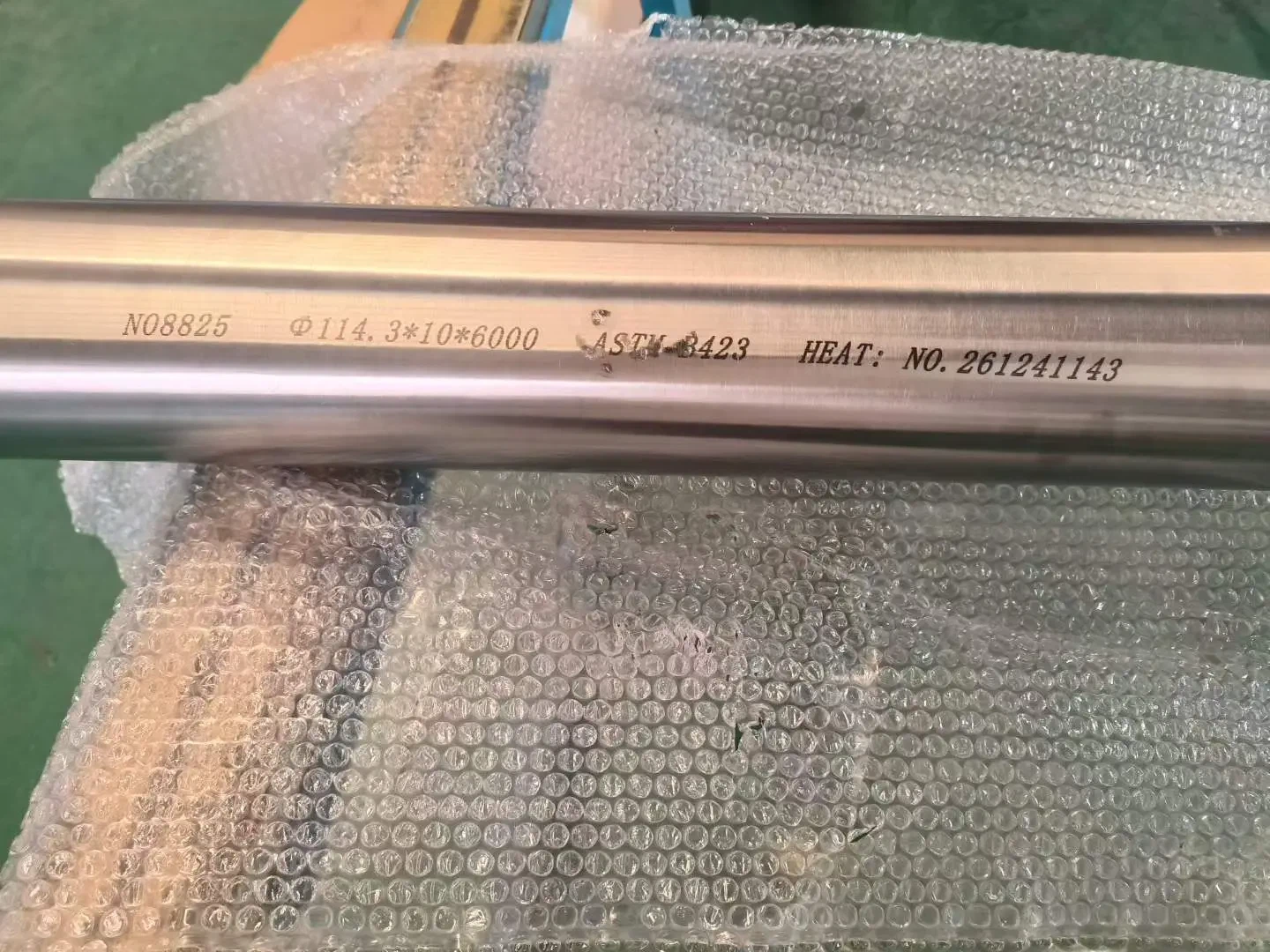
Carbon steel fittings receive rust-proof coating (oil-based, epoxy, or zinc-rich primer), hot-dip galvanizing, or phosphating depending on service conditions. Stainless steel fittings undergo pickling and passivation to restore the protective chromium oxide layer. For export, fittings are packed in wooden crates or pallets with rust-proof wrapping, and each fitting is marked per standard requirements with size, material, schedule, heat number, and manufacturer identification.
FAQ
Q: How to choose between butt weld and socket weld fittings?
A: Butt weld fittings are preferred for sizes NPS 2" and above, high-pressure/high-temperature service, and where full weld inspection is required. Socket weld fittings are chosen for small-bore (NPS 2" and below) high-pressure systems where ease of assembly matters.
Q: How to choose long radius vs short radius elbows?
A: Long radius (R=1.5D) elbows are the standard choice for most applications due to lower pressure drop and smoother flow. Short radius (R=1.0D) elbows are selected only when space constraints prevent the use of long radius elbows.
Q: Must fitting material match pipe material?
A: Yes, fitting material should be compatible with the pipe material to ensure weldability, corrosion resistance, and consistent mechanical properties. Dissimilar material joints require careful engineering evaluation.
Need Pipe Fittings for Your Project?
Contact ManufacturerPipe today for competitive pricing and expert technical support. We supply the full range of butt weld, socket weld, and threaded fittings in all material grades.
Get a Quote
Pipe Fittings Products