Definitions
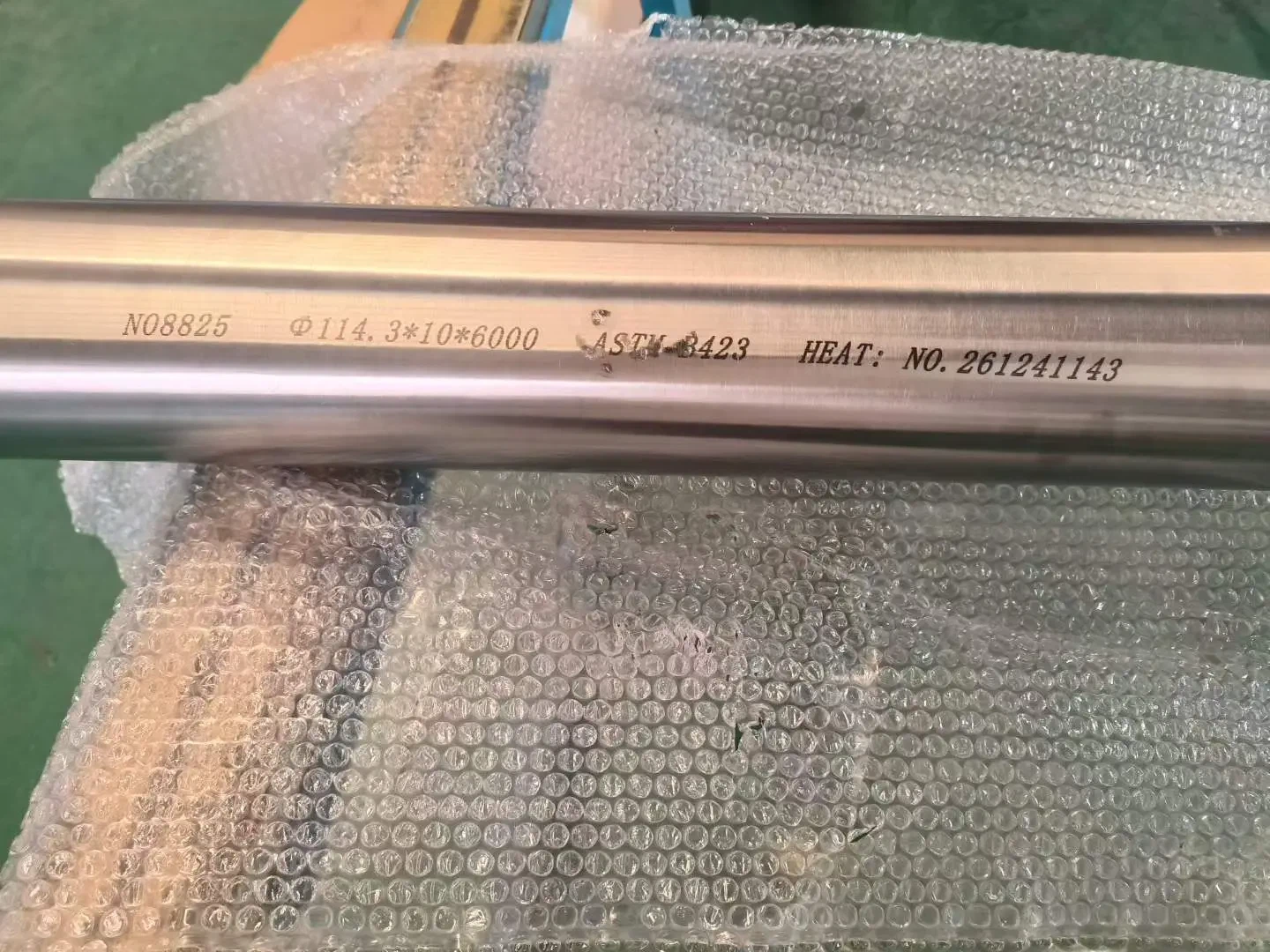
Precision pipe (also called cold drawn pipe, precision steel tube, or close-tolerance pipe) is manufactured to significantly tighter dimensional tolerances and better surface finish than standard pipe. Precision pipe achieves OD tolerances of ±0.05-0.10 mm and surface roughness Ra ≤ 0.8 μm, compared to standard pipe tolerances of ±0.5 mm and Ra 3.2-12.5 μm. These superior characteristics make precision pipe suitable for applications where the pipe serves a mechanical or structural function rather than just fluid containment, such as hydraulic cylinders, pneumatic actuators, and precision machinery components.
Standard pipe, by contrast, is manufactured to meet the requirements of standards such as ASTM A106, A53, and API 5L, where the primary function is fluid transport under pressure. The dimensional tolerances of standard pipe are adequate for pipe fitting connections and welding, but insufficient for applications requiring precise sliding fits or exact internal diameters. The choice between precision and standard pipe depends on the specific requirements of the application and whether the premium cost of precision pipe is justified by the elimination of additional machining operations.
Manufacturing Process Comparison
Precision pipe is manufactured through a multi-step cold drawing process. The starting material is a hot-rolled seamless tube (mother tube) that is pickled in acid to remove surface scale, then cold drawn through a die and over a mandrel to reduce the diameter and wall thickness to the final dimensions. The cold drawing process work-hardens the steel, increasing strength but reducing ductility. After drawing, the pipe is annealed (typically bright annealing in a controlled atmosphere furnace) to restore ductility and relieve internal stresses. The final steps include straightening (in a multi-roll straightener), cutting to length, and surface finishing.
Standard pipe (seamless) is manufactured by hot rolling a pierced billet, which produces a pipe with rougher surface finish and wider dimensional tolerances. The hot rolling temperatures (above 1000°C) cause surface oxidation (mill scale) that must be removed by pickling or shot blasting if required. Standard welded pipe is formed from steel plate or coil and welded longitudinally. Neither process achieves the dimensional precision of cold drawing because the hot working process does not provide the same control over final dimensions as the cold drawing reduction passes.
Dimensional Tolerance Comparison
| Parameter | Precision Pipe | Standard Pipe |
|---|---|---|
| OD Tolerance | ±0.05 mm | ±0.5 mm |
| Wall Thickness Tolerance | ±5% | ±12.5% |
| Straightness | 0.5 mm/m | 1.0 mm/m |
| Length Tolerance | ±1 mm | ±5 mm |
| Surface Roughness Ra | ≤ 0.8 μm | 3.2-12.5 μm |
The tighter tolerances of precision pipe are critical for applications where the pipe is used as a cylinder barrel (hydraulic cylinder) where the piston seal must slide smoothly inside the pipe. The ±0.05 mm OD tolerance ensures consistent fit in bearing housings and mounting brackets. The wall thickness tolerance of ±5% (vs ±12.5% for standard pipe) provides more predictable weight, strength, and heat transfer characteristics.
Mechanical Properties Comparison
Cold drawing increases the yield and tensile strength of precision pipe through work hardening. A typical cold-drawn precision pipe in carbon steel (St52/DIN 2391 equivalent) has a yield strength of 320-380 MPa compared to 240 MPa for A106 Gr.B standard pipe. However, the cold drawing reduces ductility: elongation for precision pipe is typically 10-15% compared to 20-25% for standard pipe. After bright annealing, the strength decreases and ductility increases, providing a balance similar to normalized standard pipe. The hardness of as-drawn precision pipe is higher (180-220 HB) than standard pipe (140-160 HB), which improves wear resistance for sliding contact applications but may reduce machinability.
Surface Finish Comparison
The surface finish of precision pipe is one of its most important distinguishing features. The cold drawing process, combined with the smooth die surface, produces an internal and external surface roughness Ra ≤ 0.8 μm, and with special processing (honing or skiving), Ra can reach 0.2 μm - a near-mirror finish. This smooth internal surface is critical for hydraulic cylinder applications where the piston seal must maintain a leak-free seal while sliding under high pressure. The smooth surface also reduces fluid friction and improves flow characteristics.
Standard pipe has a hot-rolled surface finish with roughness Ra 3.2-12.5 μm. The surface may have mill scale, pits, and other surface imperfections that are acceptable for pressure piping but would damage seals or cause excessive wear in precision applications. Some standard pipe can be supplied pickled (acid cleaned) to remove mill scale, providing a matte gray finish with Ra approximately 3.2 μm - better than hot-rolled but still not approaching the precision pipe surface quality.
Application Comparison
Precision pipe is essential for hydraulic and pneumatic cylinder barrels, where the internal surface serves as the cylinder wall. The combination of precise ID, smooth finish, and consistent wall thickness allows the piston seal to operate efficiently without leakage. Other applications include automotive shock absorber tubes, telescopic boom sections for mobile equipment, precision shafts and rollers, bearing races, and mechanical tubing for machine building. Industries that cannot substitute standard pipe for precision pipe include hydraulic cylinder manufacturers, automotive suspension manufacturers, and precision machine builders.
Standard pipe is used for fluid transport, structural support, piling, and general utility applications where pressure containment and structural strength are the primary requirements. In many cases, standard pipe can be bored and honed to create a precision internal surface, but this adds significant cost - typically more than the difference between standard and precision pipe.
Cost Analysis
Precision pipe typically commands a 30-100% premium over standard pipe of the same nominal size and material. The premium reflects the additional processing steps (pickling, multiple cold drawing passes, bright annealing, straightening) and the higher dimensional inspection requirements. However, when total cost of ownership is considered, precision pipe can be more economical in applications that would otherwise require machining of standard pipe. For example, boring and honing a standard pipe for a hydraulic cylinder costs significantly more than the premium for precision pipe supplied with the required internal diameter already within tolerance. For applications that can use standard pipe as-is, the cost premium for precision pipe is not justified.
Applicable Standards
Precision pipe is governed by standards specific to cold-drawn tubes: DIN 2391 (seamless precision steel tubes), EN 10305-1 (seamless cold-drawn precision tubes), and GB/T 3639 (Chinese precision steel tube standard). These standards define the dimensional tolerances, mechanical properties, and surface quality requirements. Standard pipe follows ASTM A106, A53, API 5L, and similar standards for carbon steel, and ASTM A312, A269 for stainless steel. An intermediate option is ASTM A519 (mechanical tubing), which offers closer tolerances than standard pipe but not as tight as precision pipe specifications. For a complete comparison of international standards, see our Pipe Standards Comparison.
How to Buy Precision Pipe
When ordering precision pipe, specify: OD and tolerance, ID and tolerance (or wall thickness and tolerance), surface roughness requirement (Ra value), straightness requirement, material grade and standard, delivery condition (cold drawn, annealed, or normalized), and length. ManufacturerPipe supplies precision pipe in carbon steel and low-alloy steel from 20 mm to 200 mm OD, with wall thicknesses from 2 mm to 20 mm. We can provide both as-drawn and bright-annealed conditions to meet your specific mechanical property requirements.
Need Precision Pipe for Your Application?
Contact our engineering team for precision pipe selection and competitive pricing on cold-drawn and bright-annealed tubes.
Get a Quote
Product Categories