Why Third-Party Inspection Is Critical for Steel Pipe Procurement
Independent Quality Verification by Third Parties
Third-party inspection is one of the most effective risk mitigation tools available to steel pipe buyers. By engaging an independent inspection agency such as SGS, Bureau Veritas, or Intertek, the buyer obtains objective verification that the manufactured pipe meets all specified requirements before shipment. This independent verification eliminates the conflict of interest inherent in relying solely on the supplier's own quality inspection results and provides documented evidence that can be used for L/C negotiation, insurance coverage, and end-user acceptance.
For international projects, third-party inspection is often mandatory - engineering contractors and project owners typically require inspection by an approved agency before accepting materials. Even when not mandatory, the cost of inspection (typically USD 500-1,500 per inspection day plus travel) is trivial compared to the cost of discovering non-conforming products after arrival, which can include customs delays, project downtime, rework costs, and contractual penalties.
Overview of Third-Party Inspection Agencies
SGS (Societe Generale de Surveillance)
SGS is the largest inspection, verification, testing, and certification company in the world, with extensive operations in China including laboratories and inspectors in all major industrial cities. SGS offers comprehensive steel pipe inspection services including dimensional checks, visual inspection, chemical analysis (PMI), mechanical testing (tensile, bend, impact), hydrostatic test witnessing, NDT witnessing (UT, RT, MT, PT), and packaging inspection. Their reports are widely accepted by banks for L/C negotiation and by engineering companies for project documentation.
BV (Bureau Veritas)
Bureau Veritas is another leading global inspection agency with strong presence in China's steel industry. BV is particularly well-known for its expertise in oil and gas industry inspections and has extensive experience with API 5L and API 5CT product verification. BV offers similar services to SGS and is widely recognized by major oil companies and engineering contractors.
Intertek
Intertek provides inspection and testing services for steel products through its global network. While slightly less dominant than SGS and BV in the steel pipe sector specifically, Intertek offers competitive pricing and good service coverage across China's manufacturing regions. Their Total Quality Assurance approach covers the entire supply chain.
Other Reputable Agencies
TUV Rheinland and TUV SUD are German-based agencies particularly valued for PED and AD 2000 compliance verification. Lloyd's Register and DNV provide specialized inspection services for offshore and marine-grade pipe. CCIC (China Certification and Inspection Group) is a Chinese state-owned agency that offers cost-effective inspection services and is sometimes preferred by Chinese suppliers and certain import markets.
Agency Strengths and Cost Comparison
| Agency | Strength | Typical Cost (per inspection day) |
|---|---|---|
| SGS | Largest network, bank recognition | USD 800-1,500 |
| BV | Oil & gas expertise | USD 750-1,400 |
| Intertek | Competitive pricing | USD 600-1,200 |
| TUV | European certification expertise | USD 1,000-1,800 |
| CCIC | Cost-effective in China | USD 400-800 |
Main Contents of Steel Pipe Inspection
Visual and Dimensional Inspection
Visual inspection examines the pipe surface for defects such as cracks, laps, scabs, pits, and dents. Dimensional inspection verifies outer diameter, wall thickness (at both ends and middle), length, straightness, and end squareness (for beveled ends). For threaded pipe, thread form, taper, length, and gauge are checked. Dimensional tolerances must conform to the applicable standard (ASTM, API, EN, etc.).
Chemical Composition Analysis (PMI)
Positive Material Identification (PMI) using X-ray fluorescence (XRF) or optical emission spectrometry (OES) verifies that the chemical composition of the steel matches the requirements of the specified grade. This is critical for confirming that the correct material has been used and is particularly important for alloy and stainless steel grades where chemical composition directly determines corrosion resistance and mechanical properties.
Mechanical Property Testing
Mechanical tests verify that the pipe meets specified strength and ductility requirements. Tensile testing measures yield strength, tensile strength, and elongation. Bend testing (for welded pipe) verifies weld ductility. Impact testing (Charpy V-notch) measures toughness at specified temperatures and is critical for low-temperature service applications such as Arctic pipelines.
Hydrostatic and Non-Destructive Testing
Hydrostatic testing is a mandatory requirement for most pressure-containing pipe. The pipe is filled with water and pressurized to a specified level (typically 60-80% of specified minimum yield strength) to verify leak-tightness and pressure integrity. Non-destructive testing includes ultrasonic testing (UT) for detecting laminations and wall thickness variations, radiographic testing (RT) for weld inspection, magnetic particle testing (MT) for surface and near-surface defects in ferromagnetic materials, and penetrant testing (PT) for surface-breaking defects in non-magnetic materials.
Third-Party Inspection Process
The typical inspection process begins with the buyer contracting an inspection agency and providing the purchase order, applicable standards and specifications, and any special inspection requirements. The agency assigns an inspector who coordinates with the factory to schedule the inspection at the appropriate stage of production - typically after manufacturing but before painting/coating and packaging. The inspector performs the agreed checks, documents results with photographs and measurement records, and issues a detailed inspection report within 3-5 working days. The buyer reviews the report and either authorizes shipment or requests corrective action.
Mill Test Certificate (MTC)
Types and Formats of MTC
The Mill Test Certificate (MTC), also known as the Certificate of Conformance or Certificate of Analysis, is the key quality document for steel pipe. Under EN 10204, MTCs are classified as Type 2.2 (test report specific to the product but not based on a specific order), Type 3.1 (inspection certificate issued by the manufacturer's authorized inspection representative), and Type 3.2 (inspection certificate issued by an independent third-party inspector after testing witnessed by both manufacturer and third party). Type 3.1 is the industry standard for most steel pipe transactions, while Type 3.2 is required for critical applications such as API 5L PSL2 or PED Category III/IV equipment.
Important Data Items on MTC
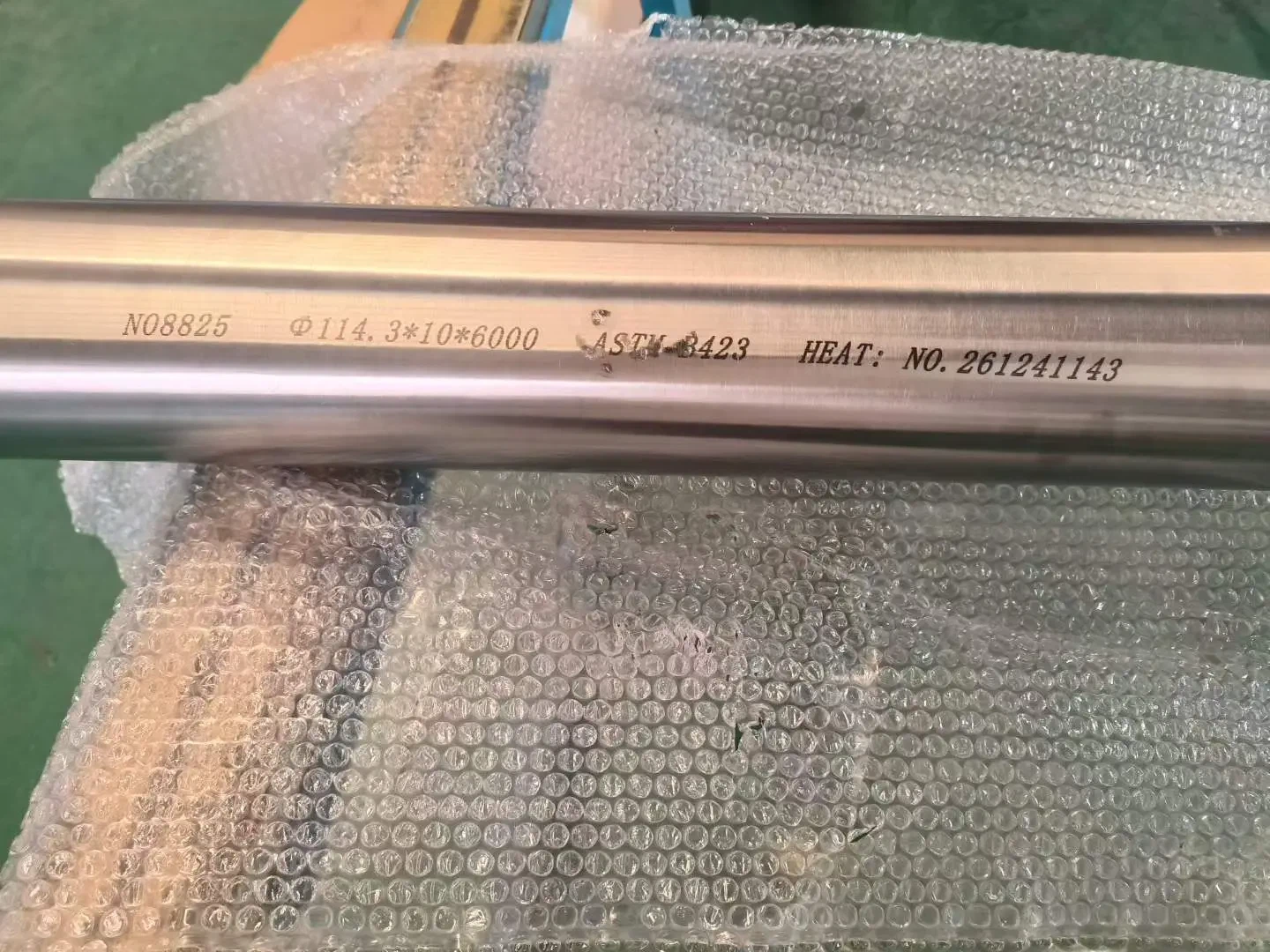
A complete MTC includes: manufacturer name and address, customer name and order reference, product description (standard, grade, dimensions), heat number (traceable to the steel melt), chemical analysis results (C, Mn, Si, P, S, Cr, Ni, Mo, etc. as applicable), mechanical test results (yield, tensile, elongation, hardness, impact values), heat treatment details, hydrostatic test pressure, NDT results, and quantity/weight. Each MTC is uniquely numbered and signed by the authorized quality inspector.
What If Inspection Results Are Not Satisfactory?
When inspection reveals non-conforming products, the standard procedure is: the inspector documents the non-conformances with photographs and measurements, the buyer reviews the report and determines whether the deviations are acceptable or require correction, the supplier proposes corrective action (rework, replacement, or price adjustment), and re-inspection is conducted after corrective action. If the parties cannot reach agreement, the contract's dispute resolution mechanism applies. ManufacturerPipe maintains a non-conforming product handling procedure aligned with ISO 9001 requirements, ensuring systematic resolution of any quality issues discovered during inspection.
Best Practices for Inspection Arrangement
Schedule inspection at the optimal time - after all manufacturing and testing is complete but before final packaging for containers, as packaging removal for inspection disrupts loading and may cause delays. Standard sampling follows ANSI/ASQ Z1.4 (AQL) with normal inspection level II, though critical parameters may require 100% inspection. Typically, the buyer bears the inspection cost, though the supplier may share or absorb costs for large orders or long-term relationships. ManufacturerPipe welcomes any recognized third-party inspection agency and provides full facility access, testing witness opportunities, and documentation support.
Need to Arrange Inspection for Your Steel Pipe Order?
Contact us to coordinate the inspection schedule. We work with all major inspection agencies and provide full facility access.
Our Products