

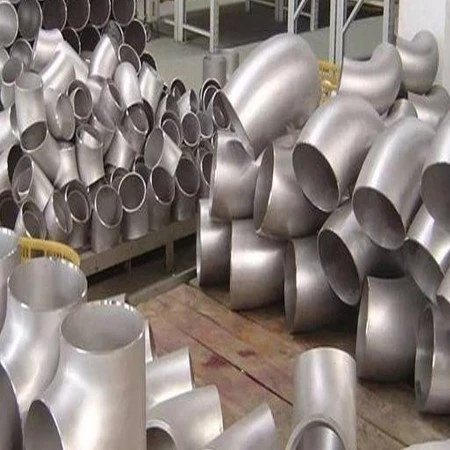
Henan TOM Intelligent Technology Co., Ltd., an expert in precision manufacturing and pipeline system solutions, was founded in 1999. We are a professional manufacturer focusing on precision machining customization, pipeline equipment/pipe fittings customization, and duplex stainless steel pipe fittings manufacturing and processing.
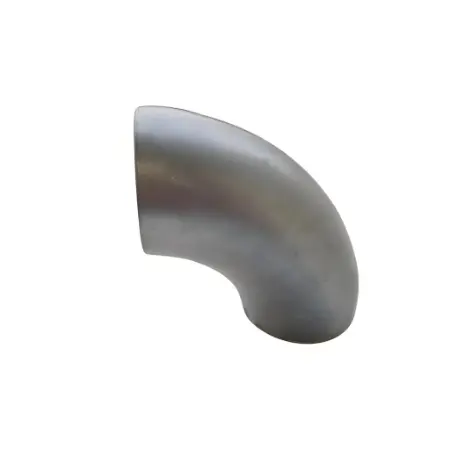
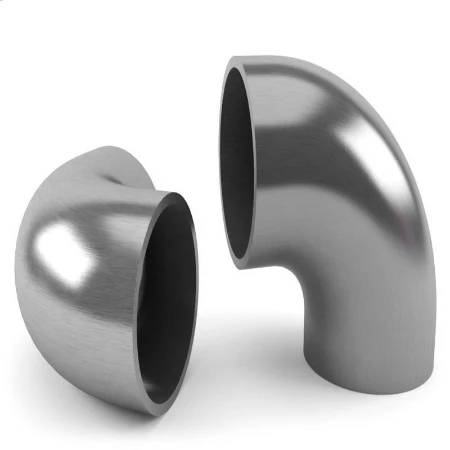
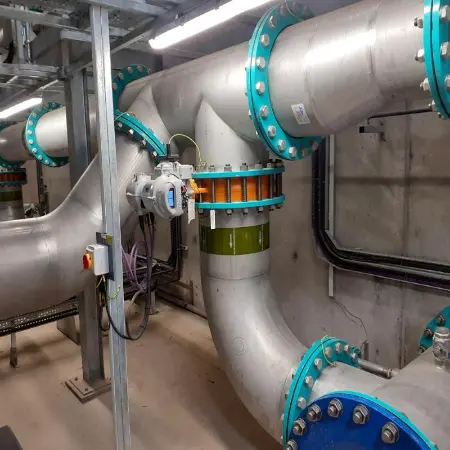
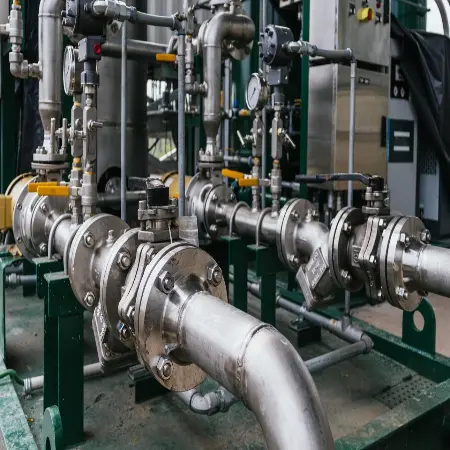
S32760 elbows are wrought butt-weld fittings in 25Cr super duplex stainless steel, used to change flow direction by 45°, 90° or 180° in piping systems where chlorides, seawater, sour gas and reducing acids rule out 316L or standard duplex. The grade delivers roughly twice the yield strength of austenitic stainless steels - allowing thinner walls and lighter spools - together with a pitting resistance equivalent number (PREN) of 40 minimum, controlled copper and tungsten additions, and qualified performance in sour service to NACE MR0175 / ISO 15156.
Chemical Composition
|
C |
Mn |
P |
S |
Si |
Cr |
Ni |
Mo |
Cu |
W |
N |
Fe |
|
0.030 max |
1.00 max |
0.030 max |
0.010 max |
1.00 max |
24.0–26.0 |
6.0–8.0 |
3.0–4.0 |
0.50–1.00 |
0.50–1.00 |
0.20–0.30 |
Balance |
Mechanical Properties
|
Property |
Requirement (min / max) |
Typical achieved |
|
0.2% yield strength, Rp0.2 |
≥ 550 MPa (80 ksi) |
600–720 MPa |
|
Tensile strength, Rm |
≥ 750 MPa (109 ksi) |
780–895 MPa |
|
Elongation, A (2 in / 50 mm) |
≥ 25% |
30–38% |
|
Hardness |
≤ 270 HBW (A815 wrought) |
200–250 HBW / 22–27 HRC |
|
Hardness, forged fittings |
≤ 290 HB (A182 F55) |
- |
What Makes S32760 the Right Choice
Strength with a weight and cost benefit. Minimum yield of 550 MPa is roughly double that of 316L (≥ 220 MPa). Wall thickness and flange rating requirements often drop by one class, cutting spool weight, support steel and welding hours.
Chloride stress corrosion cracking resistance. 316L is effectively unsuitable for warm chloride service above about 60 °C; S32760 operates without SCC in the same duty. This is the single most common reason for upgrading.
Pitting and crevice corrosion. PREN ≥ 40, verified per heat, plus tungsten for crevice duty in hot seawater and produced water. Qualified to ASTM G48 Method E and F on request.
Reducing-acid performance. The copper addition is the practical difference from 2507 in sulphuric, phosphoric and mixed-acid process streams.
Sour service. Approved to NACE MR0175 / ISO 15156-3 for H₂S-containing oil and gas duty, subject to the 28 HRC hardness cap.
Toughness at low temperature. No sharp ductile-to-brittle transition; welded joints sit only marginally below parent metal in Charpy energy, and −46 °C testing is routinely met.
Thermal fatigue. Higher conductivity and lower expansion than austenitic grades make it more resistant to thermal cycling in heat exchangers and process lines.
Applications
|
Sector |
Typical elbow duty |
|
Offshore oil & gas |
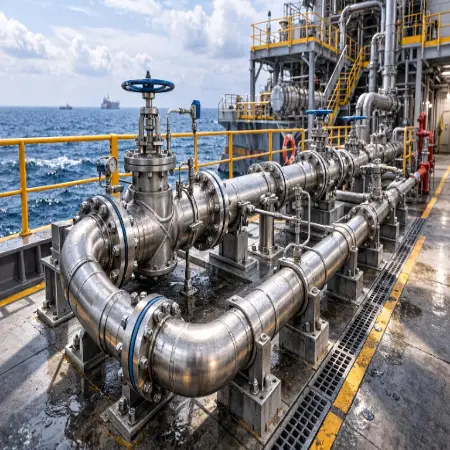
Topside process piping, manifolds, produced-water and seawater injection lines, subsea spools and jumpers |
|
Sour service |
Wellhead and downhole flow lines carrying H₂S and chlorides; NACE MR0175 compliant headers |
|
Desalination |
High-pressure RO membrane trains, brine rejection lines, MSF / MED heat exchanger piping |
|
Chemical & petrochemical |
Sulphuric and phosphoric acid circuits, chloride-bearing reaction and distillation lines, FGD absorber piping |
|
Pulp & paper |
Chlorine dioxide and bleach plant lines, digester piping |
|
Power generation |
Condenser and cooling-water systems, seawater intake, flue-gas desulphurisation |
|
Marine & shipbuilding |
Ballast and fire-fighting systems, deck and cargo piping, scrubber circuits |
|
Mining & hydrometallurgy |
Acid leach, autoclave feed, slurry and raffinate lines |
Fabrication and Welding Notes
Welding. Use a matching super duplex consumable - ER2594 / E2594 for GTAW and SMAW. A nickel-base filler such as ER NiCrMo-3 (Alloy 625) may be specified where maximum as-welded corrosion resistance in the root is required, although it does not match parent-metal strength. Control heat input at the low end (typically 0.5–1.5 kJ/mm for GTAW), cap interpass temperature at 150 °C, and use argon shielding with a nitrogen addition (commonly 2–3%) on the root purge to restore austenite. Preheat is not required.
Post-weld heat treatment. Full solution annealing (1100–1140 °C plus water quench) after welding is not normally required and is often impractical on site; the low carbon and high nitrogen content keep the weld zone balanced. Where a project specification demands it, or where service is critical, it must be performed in full - a partial or stress-relief anneal in the 600–1000 °C window is worse than none at all, because it precipitates sigma phase.
Forming and machining. The grade work-hardens rapidly; cold forming requires equipment with enough power to initiate deformation, and heavier sections should be hot formed between 1100 and 1150 °C. Machining needs sharp, high-speed-steel or carbide tooling, generous feed rates and rigid set-up - the same approach as for 2507 or 904L.
Hot Tags: s32760 super duplex stainless steel elbow, China s32760 super duplex stainless steel elbow manufacturers, suppliers, factory


