


In the realm of fasteners, mild steel hex bolts are a staple, known for their versatility and wide - ranging applications. But when it comes to vibration - prone environments, how do these bolts perform? As a supplier of Mild Steel Hex Bolt, I've witnessed firsthand the challenges and opportunities that these environments present.
Understanding Mild Steel Hex Bolts
Mild steel hex bolts are made from low - carbon steel, which gives them a good balance of strength and ductility. They are commonly used in various industries, including construction, machinery, and automotive. The hexagonal head design allows for easy installation and removal using standard wrenches, making them a practical choice for many applications.
The mechanical properties of mild steel hex bolts are crucial in determining their performance. They typically have a lower tensile strength compared to high - strength bolts like 12.9 Hex Bolt, but they offer sufficient strength for a wide range of general - purpose applications. The carbon content in mild steel is usually around 0.05% - 0.25%, which contributes to its malleability and weldability.
Vibration - Prone Environments: A Challenge for Fasteners
Vibration - prone environments are characterized by continuous or intermittent shaking, which can cause fasteners to loosen over time. This is a significant concern as loose bolts can lead to structural instability, equipment malfunction, and even safety hazards. In industries such as manufacturing, where machinery is constantly in motion, or in transportation, where vehicles are subject to road vibrations, the performance of fasteners is of utmost importance.
When a mild steel hex bolt is subjected to vibration, several factors come into play. The first is the initial tightening torque. If the bolt is not tightened to the appropriate torque, it is more likely to loosen under vibration. Additionally, the type of vibration, whether it is high - frequency or low - frequency, can also affect the bolt's performance. High - frequency vibrations can cause the bolt to experience rapid stress changes, while low - frequency vibrations may lead to gradual loosening over time.
Performance of Mild Steel Hex Bolts in Vibration - Prone Environments
One of the key factors in the performance of mild steel hex bolts in vibration - prone environments is their ability to maintain pre - load. Pre - load is the force applied to the bolt during installation, which keeps the joint together. When a bolt is properly tightened, it creates a clamping force that resists the separating forces caused by vibration.
However, mild steel hex bolts may face challenges in maintaining pre - load in vibration - prone environments. The relatively lower tensile strength of mild steel compared to high - strength bolts means that it may be more susceptible to fatigue and loosening. The ductility of mild steel can also work against it, as it may deform under the repeated stress of vibration, leading to a loss of pre - load.
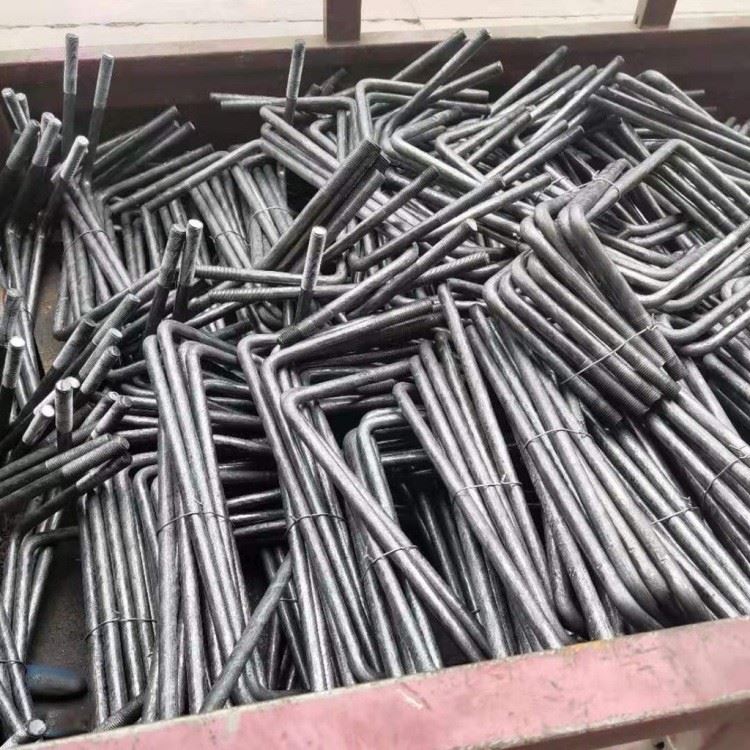
Another aspect to consider is the surface finish of the bolt. A smooth surface finish can reduce friction between the bolt and the mating parts, which may increase the likelihood of loosening. On the other hand, a rougher surface finish can provide more friction, helping to keep the bolt in place. Some mild steel hex bolts are coated, such as Galvanized Anchor Bolts, which not only provides corrosion resistance but can also affect the frictional properties of the bolt.
Mitigating Vibration - Induced Loosening
To improve the performance of mild steel hex bolts in vibration - prone environments, several strategies can be employed. One of the most common methods is the use of locking devices. Lock washers, such as spring washers or toothed lock washers, can be used to increase the friction between the bolt and the nut, preventing loosening. Nylon - insert lock nuts are also a popular choice, as the nylon insert creates a tight fit that resists vibration.

Proper installation is also crucial. Using a torque wrench to ensure that the bolt is tightened to the correct torque specification is essential. Over - tightening can lead to bolt failure, while under - tightening can result in loosening. Regular inspection and re - tightening of the bolts can also help to maintain the integrity of the joint.
In some cases, it may be necessary to use higher - strength bolts or alternative fastener designs. For applications where vibration is particularly severe, high - strength bolts like 12.9 Hex Bolt may be a better choice. These bolts have a higher tensile strength and are more resistant to fatigue and loosening.
Real - World Applications
In the construction industry, mild steel hex bolts are commonly used in the assembly of steel structures. In buildings and bridges, where they are exposed to wind and seismic vibrations, the performance of these bolts is critical. By using proper installation techniques and locking devices, the risk of bolt loosening can be minimized, ensuring the long - term stability of the structure.
In the automotive industry, mild steel hex bolts are used in various components, such as engine mounts and suspension systems. These components are subject to constant vibration from the engine and the road. To ensure the safety and reliability of the vehicle, it is essential to use high - quality bolts and proper installation methods.
Conclusion
Mild steel hex bolts can perform well in vibration - prone environments, but they require careful consideration and proper installation. While they may have limitations in terms of strength and resistance to vibration compared to high - strength bolts, with the right strategies, their performance can be optimized. As a supplier of Mild Steel Hex Bolt, I am committed to providing high - quality products and technical support to our customers. If you are looking for reliable fasteners for your vibration - prone applications, we are here to help. Contact us to discuss your specific requirements and explore the best solutions for your projects.
References
- ASME B18.2.1 - 2017, “Hex Bolts and Hex Screws (Inch Series)”
- ISO 4014 - 2011, “Hexagon head bolts - Product grades A and B”
- Machinery's Handbook, 31st Edition, Industrial Press Inc.


