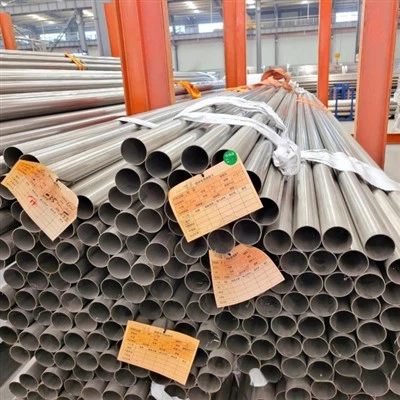
Selecting the right carbon steel pipe is not simply a matter of choosing a material grade. For industrial pipeline projects, pipe size, wall thickness, temperature, pressure, connection method, corrosion conditions, testing requirements, and applicable standards all need to be considered together. ASTM A106 Gr.B seamless carbon steel pipe is one of the commonly specified materials for high-temperature service and pressure piping, making it a practical option for many customized pipeline systems. ASTM currently lists A106/A106M-26 as the active specification, covering seamless carbon steel pipe for high-temperature service.
1. What Is A106 Gr.B Pipe?
ASTM A106 Gr.B is a seamless carbon steel pipe grade intended primarily for high-temperature service. The ASTM specification covers seamless pipe from NPS 1/8 to NPS 48 (DN 6 to DN 1200), with nominal wall thicknesses generally referenced to ASME B36.10M. The standard also states that the pipe is suitable for bending, flanging, forming and welding when an appropriate welding procedure is used.
2. Why Is A106 Gr.B Commonly Used?
One of the main advantages of A106 Gr.B is that it provides a practical balance between strength, temperature capability, weldability, availability and cost.
Compared with more specialized alloy steels, carbon steel can provide a more economical solution where the operating conditions do not require additional alloying elements. For many conventional process-piping systems, A106 Gr.B can therefore offer a good combination of engineering performance and procurement efficiency.
The seamless construction is another important characteristic. Because there is no longitudinal weld seam in the pipe body, seamless pipe is commonly selected for applications where the project specification requires seamless construction or where pressure and temperature conditions make this manufacturing route appropriate.
3. Key Material Properties of A106 Gr.B
Typical minimum mechanical requirements for A106 Gr.B include:
| Property | ASTM A106 Gr.B |
|---|---|
| Tensile Strength | 415 MPa min. |
| Yield Strength | 240 MPa min. |
| Carbon | 0.30% max. |
| Manganese | 0.29–1.06% |
| Phosphorus | 0.035% max. |
| Sulfur | 0.035% max. |
| Silicon | 0.10% min. |
The exact chemical and mechanical requirements should be verified against the applicable edition of ASTM A106/A106M and the material test report supplied with the pipe.
The material's relatively moderate carbon level also makes it suitable for fabrication and welding when an appropriate procedure is selected. Nevertheless, welding requirements should be evaluated according to pipe thickness, project specifications and the applicable welding code.
4. How to Select the Correct Pipe Size
Pipe selection normally begins with the required nominal pipe size (NPS), outside diameter, wall thickness and schedule.
ASTM A106 covers NPS 1/8 through NPS 48, while ASME B36.10M provides standardized dimensions for welded and seamless wrought steel pipe.
For example, a project may specify:
NPS 2 × SCH 40 ASTM A106 Gr.B
or:
NPS 6 × SCH 80 ASTM A106 Gr.B
The correct wall thickness should not be selected simply by copying a commonly used schedule. It should be determined according to:
Design pressure
Design temperature
Pipe diameter
Allowable stress
Corrosion allowance
External loads
Connection requirements
Applicable design code
For customized pipeline projects, providing the supplier with the complete operating conditions allows the pipe specification to be evaluated more accurately.
5. Temperature Considerations
A106 Gr.B is specifically intended for high-temperature service, which is one of the reasons it is commonly selected for steam, refinery and process-piping applications.
However, "high temperature" does not mean that A106 Gr.B can be used at any temperature. As temperature increases, the allowable stress of carbon steel decreases, and long-term exposure can introduce additional material considerations.
ASTM itself notes that possible graphitization should be considered in high-temperature service.
Therefore, when requesting a quotation for A106 Gr.B, customers should provide:
Normal operating temperature + design temperature + design pressure
rather than simply stating "high-temperature service."
This information helps determine whether A106 Gr.B is appropriate or whether an alloy steel such as an ASTM A335 grade should be considered.
6. Pressure and Wall Thickness Selection
Pressure resistance is closely related to pipe wall thickness, diameter, material allowable stress and operating temperature.
For example, increasing from SCH 40 to SCH 80 generally provides a thicker wall, but this does not automatically mean that SCH 80 is the correct choice. The final wall thickness must be established through the applicable design calculation.
A customized pipeline solution should therefore consider:
Pressure → Temperature → Diameter → Wall Thickness → Material → Design Code
rather than selecting the pipe schedule independently.
For critical applications, customers may also specify additional nondestructive testing or supplementary requirements. ASTM A106 includes optional supplementary requirements for applications requiring additional testing or enhanced verification.
7. A106 Gr.B vs. A53 Gr.B
A106 Gr.B and A53 Gr.B are frequently compared because both are carbon steel pipe grades. However, they should not simply be treated as interchangeable.
A106 Gr.B is specifically specified for seamless carbon steel pipe for high-temperature service, while ASTM A53 covers welded and seamless steel pipe for mechanical and pressure applications.
For systems involving elevated temperatures and process piping, A106 Gr.B may be the more appropriate specification when required by the design code and project specification.
8. Manufacturing Process
A typical A106 Gr.B seamless pipe manufacturing route can include:
Steel Billet → Heating → Piercing → Hot Rolling → Sizing → Heat Treatment → Straightening → Surface Inspection → Dimensional Inspection → Testing → Marking → Packing
The manufacturing process is important because dimensional accuracy, surface quality and mechanical properties need to remain within the requirements of the applicable specification.
For customized orders, customers may also request specific:
Heat-treatment conditions
Surface requirements
End finishes
Length tolerances
NDT requirements
Hydrostatic testing
Third-party inspection
Marking requirements
9. Quality Control and Testing
For industrial pipeline applications, product quality should be verified through appropriate inspection and testing rather than relying only on visual inspection.
Depending on the project specification, A106 Gr.B pipe may be supplied with documentation and testing covering areas such as:
Chemical Analysis
Confirms that the material meets the specified chemical composition.
Tensile Testing
Verifies tensile strength and yield strength requirements.
Hydrostatic Testing
Used to evaluate pressure integrity according to the applicable specification.
Dimensional Inspection
Checks outside diameter, wall thickness, length and other dimensional requirements.
Surface Inspection
Identifies visible defects or unacceptable surface conditions.
Nondestructive Testing
Additional NDT can be specified where required by the project or purchase specification.
ASTM A106 also provides optional supplementary requirements for situations where additional verification is needed.
10. What Information Should You Provide When Ordering?
For a customized quotation, the more complete the technical information, the more accurately a supplier can prepare the offer.
A recommended inquiry format is:
| Requirement | Example |
|---|---|
| Product | A106 Gr.B Seamless Carbon Steel Pipe |
| Standard | ASTM A106/A106M |
| Grade | Gr.B |
| Size | NPS 4 |
| Wall Thickness | SCH 40 |
| Length | 6 m / 12 m / Customized |
| End | Plain End / Beveled End |
| Quantity | 100 MT |
| Service | High-temperature process piping |
| Testing | Standard / NDT / Third Party |
| Documentation | MTC, inspection report, etc. |
| Packing | Export seaworthy packing |
This information allows the supplier to match the product with the actual project requirements rather than providing a generic pipe quotation.
11. One-Stop Customized Pipeline Solutions
For industrial customers, purchasing pipe alone is often not enough. A complete pipeline project may also require:
Carbon steel pipe
Stainless steel pipe
Pipe fittings
Flanges
Valves
Bolts and nuts
Gaskets
Pipe supports
Customized marking
Inspection services
Export packaging
A supplier capable of coordinating multiple products can simplify procurement and reduce communication between different vendors.
For example, an A106 Gr.B pipeline package can be developed around:
A106 Gr.B Pipe + A234 WPB Fittings + A105 Flanges + ASTM A193 Bolts + Matching Gaskets
The exact combination should be determined by the applicable piping specification and design requirements.
12. Why Choose A106 Gr.B for Customized Pipeline Projects?
A106 Gr.B can be a strong candidate when a project requires:
Seamless construction + carbon steel material + elevated-temperature service + reliable mechanical properties + flexible dimensions.
Its broad size range, standardized dimensions and suitability for forming and welding make it practical for a wide variety of industrial piping systems.
For buyers, however, the most important point is that material grade should follow the application rather than the other way around. A good supplier should evaluate the customer's pressure, temperature, medium, dimensions, standards and inspection requirements before recommending the final pipe specification.
Conclusion
Choosing A106 Gr.B seamless carbon steel pipe is not simply about selecting a popular carbon steel grade. A reliable pipeline solution requires a complete evaluation of material, size, wall thickness, pressure, temperature, manufacturing process, testing and project standards.
For customers looking for a one-stop customized pipeline solution, A106 Gr.B can serve as an effective foundation for high-temperature carbon steel piping projects, while complementary fittings, flanges, fasteners and inspection services can be integrated into the same procurement package. The final material selection should always be confirmed against the applicable design code, project specification and actual service conditions.
Contact Info
📞 +86 19069638227
✉️ info@manufacturerpipe.com
Quick Links
Home Blog Fasteners Contact Us
Fastener Products
Stainless Steel Fasteners Carbon Steel Fasteners Duplex Fasteners Alloy Steel Bolts
Contact
Tel: +86 19069638227
Email: info@manufacturerpipe.com
Worldwide Shipping Available
© 2026 ManufacturerPipe.com - All Rights Reserved