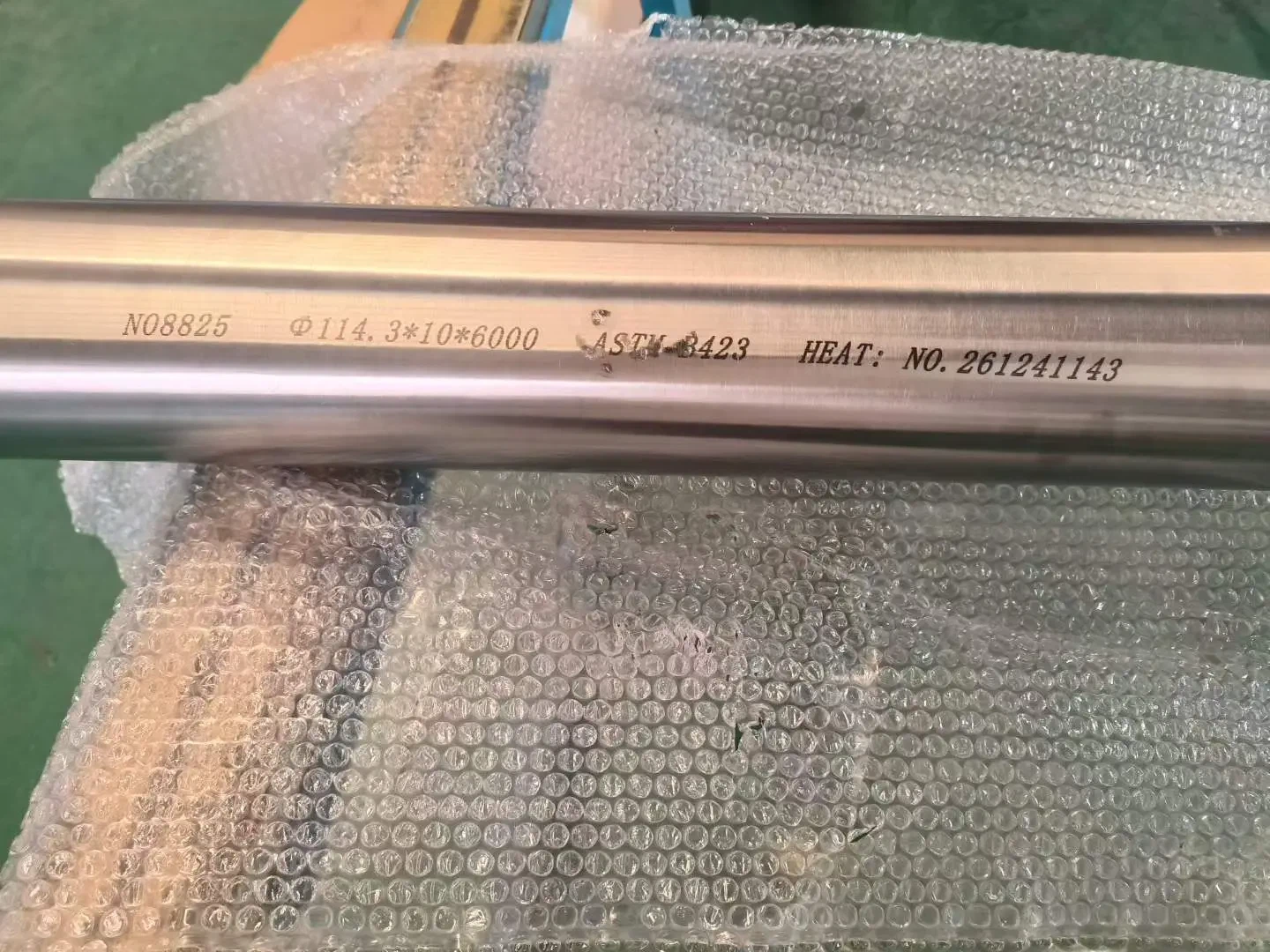
What Is Carbon Steel Pipe? Carbon Steel Pipe Grade System Overview
Carbon steel pipe is steel pipe where the primary alloying element is carbon, with limited amounts of other elements. It is classified by carbon content: low carbon (up to 0.30% C) offers excellent weldability and formability; medium carbon (0.30-0.60% C) provides higher strength; and high carbon (0.60-1.00% C) offers maximum hardness but reduced weldability. Carbon steel pipe accounts for approximately 80% of all steel pipe produced globally, serving applications from simple water transport to high-pressure steam systems and cross-country oil and gas pipelines.
The grade system within carbon steel pipe standards reflects varying strength levels, chemical compositions, and service conditions. The primary standard systems are ASTM (American), API (oil and gas), EN (European), JIS (Japanese), and GB (Chinese). Understanding how grades map across these systems is essential for international procurement. Our ASTM vs EN vs JIS vs GB Standards Comparison provides complete cross-reference tables.
ASTM A106 Grade B - The King of General-Purpose Carbon Steel Pipe
A106 Gr.B is the most widely specified carbon steel pipe grade for industrial piping. Its chemical composition is carefully balanced: carbon 0.30% max, manganese 0.29-1.06%, phosphorus 0.035% max, sulfur 0.035% max, and silicon 0.10% minimum. The silicon minimum is unique to A106 and improves high-temperature oxidation resistance. Mechanically, A106 Gr.B requires minimum yield strength of 240 MPa and tensile strength of 415 MPa. The material is typically supplied in the normalized condition for sizes requiring heat treatment.
A106 is available in three grades: A, B, and C, with increasing strength. Grade A (yield 195 MPa) is rarely specified, Grade B is the workhorse, and Grade C (yield 275 MPa) is used where higher strength is needed without moving to alloy steel. Applications for A106 Gr.B include refinery piping, power plant steam lines, chemical plant process piping, and general high-temperature industrial service up to 538°C per ASME code.
API 5L Line Pipe Grades
API 5L is the standard for line pipe used in oil and gas transportation pipelines. The grade designation starts with Gr.B (equivalent to A106 Gr.B in strength) and progresses through X42, X46, X52, X56, X60, X65, X70, and X80. The "X" number indicates the minimum yield strength in ksi: X52 = 52 ksi (358 MPa) minimum yield, X65 = 65 ksi (448 MPa), X70 = 70 ksi (483 MPa), and X80 = 80 ksi (552 MPa). Higher grades allow thinner walls for a given pressure, reducing material weight and welding costs.
| Grade | Min Yield (MPa) | Min Tensile (MPa) | Typical Application |
|---|---|---|---|
| Gr.B | 241 | 414 | Low-pressure gathering lines |
| X52 | 359 | 455 | Medium-pressure transmission lines |
| X60 | 414 | 517 | High-pressure transmission lines |
| X65 | 448 | 530 | Offshore pipelines, high-pressure service |
| X70 | 483 | 565 | Long-distance high-pressure pipelines |
| X80 | 552 | 620 | Ultra-high-pressure large-diameter lines |
API 5L has two product specification levels: PSL1 (standard quality) and PSL2 (additional requirements). PSL2 adds mandatory CVN impact testing, stricter chemical composition limits (including carbon equivalent formula requirements), maximum yield strength limits, and NDT requirements. For sour service (wet H2S), API 5L pipes to PSL2 with NACE MR0175/ISO 15156 compliance are required.
Grade Performance Comparison Table
The selection of carbon steel grade directly affects both the pressure capacity and cost of the piping system. Higher-grade pipes can operate at higher pressures with thinner walls, reducing material weight and welding time. However, higher grades typically cost more per kilogram and may require more stringent welding procedures and preheat/post-weld heat treatment. The optimum grade selection considers the trade-off between material cost, fabrication cost, and operating pressure requirements.
ASTM A333 - Low-Temperature Carbon Steel Pipe
ASTM A333 covers seamless and welded carbon steel pipe for low-temperature service. The most common grade is A333 Gr.6, which maintains Charpy V-notch (CVN) impact toughness of at least 18 J (27 J typical) at -45°C. This is achieved through a fine-grain normalized microstructure and strict chemistry control, particularly low phosphorus and sulfur. Other grades include Gr.3 (lower manganese, for -100°C service) and Gr.8 (high-nickel steel for -195°C LNG service).
Applications for A333 Gr.6 include LNG (liquefied natural gas) facilities, cold climate pipelines in Arctic regions, cryogenic storage tanks, and any system operating below -20°C where carbon steel must maintain ductility. The key difference from A106 is the guaranteed impact toughness: A106 has no CVN requirements by default, while A333 Gr.6 must meet specified CVN values at the designated test temperature.
ASTM A53 - General-Purpose Carbon Steel Pipe
ASTM A53 covers both welded and seamless carbon steel pipe for general mechanical and pressure applications. It comes in three types: Type F (furnace butt welded, continuous weld), Type E (electric resistance welded, ERW), and Type S (seamless). Grade A has 205 MPa min yield, and Grade B has 240 MPa min yield. A53 is suitable for steam, water, gas, and air lines at moderate temperatures but is not explicitly listed for high-temperature service in ASME Section II. See our A106 vs A53 vs API 5L Comparison for detailed differences.
API 5CT - Oil Well Pipe Grades
API 5CT governs casing and tubing used in oil and gas wells. Grades range from H40 (lowest strength) through J55, K55, N80, L80, C95, T95, and P110 (highest strength). The grade designation indicates minimum yield strength in ksi: H40 = 40 ksi (275 MPa), N80 = 80 ksi (551 MPa), P110 = 110 ksi (758 MPa). L80 and C95 are restricted-yield grades designed for sour service (H2S resistance), with hardness limits of 23 HRC max and specified heat treatment (quench and temper).
Carbon Steel Pipe Grades in EN & JIS
European standard EN 10216 (seamless) and EN 10217 (welded) use designations like P235GH, P265GH, and P355GH. The "GH" suffix indicates elevated-temperature properties. The number indicates minimum yield strength at ambient temperature in MPa: P265GH = 265 MPa min yield. Japanese standard JIS G3454 (pressure service) uses STPG370 and STPG410 (tensile strength 370 and 410 MPa). JIS G3456 (high-temperature) uses STS370, STS410, and STS480. Chinese standard GB/T 8163 (fluid transport) uses 10, 20, and Q345 steel grades, while GB/T 5310 (high-pressure boiler) uses 20G, 15CrMoG, and 12Cr1MoVG.
How to Choose the Right Grade
Grade selection depends on multiple factors. Operating temperature determines whether standard carbon steel (A106, A53), low-temperature steel (A333), or alloy steel (A335) is needed. Operating pressure determines the required strength level: lower strengths (Gr.B, X52) for moderate pressures, higher strengths (X65, X70) for high pressures. Medium corrosivity determines whether standard grades or sour-service grades (with H2S resistance) are required. Weldability considerations favor lower carbon equivalent (CE) grades, especially for field welding under challenging conditions.
Our Supply Capability
ManufacturerPipe supplies the full range of carbon steel pipe grades from A106 Gr.B through API 5L X80 and A333 Gr.6. Our seamless pipe covers 1/2" to 36", and welded pipe (ERW, LSAW, SSAW) covers 1/2" to 80". All pipe is supplied with MTC traceable to heat numbers, and we offer third-party inspection services for quality assurance. Our engineering team can provide grade selection guidance based on your specific operating conditions.
Need Carbon Steel Pipe for Your Project?
Contact our engineering team for expert grade selection and competitive pricing on all carbon steel pipe grades.
Get a Quote