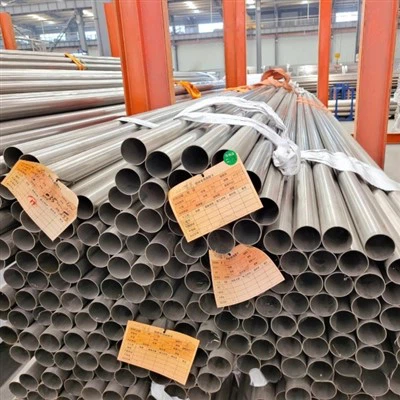
Corrosion is the single largest lifetime cost in most piping systems. When a line carries seawater, acidic process streams, or high-temperature flue gas, the wrong material choice means leaks, unplanned shutdowns, and expensive retrofits. That is why specifying a corrosion resistant pipe supplier-rather than a generic pipe trader-matters: the supplier's material knowledge, mill traceability, and quality system decide whether your pipe survives its design life.
This article explains what "corrosion resistant" actually means, which alloys and standards dominate the category, and how to evaluate a supplier before placing an order.
What makes a pipe "corrosion resistant"?
Ordinary carbon steel relies on a paint or coating to keep moisture and oxygen away from the metal. Corrosion resistant alloys (CRAs) take a different approach: they form a thin, self-healing passive film of chromium oxide on the surface. As long as that film is intact, the underlying metal does not react with the environment.
The film forms because the alloy contains enough chromium (≥10.5%). Stainless steels sit at 11–30% Cr; higher chromium, plus molybdenum and nitrogen, give dramatically better resistance to pitting and crevice corrosion in chloride environments.
PREN = %Cr + 3.3 × %Mo + 16 × %N
Common corrosion resistant pipe materials
| Grade / Alloy | Family | PREN (approx.) | Best for |
|---|---|---|---|
| 304 / 304L | Austenitic SS | ~19 | Atmospheric, fresh water, food, general service |
| 316L | Austenitic SS | ~25 | Marine, chemical, pharma, mild chlorides |
| 317L | Austenitic SS | 29–31 | Acidic chloride, pulp & paper, flue gas |
| 321 | Ti-stabilized austenitic | ~19 | High-temp intermittent service (up to ~900°C) |
| 347H | Nb-stabilized austenitic | ~20 | High-temp refinery / heater tubes |
| 310S | 25Cr-20Ni austenitic | ~25 | Very high temperature (up to ~1150°C) |
| 2205 (S31803) | Duplex | 34–35 | Seawater, desalination, offshore, chloride-heavy |
| 2507 (S32750) | Super duplex | ~40+ | Aggressive seawater, high-pressure offshore |
| 904L | High-alloy austenitic | ~36 | Sulfuric acid, harsh chemical |
| Inconel 625 / 825 | Nickel alloy | Very high | Extreme sour / acid service |
The standards behind the pipe
| Standard | Scope |
|---|---|
| ASTM A312 | Seamless & welded austenitic stainless pipe (workhorse: 304/316L/317L/321/347) |
| ASTM A790 / A789 | Seamless & welded ferritic-austenitic (duplex) pipe and tube |
| ASTM A213 | Seamless ferritic & austenitic boiler, superheater, heat-exchanger tubes |
| ASTM A269 | Welded & seamless austenitic tubing for general service |
| ASTM A358 | Electric-fusion-welded (EFW) large-diameter austenitic pipe |
| NACE MR0175 / ISO 15156 | Sour-service (H₂S) material limits |
| EN 10204 3.1 / 3.2 | Mill test certificate levels (3.2 = third-party verified) |

Seamless vs. welded for corrosive service
Both forms exist in corrosion resistant grades, but they behave differently:
Seamless pipe has no longitudinal weld, so there is no weld seam that can become a preferential corrosion path. It is the default for high-pressure, high-temperature, and sour/acid service.
Welded pipe (TIG/autogenous or with filler) is economical for larger diameters and lower-pressure lines. Modern orbital welding and full solution-annealing make welded stainless pipe perfectly serviceable in many corrosive duties-provided the weld is properly passivated.
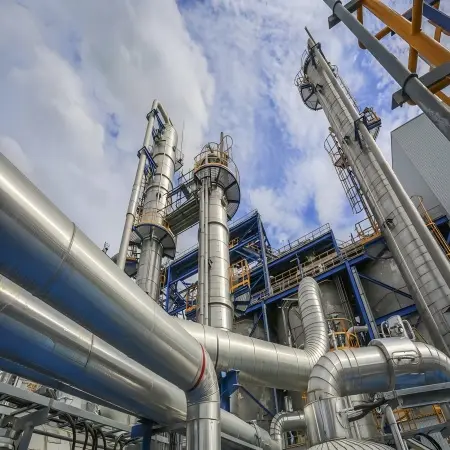
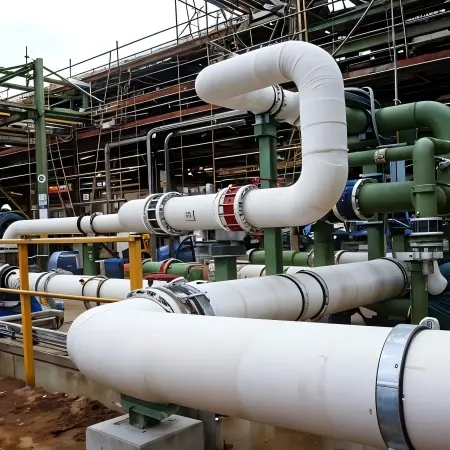
Where corrosion resistant pipe is used
Oil & gas / offshore: seawater injection, topside process-duplex and super duplex dominate.
Desalination: high chloride + high velocity → 2205 / 2507 and 316L.
Chemical & petrochemical: 316L, 317L, 904L depending on acid concentration.
Power & heat exchangers: A213 tubing in 304H / 321 / 347H.
Pharmaceutical & food: 316L with high surface finish (often electropolished).
Pulp & paper, FGD: 317L and high-alloy austenitics.
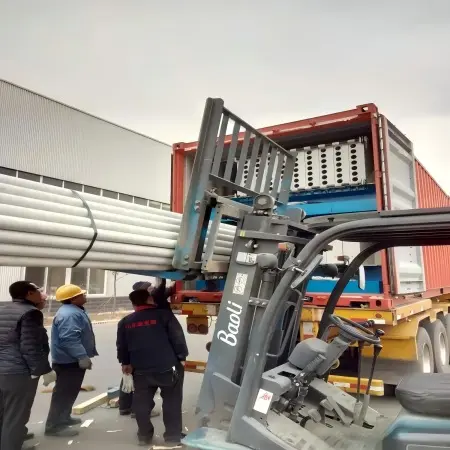
How to evaluate a corrosion resistant pipe supplier
Before you commit, verify these seven points:
Material traceability - every pipe carries a mill heat number; certificates match the heat.
Relevant certifications - ISO 9001 at minimum; PED for pressure equipment; NACE compliance for sour service.
In-house testing - PMI (positive material identification), hydrostatic/pneumatic test, UT/ET for welds, intergranular corrosion tests (e.g., ASTM A262).
Third-party inspection option - SGS, TÜV, BV, or Lloyd's, with EN 10204 3.2.
Range and customization - ability to supply non-standard sizes, wall thicknesses, and OEM/ODM machining.
Lead time and stock - common grades available from stock; mill runs for specials.
Technical support - the supplier helps you pick the grade instead of just quoting what you ask.
Conclusion
Specifying corrosion resistant pipe is a materials-engineering decision, not a commodity purchase. Understand the PREN of the grades you are comparing, insist on the right ASTM standard and mill certificate, and choose a supplier whose quality system you can audit. Do that, and your piping system will reach-or exceed-its design life without surprise failures.