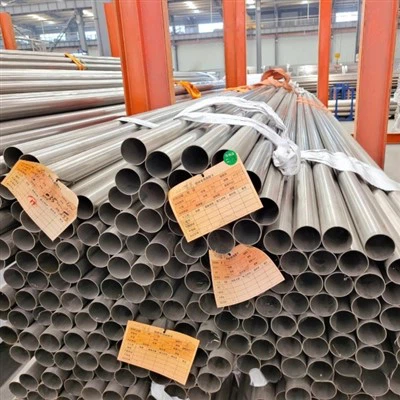
Both are corrosion-resistant stainless steels, but they are built differently:
316L (UNS S31603, austenitic, low carbon) - the all-rounder: excellent formability and weldability, good in mild service, but only modest chloride resistance (PREN ≈ 25).
Duplex 2205 (UNS S32205, ferritic-austenitic "duplex") - a two-phase alloy with about 2× the strength of 316L and much better resistance to pitting, crevice corrosion and chloride cracking (PREN ≈ 34–35).

1.What is 316L stainless steel?
316L is a low-carbon austenitic stainless steel. The "L" means the carbon is held low (≤0.030%) to avoid sensitization (carbide precipitation) during welding, so it welds without post-weld heat treatment in most cases. Its roughly 2.5% molybdenum is what lifts it above 304 for chloride resistance - hence the "marine grade" label.

Advantages of 316L
Excellent formability and weldability - bends, deep-draws and welds like standard austenitic steel; huge fabrication know-how exists worldwide.
Non-magnetic and cleanable - ideal for hygienic, pharmaceutical and food applications.
Good cryogenic toughness - retains ductility at very low temperatures.
Wide availability, low cost - the most stocked stainless grade after 304.
Broad standards coverage - pipe, tube, plate, bar, fittings and flanges all standardized.
Typical applications of 316L
Food & beverage, dairy, brewing and pharmaceutical process lines.
Architecture, handrails, façades and coastal (not continuous-seawater) structures.
Chemical and process plants handling mild, low-chloride fluids.
Heat exchangers, tanks and vessels with clean or mildly corrosive media.
Medical, marine hardware and general-purpose corrosion-resistant piping.
2.What is Duplex 2205 stainless steel?
Duplex 2205 (UNS S32205; the older S31803 is the same family) has a roughly 50/50 ferrite + austenite microstructure. That dual structure is the trick: the ferrite gives strength and chloride-cracking resistance, the austenite gives toughness and weldability. Added nitrogen (≈0.14–0.20%) boosts both strength and pitting resistance.

Advantages of Duplex 2205
Approximately twice the yield strength of 316L - thinner walls, lighter structures, lower material weight for the same pressure.
Far better pitting & crevice corrosion resistance - PREN ≈ 34–35 versus ≈25, so it handles brackish water, seawater splash zones and many chloride media that pit 316L.
Excellent resistance to chloride stress-corrosion cracking (SCC) - where 316L is vulnerable, 2205 shrugs it off.
Good general corrosion and erosion resistance - the ferritic phase resists wear in flowing, abrasive slurries.
Cost-competitive by weight - low nickel content (~5% vs ~12% in 316L) offsets the higher chromium and nitrogen.
Typical applications of Duplex 2205
Oil & gas: offshore topsides, subsea and downhole components, flowlines, heat exchangers.
Desalination and seawater cooling systems (splash zones, intake, pump casings).
Chemical processing of chloride-containing and mildly acidic streams.
Pulp & paper: digesters, bleach washers and filtrate lines.
Pressure vessels, storage tanks, bridges and structural members where strength + corrosion resistance matter.
Flue-gas desulfurization (FGD) and shipbuilding structural piping.
3.Duplex 2205 vs 316L: the head-to-head comparison
|
Property |
316L (S31603, austenitic) |
Duplex 2205 (S32205, duplex) |
|
Microstructure |
Fully austenitic |
≈ 50% ferrite + 50% austenite |
|
Chromium (Cr) |
16–18% |
22–23% |
|
Nickel (Ni) |
10–14% |
4.5–6.5% |
|
Molybdenum (Mo) |
2.0–3.0% |
3.0–3.5% |
|
Nitrogen (N) |
≤0.10% |
0.14–0.20% |
|
PREN |
≈ 25–26 |
≈ 34–35 |
|
Min. yield strength |
≈ 170–220 MPa |
≈ 450 MPa |
|
Tensile strength |
> 485 MPa |
> 620 MPa |
|
Pitting / crevice corrosion |
Moderate (chlorides limit it) |
Strong |
|
Chloride SCC resistance |
Vulnerable above ~60 °C |
Excellent |
|
Formability |
Excellent |
Good, but less ductile |
|
Weldability |
Excellent |
Good; needs controlled heat input |
|
Magnetism |
Non-magnetic |
Slightly magnetic (ferrite) |
|
Max. service temperature |
Broad (cryogenic to high) |
≈ 300 °C max (avoid long-term >250 °C) |
|
Density |
≈ 8.0 g/cm³ |
≈ 7.8 g/cm³ |
|
Relative cost (by weight) |
Baseline |
Comparable (lower Ni) |
4.Where they really differ
Corrosion resistance
PREN is the single best predictor here: 2205's ≈34–35 versus 316L's ≈25 means 2205 resists pitting and crevice corrosion in far higher chloride concentrations, and it is essentially immune to the chloride stress-corrosion cracking that plagues 316L above about 60 °C. For continuous full-strength seawater, both are outclassed by super duplex (2507) or 6Mo (254 SMO), but 2205 closes a big gap that 316L leaves open.
Mechanical strength
With a minimum yield of ≈450 MPa, 2205 is roughly 2 to 2.5× stronger than 316L. For a given pressure, that can mean roughly half the wall thickness - lighter pipe, smaller supports, and often a lower total installed cost despite similar per-kg pricing.
Weldability & fabrication
316L is the easier fabricator's friend. 2205 welds well but needs matched duplex fillers (e.g. ER2209), controlled heat input and a low interpass temperature (commonly ≤150 °C) to preserve the ferrite/austenite balance. It is easier than super duplex, where the phase window is tighter.
Temperature limits
316L is the safer pick for very low (cryogenic) and very high temperatures. 2205 should not run above ≈300 °C for long (risk of brittle sigma/chi phases), and its toughness at deep cryogenic temperatures is not as good as 316L's.
5.Standards
|
Product form |
316L (austenitic) |
Duplex 2205 |
|
Seamless / welded pipe |
ASTM A312, A269, A270, A213 |
ASTM A790 (pipe), A789 (tube) |
|
Plate, sheet, strip |
ASTM A240 |
ASTM A240 |
|
Bar & forged stock |
ASTM A276, A479; A182 F316L |
ASTM A276, A479; A182 F60 |
|
Fittings & flanges |
ASTM A403, A182 F316L |
ASTM A815, A182 F60 |
6.How to choose: a quick decision path
Mild, low-chloride, formability- or cost-critical (food, pharma, architecture, clean heat exchange) → 316L.
Higher pressure / weight-limited, brackish or chloride service, SCC risk → Duplex 2205.
Continuous full-strength seawater, aggressive acids, subsea → step up to super duplex 2507 (S32750) or 6Mo 254 SMO (S31254).
Cryogenic or sustained high temperature → lean toward 316L (or a stabilized / high-temp austenitic grade).
7.Common mistakes to avoid
Assuming 316L is "marine proof." It handles coastal atmosphere, not continuous seawater or hot chlorides.
Forgetting 2205's temperature ceiling. Don't use it above ~300 °C long-term or in deep-cryogenic service.
Poor duplex welding. Use matched filler, control heat input, keep interpass low - otherwise you lose corrosion resistance.
Buying on grade name alone. Specify minimum PREN and ferrite range from the MTC.
Over-specifying. If there are no chlorides and no pressure premium, 316L saves money without sacrificing life.
8.FAQ
What is the difference between Duplex 2205 and 316L?
316L is an austenitic steel (~17% Cr, 12% Ni, 2.5% Mo, PREN ~25). 2205 is a ferritic-austenitic duplex (~22% Cr, 5% Ni, 3% Mo + N, PREN ~34–35). 2205 has roughly 2× the yield strength and far better chloride corrosion and SCC resistance, but is slightly harder to weld, has a ~300 °C ceiling, and is less formable.
Is Duplex 2205 stronger than 316L?
Yes - minimum yield ≈450 MPa (ASTM A790/A789) versus ≈170–220 MPa for 316L, about 2 to 2.5 times. That allows much thinner walls for the same pressure.
Is Duplex 2205 more corrosion resistant than 316L?
Yes. PREN ~34–35 vs ~25 gives far better pitting, crevice and chloride-SCC resistance. It is a common upgrade for brackish water, seawater splash zones and many chemical duties; for continuous full-strength seawater or aggressive acids, super duplex or 6Mo is still preferred.
Which is cheaper, 2205 or 316L?
By weight they are comparable (2205 uses far less nickel). Because 2205 needs roughly half the wall thickness for the same pressure, it usually gives a lower total installed cost on strength-driven jobs, while 316L stays cheaper for simple, low-pressure parts.
Can 2205 be welded like 316L?
Both weld well, but 2205 needs matched duplex fillers (ER2209), controlled heat input and a low interpass temperature (often ≤150 °C) to keep its phase balance. It is easier to weld than super duplex.
When should I choose 316L instead of Duplex 2205?
Choose 316L for mild, low-chloride service where formability, easy welding, cryogenic toughness and low cost matter most - food, pharma, dairy, architecture and clean heat exchange. Choose 2205 when you need higher strength, better chloride corrosion resistance or lighter weight in pressure systems.