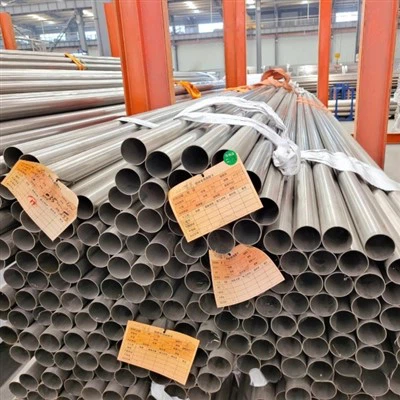
A comprehensive guide to SSAW steel pipe (spiral welded pipe) - covering the helical submerged arc welding process, available grades, standards, size range, applications, and procurement tips for large-diameter pipe projects.
1. Introduction
SSAW steel pipe (Spiral Submerged Arc Welded pipe), also called spiral welded pipe or helical welded pipe, is the most economical solution for large-diameter pipe applications. The spiral forming process enables diameters up to 120" (3,048mm) from relatively narrow coil widths, offering unmatched flexibility for water transmission, structural piling, and ventilation projects.
This guide covers the SSAW manufacturing process, material options, standards, and the key considerations for specifying spiral welded pipe for your next project.
2. What Is SSAW Steel Pipe?
SSAW steel pipe is manufactured by helically winding a steel strip (coil) and welding the spiral seam using submerged arc welding (SAW) on both the inside and outside of the pipe. The helical seam distributes stress more evenly around the pipe circumference compared to a longitudinal weld, which is a structural advantage in certain applications.
Key Characteristics
- Extremely large diameters - 20" to 120", beyond the reach of seamless or LSAW pipe
- Flexible production - one coil width can produce a range of diameters (adjusting the helix angle)
- Cost-effective - lowest per-ton cost for large-diameter pipe
- Continuous process - coil-fed production enables long run lengths and short lead times
- Balance of strength and cost - ideal for low-to-medium pressure applications
3. SSAW Pipe Manufacturing Process
Step 1: Coil Uncoiling & Preparation
Steel coil is unrolled and passed through a leveler to flatten the strip. The edges are milled to prepare the weld bevel and ensure consistent strip width.
Step 2: Helical Forming
The flat strip is fed at a precisely controlled angle into a set of forming rolls that bend it into a helical (spiral) cylinder. The helix angle determines the final pipe diameter - a steeper angle produces a smaller diameter, and a shallower angle produces a larger diameter.
Step 3: Internal Submerged Arc Welding
As the spiral forms, the internal weld is applied first. The welding head is positioned inside the pipe, and the arc is submerged under a granular flux layer. The flux shields the weld pool from oxidation and shapes the weld bead.
Step 4: External Submerged Arc Welding
Immediately after (or simultaneously with) the internal weld, the external weld is applied from the outside. The internal + external SAW process creates a full-penetration weld with excellent mechanical properties.
Step 5: Ultrasonic Testing
100% of the spiral weld seam is inspected by automated ultrasonic testing (AUT). The UT probes scan both the internal and external weld surfaces as the pipe rotates during production. Any defect triggers an alarm and the defect area is cut out and repaired.
Step 6: Hydrostatic Testing
Each finished pipe length is hydrostatically pressure tested to the specified test pressure (typically 1.5× design pressure) and held for a minimum of 10 seconds.
Step 7: End Preparation & Coating
Pipes are cut to length, ends are beveled for field welding, and external/internal coatings are applied as required (3LPE, FBE, bitumen, or concrete).
4. Material Grades
| Grade | Standard | Yield Strength (min) | Tensile Strength (min) |
|---|---|---|---|
| API 5L Gr. B | API 5L PSL1 | 245 MPa | 415 MPa |
| API 5L X42 | API 5L PSL1/PSL2 | 290 MPa | 415 MPa |
| API 5L X52 | API 5L PSL1/PSL2 | 360 MPa | 460 MPa |
| API 5L X60 | API 5L PSL2 | 415 MPa | 520 MPa |
| API 5L X65 | API 5L PSL2 | 450 MPa | 535 MPa |
| API 5L X70 | API 5L PSL2 | 485 MPa | 570 MPa |
| ASTM A252 Gr. 2 | ASTM A252 | 240 MPa | 415 MPa |
| ASTM A252 Gr. 3 | ASTM A252 | 310 MPa | 455 MPa |
| ASTM A36 | ASTM A36 | 250 MPa | 400-550 MPa |
5. Applicable Standards
| Standard | Scope |
|---|---|
| API 5L PSL1/PSL2 | Line pipe for oil and gas transmission |
| ASTM A252 | Welded steel pipe piles for structural applications |
| EN 10219 | Cold-formed welded structural hollow sections (European) |
| AWWA C200 | Steel water pipe 6 in. and larger (American Water Works Association) |
| JIS A5525 | Steel pipe piles (Japanese) |
| GB/T 9711 | Steel pipe for petroleum and natural gas industries (Chinese) |
| ASTM A139 | Electric-fusion (arc) welded steel pipe (for thin-wall SSAW) |
6. Size Range
| OD (in) | OD (mm) | Wall Thickness (mm) | Typical Weight (kg/m) |
|---|---|---|---|
| 20" | 508 | 5 – 16 | 185 – 595 |
| 24" | 610 | 5 – 18 | 225 – 720 |
| 36" | 914 | 6 – 20 | 405 – 1,345 |
| 48" | 1,219 | 6 – 22 | 540 – 1,805 |
| 60" | 1,524 | 6 – 25 | 675 – 2,590 |
| 72" | 1,829 | 8 – 25 | 1,080 – 3,110 |
| 96" | 2,438 | 8 – 25 | 1,440 – 4,150 |
| 120" | 3,048 | 10 – 25 | 2,240 – 5,180 |
7. SSAW vs LSAW vs ERW: Which to Choose?
| Factor | Choose SSAW When… | Choose LSAW When… | Choose ERW When… |
|---|---|---|---|
| Diameter | 24" to 120" | 16" to 60" | 1/2" to 24" |
| Pressure | Low to medium (water, piling) | High (oil & gas transmission) | Medium (general service) |
| Budget | Most economical for large OD | Moderate | Lowest cost |
| Wall thickness | Thin to moderate (5-25mm) | Thick (6-40mm) | Thin to moderate |
| Critical service | Non-critical | Critical | Standard |
| Steel type | Coil (limited grades) | Plate (any grade) | Coil (limited grades) |
Advantages of the Spiral Weld
The spiral weld seam in SSAW pipe offers a structural advantage: because the weld is at an angle to the hoop stress direction, the effective stress component perpendicular to the weld is reduced compared to a longitudinal weld. This means a spiral weld experiences approximately 30% less stress from internal pressure than a longitudinal weld of the same wall thickness. Some piping codes recognize this with a higher allowable stress for spiral welded pipe.
8. Applications of SSAW Steel Pipe
Water Transmission & Irrigation
Large-diameter SSAW pipe is the most cost-effective solution for municipal water mains, irrigation canals, and cooling water systems. AWWA C200 SSAW pipe with mortar lining and bituminous coating provides decades of service life in water applications.
Structural Piling
ASTM A252 SSAW pipe piles are widely used for deep foundations in bridges, ports, high-rise buildings, and offshore structures. The spiral weld provides excellent torsional strength during pile driving.
Dredging & Slurry Transport
Marine dredging operations and mining slurry pipelines use SSAW pipe for its large diameter (handling high flow rates) and abrasion resistance (thick walls at low cost).
HVAC & Ventilation
Thin-wall SSAW pipe is an economical choice for large-diameter HVAC ducting, exhaust stacks, and ventilation systems in industrial and commercial buildings.
Hydroelectric & Renewable Energy
Penstock pipes for hydroelectric plants, wind turbine tower foundations, and geothermal well casing all benefit from SSAW pipe's large diameter and cost advantage.
9. Frequently Asked Questions
Q: What does SSAW stand for?
A: SSAW stands for Spiral Submerged Arc Welding - the process of welding a spiral (helical) seam using submerged arc welding on both the internal and external surfaces.
Q: What is the difference between SSAW and LSAW pipe?
A: SSAW has a helical (spiral) weld seam and is formed from coil, reaching diameters up to 120". LSAW has a single longitudinal weld seam, is formed from plate, and typically ranges from 16" to 60". LSAW offers higher pressure ratings and thicker walls; SSAW offers larger diameters and lower cost.
Q: What sizes does SSAW pipe come in?
A: SSAW pipe is typically manufactured from 20" (508mm) up to 120" (3,048mm) OD. Wall thicknesses range from 5mm to 25mm, depending on the diameter and grade.
Q: Is SSAW pipe suitable for high-pressure service?
A: SSAW pipe is suitable for medium-pressure applications (typically Class 150-300 equivalent). For high-pressure gas transmission (Class 600+), LSAW or seamless pipe is generally preferred due to thicker wall capability and more consistent weld properties.
Q: What is the advantage of a spiral weld?
A: The spiral weld is at an angle to the hoop stress direction, reducing the effective stress on the weld. This means a spiral weld experiences approximately 30% less tensile stress from internal pressure compared to a longitudinal weld of the same wall thickness. Additionally, the continuous helical weld distributes stresses more evenly than a single straight seam.
Q: Can SSAW pipe be coated?
A: Yes. SSAW pipe can be coated with 3LPE, FBE, bitumen (asphalt enamel), concrete weight coating, or internal cement mortar lining depending on the application.
Q: Does Shuangzhong supply SSAW pipe for piling?
A: Yes, we supply SSAW pipe to ASTM A252 Grades 2 and 3 for structural piling applications, with optional end plates, stiffeners, and coatings for pile driving.
10. Why Choose Shuangzhong for SSAW Steel Pipe?
Shuangzhong supplies SSAW steel pipe to global customers at competitive factory-direct prices. Our capabilities include:
- Diameters from 20" to 120"
- API 5L PSL1/PSL2 and ASTM A252 certified
- Full coating options - 3LPE, FBE, bitumen, concrete lining
- Third-party inspection available (SGS, Bureau Veritas)
- Short lead times from coil-fed production
- Flexible shipping terms: FOB, CIF, CNF
Need large-diameter pipe for your project? Request a quote and our team will respond within 24 hours.
Email: sarah@manufacturerpipe.com
WhatsApp: +86 19069638227
Related:
Carbon Steel Pipe | Pipe Fittings | Flanges