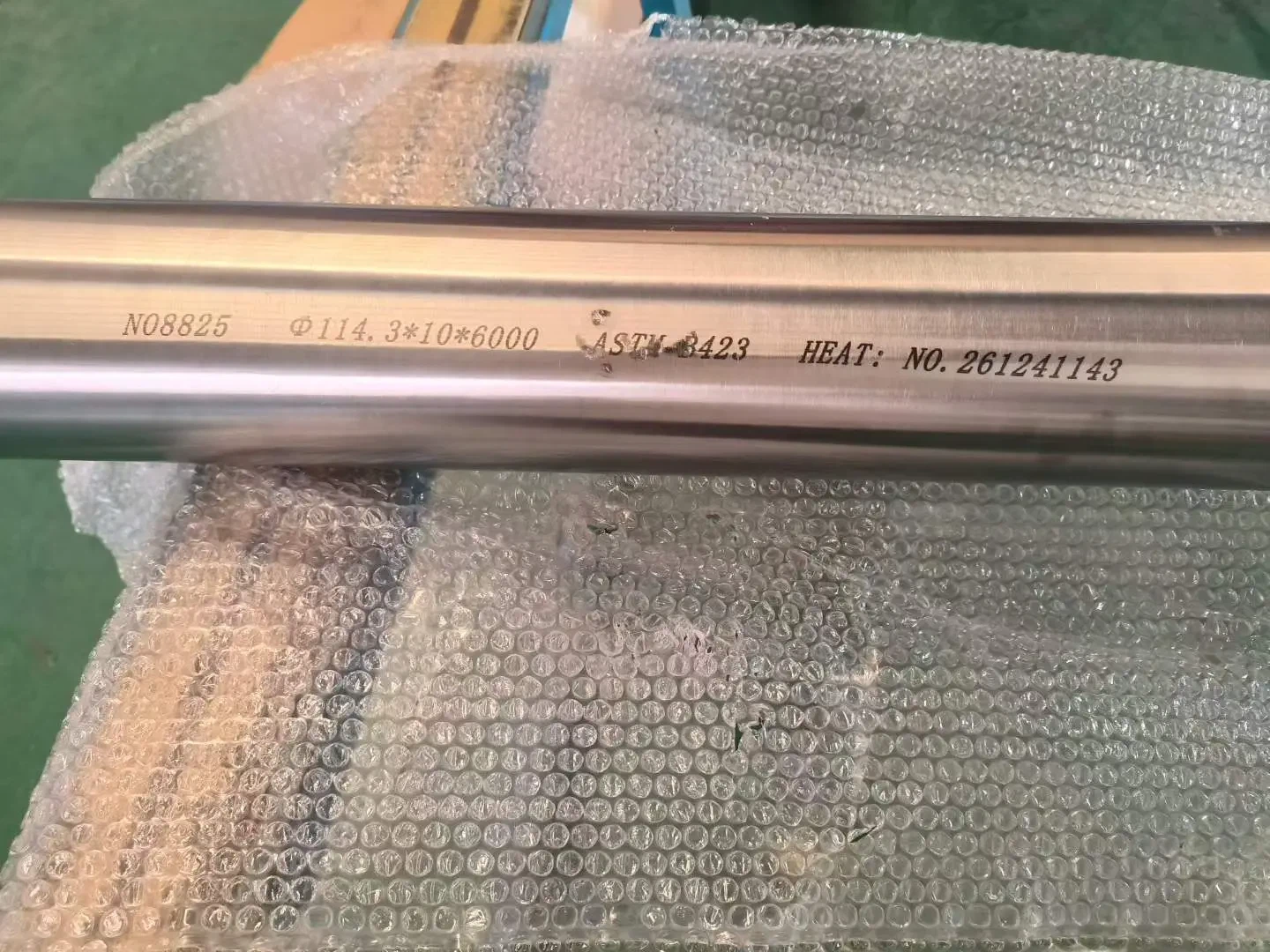
Shipboard Piping Systems Overview
Ships and offshore platforms contain multiple independent piping systems, each with specific material and performance requirements. Seawater systems provide cooling water for engines and auxiliaries. Fire protection systems must deliver water at adequate pressure throughout the vessel. Fuel systems transfer diesel or heavy fuel oil from storage tanks to engines. Steam systems on steam-powered vessels or tankers (for cargo heating) require high-temperature pipe. Bilge and ballast systems manage water within the hull. Hydraulic systems control winches, cranes, and hatch covers. Each system operates under different pressure, temperature, and environmental conditions, requiring different pipe materials and specifications.
The marine environment presents unique challenges for piping systems. Seawater is highly corrosive, especially in warm tropical waters and in the splash zone where alternating wetting and drying accelerates corrosion. Ship motion creates vibration and dynamic stresses that can cause fatigue failure in inadequately supported piping. Temperature variations from arctic to tropical conditions require careful thermal expansion design. Fire safety is paramount, and certain piping systems must remain operational during a fire. The selection of pipe materials for shipboard systems must address all of these challenges while meeting classification society requirements.
Marine Carbon Steel Pipe
General marine carbon steel pipe is used for air, fresh water, bilge water, ballast water (if lined or coated), and low-pressure steam systems. The typical specification is a carbon steel pipe to ASTM A106 Gr.B or A53 Gr.B, with zinc galvanizing (hot-dip galvanized per ASTM A123) for corrosion protection in non-potable water applications. Galvanizing provides sacrificial cathodic protection: the zinc coating corrodes preferentially, protecting the underlying steel. The typical coating thickness is 85-120 μm for standard marine service.
Marine steam pipe requires carbon steel rated for the design temperature. For saturated steam up to 200°C, A106 Gr.B is adequate. For superheated steam up to 400°C, A106 Gr.B with proper wall thickness is used, but above this temperature, alloy steel (A335 P11 or P22) is required. Marine fuel and lube oil pipe must be seamless to prevent leakage through weld defects, and must have sufficient wall thickness to withstand the fuel injection pressures (up to 100 MPa for modern diesel engines). Fuel pipes are typically SCH 80 or thicker depending on pressure requirements. Carbon steel pipe for marine use must be internally treated (coated or lined) for ballast and bilge service.
Marine Stainless Steel & Cu-Ni Pipe
316L stainless steel is the preferred material for marine seawater piping systems where corrosion resistance is critical. The molybdenum content (2-3%) provides resistance to chloride pitting and crevice corrosion in seawater. However, 316L is susceptible to microbiologically influenced corrosion (MIC) in stagnant seawater and to crevice corrosion under biofouling deposits. For these reasons, 316L seawater pipes must be designed for continuous flow or properly treated with biocide and cleaned periodically.
Copper-nickel alloys offer superior seawater corrosion resistance compared to stainless steel. 90/10 Cu-Ni (UNS C70600, 88% Cu, 10% Ni, 1% Fe) is the standard marine grade, providing excellent resistance to seawater corrosion, biofouling resistance (the copper content inhibits marine organism attachment), and good fabricability. 70/30 Cu-Ni (UNS C71500, 68% Cu, 30% Ni, 1% Fe) offers higher strength and better resistance to impingement attack in high-velocity seawater service. Cu-Ni pipes are connected by silver brazing, welding (with suitable filler metals), or flanged connections. The cost of Cu-Ni pipe is significantly higher than 316L (typically 2-3x), but the extended service life and reduced maintenance often justify the premium for critical seawater systems.
| Material | Seawater Resistance | Relative Cost | Typical Application |
|---|---|---|---|
| Galvanized Carbon Steel | Moderate (coating dependent) | 1x | Bilge, ballast, fire main |
| 316L Stainless Steel | Good | 3-4x | Seawater cooling, fire main |
| 90/10 Cu-Ni | Excellent | 5-7x | Seawater critical systems |
| 70/30 Cu-Ni | Superior | 8-10x | High-velocity seawater service |
Classification Society Requirements
Major classification societies - DNV (Det Norske Veritas), ABS (American Bureau of Shipping), Lloyd's Register (LR), BV (Bureau Veritas), and CCS (China Classification Society) - each publish rules for the design, materials, and testing of shipboard piping systems. These rules specify minimum wall thicknesses, allowable materials, testing requirements (hydrostatic pressure, NDT), and certification requirements. Pipe supplied to shipbuilding projects must typically carry a classification society certificate (Type Approval or Factory Approval) confirming that the manufacturer's quality system and products meet the society's requirements.
For pipe materials, classification societies typically require: material certificates traceable to the heat number, mechanical property testing (tensile, yield, elongation), chemical analysis, hydrostatic testing, and, for certain applications, additional tests such as flattening, flaring, and impact testing. NDT requirements vary: seamless pipe generally requires UT or hydrostatic testing; welded pipe requires 100% NDT of the weld seam. ManufacturerPipe holds Factory Approvals from major classification societies for carbon steel, stainless steel, and alloy steel pipe production.
Key Performance Requirements
Seawater corrosion resistance is the primary performance requirement for marine pipe. In addition to material selection, the design must consider flow velocity (too low causes sedimentation and MIC; too high causes erosion-corrosion - typically limit to 3 m/s for Cu-Ni and 2 m/s for stainless steel), stagnation avoidance, and accessibility for inspection and maintenance. Vibration and impact resistance require adequate pipe supports (hangers, clamps, and guides spaced appropriately for the pipe size and operating conditions), and the use of flexible couplings at equipment connections to isolate vibration. Fire resistance requires that essential systems (fire main, sprinkler, emergency generators) use fire-resistant materials or passive fire protection (A60 class insulation on pipe and supports) to maintain operation for 60 minutes during a fire. Low-temperature toughness is essential for vessels operating in polar regions (icebreakers, arctic supply vessels), requiring impact-tested materials such as A333 Gr.6 for carbon steel systems.
Pipe Selection by Ship System
Seawater cooling systems: Cu-Ni alloy (90/10 or 70/30 depending on velocity) or 316L stainless steel. Fire protection system: galvanized carbon steel or 316L stainless steel. Fuel transfer system: seamless carbon steel (A106 Gr.B, SCH 80 minimum). Bilge water system: galvanized carbon steel or plastic-coated carbon steel. Ballast water system: coated carbon steel with certified coating system, or Cu-Ni alloy for long life. Hydraulic systems: seamless cold-drawn precision pipe (high strength, smooth bore). Steam systems: carbon steel for low-medium pressure, alloy steel for high-pressure high-temperature systems.
Our Marine Pipe Capability
ManufacturerPipe holds classification society approvals from DNV, ABS, BV, LR, and CCS for the production of marine steel pipe. We supply carbon steel, stainless steel, and alloy steel pipe for shipbuilding and offshore applications, with full material traceability and classification certificates. Our marine pipe is packaged with end protectors and prepared for the international shipping conditions required by major shipyards.
Need Marine Pipe for Shipbuilding?
Contact our team for classification society-approved steel pipe for marine and offshore applications.
Get a Quote
Product Categories