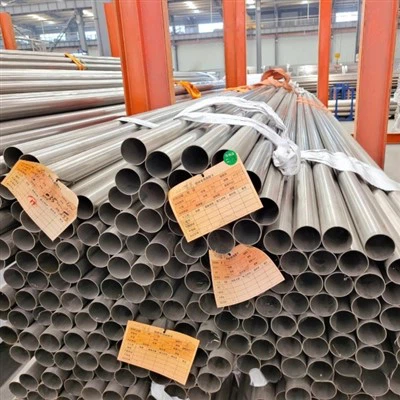
Special Requirements for Food & Beverage Industry
Sanitary grade pipe for the food and beverage industry must meet fundamentally different requirements from industrial pipe. The primary concern is not pressure containment but hygiene: the pipe must not contaminate the product, must be cleanable to prevent bacterial growth, and must withstand the aggressive cleaning and sterilization chemicals used in CIP (Clean-In-Place) and SIP (Sterilize-In-Place) processes. Any surface roughness, crevice, dead leg, or other feature that can trap product residue becomes a potential site for bacterial growth and product contamination.
The regulatory framework for sanitary pipe includes the US Food and Drug Administration (FDA) requirements in 21 CFR (Code of Federal Regulations), which specify acceptable materials for food contact surfaces. The 3-A Sanitary Standards (developed by the 3-A Sanitary Standards, Inc.) provide detailed design and fabrication requirements for equipment used in dairy and food processing. The European Hygienic Engineering & Design Group (EHEDG) publishes guidelines for hygienic equipment design that complement the Machinery Directive and food contact regulations in Europe.
Stainless Steel for Food Industry
304 stainless steel (EN 1.4301) is the general-purpose grade for food processing, offering good corrosion resistance for most food products combined with moderate cost. It is suitable for dairy products (milk, cream, yogurt), beverages (beer, wine, soft drinks), edible oils, and many processed foods. The low-carbon version 304L (EN 1.4307) is preferred when welding is required to prevent sensitization and maintain corrosion resistance in the heat-affected zone.
316L stainless steel (EN 1.4404) provides superior corrosion resistance due to the addition of 2-3% molybdenum. It is required for applications involving acidic foods (citrus juices, tomato products, pickles), high-chloride environments (salt brines, soy sauce), and where stronger cleaning chemicals are used. The extra cost of 316L (typically 20-30% more than 304L) is justified in these demanding applications. Carbon steel is rarely used in direct contact with food because rust formation would contaminate the product and the rough surface cannot be adequately cleaned.
| Food Type | Recommended Grade | Reason |
|---|---|---|
| Dairy (milk, cream) | 304L | Low acidity, general corrosion resistance sufficient |
| Beer & wine | 304L | Moderate acidity, CIP compatible |
| Citrus juices | 316L | High acidity, citric acid requires Mo-grade SS |
| Salt brines | 316L | Chloride pitting resistance essential |
| Edible oils & fats | 304L | Non-corrosive, surface finish is the key factor |
| Purified water | 304L | Low conductivity, low corrosivity |
Surface Finish Requirements for Sanitary Pipe
The internal surface finish of sanitary pipe is critical for cleanability. The standard for mechanical polishing is Ra ≤ 0.8 μm (32 μin), which provides a surface that can be effectively cleaned by CIP systems. However, even at Ra 0.8 μm, the surface under microscopic examination still has peaks and valleys where bacteria can attach. Electropolishing (EP) reduces the surface roughness to Ra ≤ 0.4 μm (16 μin) by removing the passive layer and creating a smoother, more uniform surface. In addition to being smoother, electropolished surfaces are more corrosion-resistant because the process removes free iron and embedded contaminants from the surface.
Research has shown that bacterial adhesion decreases significantly with smoother surfaces. At Ra > 0.8 μm, bacteria such as Listeria monocytogenes and E. coli can become trapped in surface crevices and survive CIP cleaning. Electropolished surfaces (Ra < 0.4 μm) show substantially lower bacterial retention and are easier to clean. After polishing, the pipe is typically passivated (treated with nitric acid or citric acid solution) to enhance the natural chromium oxide passive layer, maximizing corrosion resistance and preventing metal ion release into the product.
CIP/SIP Requirements
Clean-In-Place (CIP) systems circulate cleaning solutions (caustic soda, acid, and sanitizer) through the piping system without disassembly. The pipe internal surface must be smooth and chemically resistant to withstand repeated exposure to aggressive cleaning chemicals at temperatures up to 85°C. Pipe layout must eliminate dead legs where cleaning solution cannot circulate, and all pipe runs must be sloped for complete drainage (typically 2% minimum slope). Sterilize-In-Place (SIP) uses steam at 120-140°C to sterilize the system. The pipe material must withstand repeated thermal cycling without degradation. 304L and 316L stainless steel are both suitable for SIP provided the pipe is properly supported for thermal expansion.
The connection method for sanitary pipe is typically the Tri-Clamp (sanitary clamp) fitting, which uses a gasketed ferrule and external clamp to create a flush, crevice-free internal joint. This design eliminates the crevices present in threaded connections and the internal weld beads present in socket weld connections, both of which would trap product and bacteria. For permanent connections, automatic orbital welding with back-purging of inert gas produces a smooth internal weld bead that can be inspected and electropolished to match the pipe surface finish.
Sanitary Pipe Dimensions
Sanitary pipe dimensions differ from standard ASME pipe dimensions. The OD of sanitary pipe is the same as the corresponding standard pipe size, but the wall thickness is typically SCH 5S or 10S (thin wall), not SCH 40 or 80. For example, 2" sanitary pipe has OD 60.3 mm (same as standard 2" pipe) but wall thickness of 1.65 mm (SCH 5S) compared to 3.91 mm (SCH 40) for standard pipe. The thinner wall reduces weight and cost and improves heat transfer for temperature-controlled processes. Common sanitary sizes are 1" (25.4 mm OD), 1.5" (38.1 mm OD), 2" (50.8 mm OD straight for some standards, 60.3 mm for others), 3" (76.2 or 88.9 mm OD), and 4" (101.6 or 114.3 mm OD). The variation in OD between different sanitary standards (DIN 11850, ISO 2037, ASTM A270) requires careful verification when ordering.
Sanitary Pipe Standards
ASTM A270 is the primary US standard for sanitary grade stainless steel pipe. DIN 11850 is the German standard used widely in Europe. ISO 2037 is the international standard. GB/T 14976 covers Chinese stainless steel seamless pipe and is applicable for food grade service when properly specified with the required surface finish. Each standard has slightly different OD dimensions and wall thicknesses, so it is essential to specify the governing standard when ordering. Our Pipe Standards Comparison(59) includes cross-references for sanitary pipe standards.
Sanitary Pipe Certification
Sanitary pipe should be supplied with documentation demonstrating FDA material compliance (typically through the material certificate showing chemical composition meets the applicable ASTM standard), surface finish measurement results (Ra value, measurement method, and date), material traceability (MTC with heat number and batch number for full traceability from melt to finished pipe), and, where required, third-party certification from 3A or EHEDG for the complete system design.
Our F&B Solutions
ManufacturerPipe supplies food grade 304L and 316L stainless steel pipe in sanitary finishes. We offer mechanical polishing to Ra ≤ 0.8 μm standard and electropolishing to Ra ≤ 0.4 μm for critical applications. Our pipes are supplied with full MTC, surface finish certification, and FDA compliance declarations. We can arrange third-party inspection for 3A or EHEDG compliance verification.
Need Sanitary Pipe for Food Processing?
Contact our team for food grade stainless steel pipe with the right surface finish and certification for your application.
Get a Quote
Product Categories