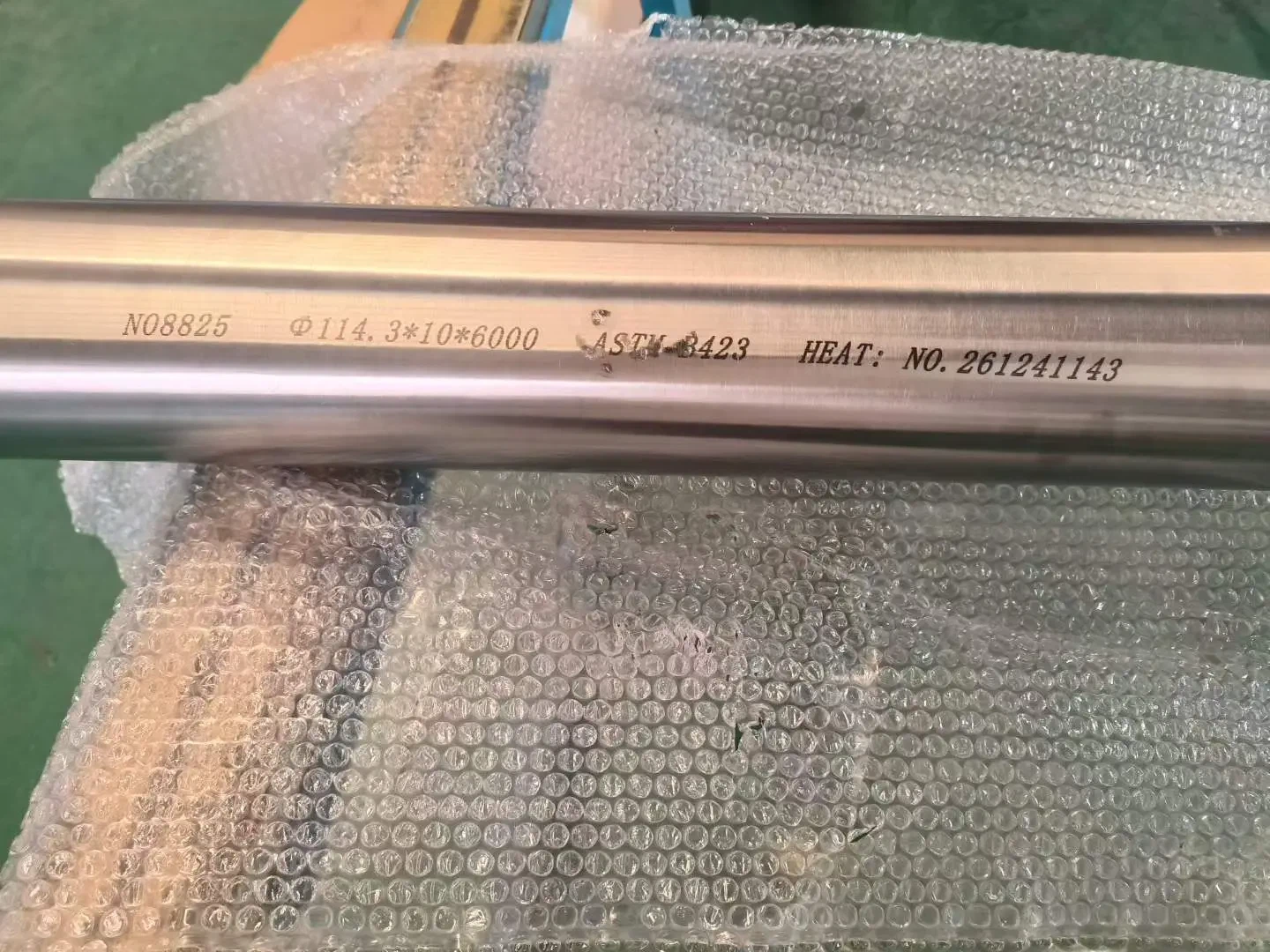
What is Carbon Steel Pipe?
Carbon steel pipe is manufactured from carbon steel, an alloy primarily composed of iron and carbon. The carbon content typically ranges from 0.05% to 2.0%, which determines the pipe's mechanical properties, strength, and weldability.
Carbon steel pipes are categorized by their carbon content:
- Low carbon steel pipe (Carbon content ≤ 0.30%) – Excellent weldability, widely used in general industrial applications
- Medium carbon steel pipe (Carbon content 0.30% – 0.60%) – Higher strength, requires preheating for welding
- High carbon steel pipe (Carbon content ≥ 0.60%) – High hardness and strength, difficult to weld
Types of Carbon Steel Pipe
Seamless vs. Welded Pipe
| Type | Manufacturing Method | Applications |
| Seamless Pipe | Formed by piercing hot-rolled steel | High-pressure applications, oil and gas transmission |
| Welded Pipe | Made by rolling and welding steel plates | Water pipelines, structural applications |
API 5L Carbon Steel Pipe
The American Petroleum Institute (API) specification API 5L is the standard for line pipe used in oil and gas transportation. It covers various grades like X42, X52, X60, X65, and X70, each with different strength requirements.
Welding Methods for Carbon Steel Pipe
1. Shielded Metal Arc Welding (SMAW)
Also known as stick welding, SMAW is the most versatile and widely used method for welding carbon steel pipe.
Advantages:
-
Low equipment cost
- Works well in outdoor and windy conditions
- Suitable for all positions
- Portable and flexible
Common electrodes: E6013, E7018, E8018
2. Gas Tungsten Arc Welding (GTAW/TIG)
TIG welding produces high-quality, precise welds with excellent appearance.
Advantages:
-
Superior weld quality and precision
- No slag formation
- Excellent for thin-walled pipes
- Precise heat input control
Best for: High-pressure systems, critical applications, stainless steel and alloy welding
3. Gas Metal Arc Welding (GMAW/MIG)
MIG welding offers high efficiency and good weld quality.
Advantages:
-
High welding speed
- Easy to learn and operate
- Minimal post-weld cleaning
- Suitable for automated applications
Best for: Medium to thick-walled pipes, production welding
4. Submerged Arc Welding (SAW)
SAW is a highly efficient method for thick-walled carbon steel pipes.
Advantages:
-
Extremely high deposition rate
-
Excellent weld quality
- Minimal fume exposure
- High productivity
Best for: Large-diameter, thick-walled pipes, industrial manufacturing
5. Flux-Cored Arc Welding (FCAW)
FCAW combines benefits of both MIG and stick welding.
Advantages:
-
High deposition rates
- Good for outdoor use
- Deep penetration
- Versatile positioning
Carbon Steel Pipe Welding Procedures
Preheating
Preheating is essential for medium and high-carbon steel pipes to prevent cracking.
| Carbon Content | Recommended Preheat Temperature |
| < 0.30% | Not required (except in cold climates) |
| 0.30% – 0.50% | 100°C – 200°C (212°F – 392°F) |
| > 0.50% | 200°C – 350°C (392°F – 662°F) |
Why preheat?
-
Reduces cooling rate
-
Minimizes thermal stress
-
Allows hydrogen to diffuse out
-
Prevents hard zone formation
Post-Weld Heat Treatment (PWHT)
PWHT is required for certain carbon steel grades to:
- Relieve residual stresses
- Improve toughness
- Prevent delayed cracking
- Restore mechanical properties
Common methods:
- Stress relieving: 550°C – 650°C (1020°F – 1200°F)
- Normalizing: 850°C – 950°C (1560°F – 1740°F)
Joint Preparation and Groove Design
Proper groove design ensures complete fusion and strong welds.
| Wall Thickness | Groove Type |
| ≤ 3mm (0.12") | I-groove |
| 3mm – 12mm (0.12" – 0.47") | V-groove |
| > 12mm (0.47") | U-groove or Double V-groove |
Filler Metal Selection
| Pipe Grade | Recommended Filler Metal |
| A106 Grade A/B | E7018 |
| API 5L X42-X60 | E7018, E8018 |
| API 5L X65-X80 | E9018, E10018 |
| ASTM A53 | E6013, E7018 |
Common Welding Defects and Prevention
1. Cracking
Causes:
- Rapid cooling rate
- High hydrogen content
- High carbon equivalent
- Residual stress
Prevention:
- Proper preheating
- Use low-hydrogen electrodes
- Control interpass temperature
- Post-weld heat treatment
2. Porosity
Causes:
- Contaminated base metal or filler
- Improper shielding gas
- Excessive travel speed
- Moisture in electrodes
Prevention:
- Clean base metal thoroughly
- Store electrodes properly
- Optimize gas flow rate
- Ensure proper arc length
3. Incomplete Fusion
Causes:
- Insufficient heat input
- Improper joint preparation
- Incorrect electrode angle
- Too fast travel speed
Prevention:
- Increase current
- Improve joint fit-up
- Adjust electrode angle
- Reduce travel speed
4. Undercut
Causes:
- Excessive current
- Long arc length
- Incorrect electrode angle
Prevention:
- Reduce current
- Maintain proper arc length
- Use proper electrode manipulation
5. Slag Inclusions
Causes:
- Incomplete slag removal between passes
- Improper welding technique
- Incorrect electrode angle
Prevention:
- Clean slag between passes
- Use correct electrode angle
- Ensure proper welding parameters
Welding Standards and Certifications
Common Standards
- AWS D1.1 – Structural Welding Code – Steel
- ASME Section IX – Boiler and Pressure Vessel Code
- API 1104 – Welding of Pipelines and Related Facilities
- ISO 15614 – Specification and Qualification of Welding Procedures
Certifications
- WPS (Welding Procedure Specification) – Documents the specific welding procedure
- PQR (Procedure Qualification Record) – Tests and verifies the WPS
- Welder Qualification – Certified welders for specific welding processes
Safety Considerations
Personal Protective Equipment (PPE)
- Welding helmet with proper shade lens ( Shade 10-15)
- Flame-resistant welding gloves
- Leather apron and jacket
- Steel-toed safety boots
- Hearing protection
Workplace Safety
-
Ensure proper ventilation
-
Remove flammable materials
-
Use fire-resistant blankets
-
Keep a fire extinguisher nearby
-
Use grounding cables properly
Electrical Safety
-
Inspect cables for damage
-
Ensure proper grounding
-
Avoid working in wet conditions
-
Use dielectric gloves
Best Practices for Quality Welds
-
Clean the work area – Remove rust, paint, oil, and debris
-
Check fit-up – Ensure proper gap and alignment
-
Control parameters – Maintain consistent amperage and voltage
-
Manage interpass temperature – Keep within specified range
-
Inspect visually – Check for defects after each pass
-
Document everything – Record welding parameters and inspection results
Applications of Carbon Steel Pipe Welding
- Oil and gas transmission pipelines
- Water and wastewater systems
- Structural steel construction
- Chemical processing plants
- Power generation facilities
- HVAC systems
- Industrial manufacturing
Conclusion
Welding carbon steel pipe requires a thorough understanding of materials, welding processes, and quality control procedures. Whether you're working on a small fabrication project or a large-scale pipeline, following proper welding procedures and standards is essential for achieving safe, durable, and code-compliant welds.
For critical applications, always ensure your welding procedures are qualified and your welders are certified to applicable standards.
Frequently Asked Questions
Q: What is the best welding method for carbon steel pipe?
A: The best method depends on your specific application. SMAW (stick welding) is most versatile and widely used. TIG welding offers the highest quality for critical applications. MIG welding is ideal for production work, while SAW is best for thick-walled pipes.
Q: Do I need to preheat carbon steel pipe before welding?
A: Low-carbon steel (≤0.30% carbon) typically doesn't require preheating unless in cold conditions. Medium-carbon steel (0.30%-0.60%) needs preheating to 100-200°C. High-carbon steel (>0.60%) requires 200-350°C preheating to prevent cracking.
Q: What electrode should I use for welding carbon steel pipe?
A: For most applications, E7018 is the standard choice. API 5L grades X42-X60 also use E7018 or E8018. Higher grades like X65-X80 require E9018 or E10018. Always match the filler metal to the pipe grade.
Q: What are the most common defects in carbon steel pipe welding?
A: The main defects are: cracking (from rapid cooling or high hydrogen), porosity (from contamination or improper shielding), incomplete fusion (from insufficient heat), undercut (from excessive current), and slag inclusions (from improper cleaning between passes).
Q: What standards apply to carbon steel pipe welding?
A: Key standards include AWS D1.1 for structural welding, ASME Section IX for pressure vessels, API 1104 for pipelines, and ISO 15614 for welding procedure qualification. WPS (Welding Procedure Specification) and welder certification are typically required for code compliance.