Three Persistent Problems with Manual Interior Spraying
modular title
Lorem ipsum dolor sit amet consectetur adipisicing elit
inconsistent film thickness
high operator exposure to solvents in confined spaces
difficulty maintaining repeatable coverage over long pipe lengths
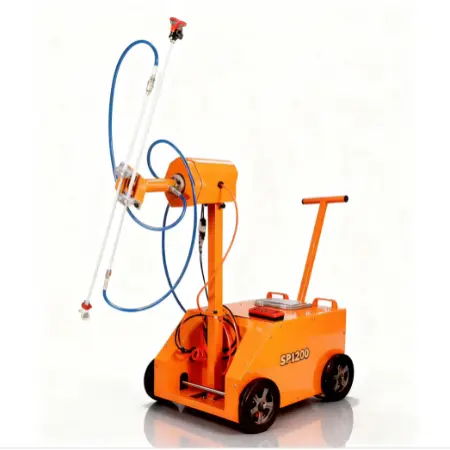
Pipeline coating is one of the most specification-sensitive stages in oil, gas, and water transmission projects. For large-diameter pipe, manual interior spraying creates three persistent problems: inconsistent film thickness, high operator exposure to solvents in confined spaces, and difficulty maintaining repeatable coverage over long pipe lengths. Automated pipeline spraying systems are increasingly adopted to solve these problems through PLC-controlled motion, remote operation, and repeatable spray parameters.
What "Automated" Means in the Specs
1,200–5,000 mm
pipe inner diameter
80 m / extendable
working length
50–1,000 μm
spray thickness
0.2–5 m/min
spray speed
A typical large-diameter pipeline spraying robot is designed for pipe inner diameters from about 1,200 mm to 5,000 mm, with working lengths of 80 metres and extendable configurations for longer runs. Key performance parameters include spray thickness from 50 μm to 1,000 μm and spray speed from 0.2 to 5 metres per minute. These are not merely equipment specifications; they determine whether a coating can meet the film-build and uniformity requirements of protective systems such as solvent-free epoxy, high-build anticorrosive coatings, epoxy coal tar pitch, polyurethane, phenolic and vinyl anticorrosive coatings, and fast-dry enamel.
Coating Systems It Must Handle
- solvent-free epoxy
- high-build anticorrosive coatings
- epoxy coal tar pitch
- polyurethane
- phenolic and vinyl anticorrosive coatings
- fast-dry enamel
Why Saudi Arabia Is a Concentrated Demand Centre
The Kingdom's Vision 2030 project pipeline
Saudi Aramco robotic automation in pipe prefabrication yards
installed manual spraying equipment over ten years old
Saudi Arabia is becoming a concentrated demand centre for this category. The Kingdom's Vision 2030 project pipeline, the expansion of oil and gas transmission infrastructure, and the renewal of ageing industrial coating lines are pushing specifications upward. Saudi Aramco has begun introducing robotic automation into pipe prefabrication yards, including automatic spraying robots for coating operations. On the supply side, new anti-corrosion coating lines are being added for steel pipe production. At the same time, a significant share of installed manual spraying equipment in the petrochemical and metal fabrication sectors is over ten years old, creating a multi-year replacement cycle for automated, energy-efficient alternatives.