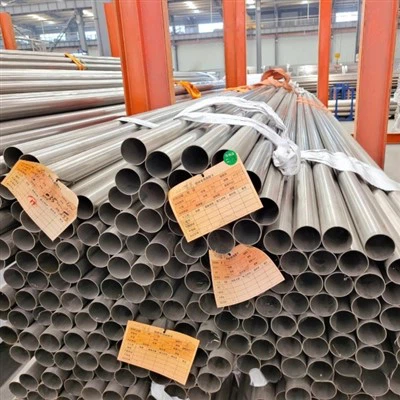
In early July, a mining client in the Athabasca Basin of Saskatchewan, northern Canada, was invited to visit Shuangzhong's factory. During the visit, they expressed their interest in purchasing a batch of steel pipes to ensure water supply for production and domestic use in the mining area. On July 3, the Canadian client ultimately decided to purchase a batch of 5-inch galvanized pipes and immediately signed a contract with our company. The contract stipulated a 100% refund for any quality issues and provided 24-hour online technical support.
On July 8, engineers carefully inspected each batch of products to be shipped and, after confirming they were free of defects, delivered them to the client. On July 25, the Canadian client received the products and indicated that they would use them in an upcoming project. By August 29, all the pipes ordered by the client had been installed, and they indicated that they would place a subsequent order once quality assurance was complete. Shuangzhong Factory stated that they were 100% confident in the quality of their products and looked forward to future cooperation.
August 29, 2025, from the Athabasca Basin, Saskatchewan, Canada
Across Canada's vast northern tundra, the extremely cold and dry climate not only challenges mineral resource development but also places stringent demands on the stability of infrastructure. Recently, with the advancement of temporary water supply projects at key northern mining areas, such as the Athabasca Basin uranium mine in Saskatchewan and the Raglan nickel-copper mine in Nunavut, 5-inch hot-dip galvanized steel pipe, with its excellent corrosion resistance, has become a key piece of equipment for ensuring water supply for production and domestic use in these mining areas. This effectively addresses the issue of conventional steel pipes, which are prone to rust in extremely cold environments and face high maintenance costs. Extremely cold environments pose a water supply challenge, and galvanized pipes demonstrate their corrosion resistance advantages.
Most mining areas in northern Canada are located north of the 60th parallel, where winter temperatures often drop below -40°C and the environment is dry and windy year-round. Ordinary steel pipes, exposed to freeze-thaw cycles and the erosion of dry, cold air currents, often develop surface corrosion and joint leakage within one to two years. This not only frequently impacts water supply stability but also requires extensive replacement and maintenance efforts. "We previously tested ordinary steel pipes at a uranium mine in the Athabasca Basin. During the winter, we had to inspect the pipes for corrosion every two weeks. During the summer drought, the corrosion rate at the pipe joints accelerated, and maintenance costs accounted for 30% of the total investment in the temporary water supply system," explained Mark Anderson, an engineer at Canadian Arctic Resources Development, who is responsible for the mine's infrastructure.
The 5-inch hot-dip galvanized steel pipes being used this time use a high-temperature zinc dipping process to form a zinc layer 80-100 microns thick on the steel pipe surface, effectively isolating the steel pipe base from cold air and dry air currents. Tests have shown that even in the low temperatures of -35°C in the Athabasca Basin, the galvanized pipes showed no visible signs of rust and maintained excellent joint sealing. In the dry desert environment of the Raglan Mine in Nunavut, the galvanized pipes' aging resistance is over four times better than that of ordinary steel pipes, extending their service life to 5-8 years and significantly reducing maintenance frequency and costs.
Adapting to the needs of various mining sites, galvanized pipes have become the "standard" for temporary water supply.
In addition to their corrosion resistance, the 5-inch galvanized pipe's diameter and installation flexibility make it suitable for the temporary water supply needs of various mining sites in northern Canada. At the MacArthur River Mine in the Athabasca Basin, the world's largest high-grade uranium mine, 5-inch galvanized pipe serves as the main water supply, connecting the mine's drilling platforms, employee living quarters, and beneficiation workshops. It delivers an average of 2,000 cubic meters of water daily, meeting the production and living needs of nearly 500 miners. At the Raglan Nickel-Copper Mine, located in hilly permafrost terrain, the lightweight and flexible nature of galvanized pipe allows it to be laid in complex terrain, increasing installation efficiency by 60% compared to traditional cement pipe. Construction of a 3-kilometer temporary water supply pipeline was completed in just 10 days.
"For northern mining areas, temporary water supply systems must be not only durable but also quick to install," said Mark Anderson. The construction window in northern Canada's mines is short, with outdoor construction only available from May to September each year. The 5-inch galvanized pipe requires no complex anti-corrosion pretreatment and can be directly welded or threaded upon arrival, significantly shortening the construction period. In addition to the Athabasca Basin and Raglan Mine, several temporary water supply projects in northern Ontario's "Ring of Fire" mining region and northern Alberta's oil sands mining region have also adopted this standard of galvanized pipe. It is expected that by the end of 2025, the utilization rate of galvanized pipe in temporary water supply systems in key mining areas in northern Canada will reach over 80%.
Promoting a Balance between Resource Development and Ecological Protection
Notably, the environmentally friendly properties of galvanized pipe also align with the ecological protection requirements of Canada's northern mining regions. Many northern mining areas are located in traditional Indigenous territories and ecologically sensitive areas. Rust from corrosion on ordinary steel pipes can seep into the soil with snowmelt, impacting the surrounding permafrost ecosystem. However, the zinc coating of galvanized pipes slowly releases in the natural environment, producing no toxic or harmful substances. Furthermore, it can be recycled and reused after disposal, meeting the Canadian government's requirements for "green development" in mining areas. "We specifically chose recyclable hot-dip galvanized pipe for the Raglan Mine pipeline. After the project is completed, these pipes can be disassembled and recycled, minimizing disruption to the permafrost ecosystem," said Eva Caron, a representative of the Canadian Indigenous Partnership for Development.
With the intensification of mineral resource development in northern Canada, the stability of infrastructure such as temporary water and power supply has become increasingly critical. The successful application of 5-inch galvanized pipe in the extremely cold and dry environment not only provides an efficient and durable water supply solution for the mine, but also provides a reference for infrastructure construction in similar extreme environments in the Arctic, helping to achieve a sustainable balance between resource development and ecological protection in the north.