


Pitting corrosion is a form of localized corrosion that leads to the creation of small holes in the metal. In the context of Hastelloy Alloy Coil, understanding its pitting resistance is crucial for applications where the coil will be exposed to corrosive environments. As a supplier of Hastelloy Alloy Coil, I am well - versed in the properties and performance of this material, and I'm here to provide an in - depth analysis of its pitting resistance.
Composition and Its Impact on Pitting Resistance
Hastelloy alloys are a group of nickel - based superalloys known for their excellent corrosion resistance. The composition of Hastelloy Alloy Coil typically includes nickel, chromium, molybdenum, and other elements. Nickel provides a stable base structure and enhances the overall corrosion resistance. Chromium forms a passive oxide layer on the surface of the alloy, which acts as a protective barrier against corrosive agents. Molybdenum further improves the pitting and crevice corrosion resistance.
For example, in Hastelloy C - 276, which is a widely used grade in the Hastelloy family, the high molybdenum content (about 15 - 17%) significantly enhances its ability to resist pitting in chloride - containing environments. Chloride ions are notorious for causing pitting corrosion in many metals. When the alloy is exposed to a chloride - rich environment, the passive oxide layer can be disrupted by the chloride ions. However, the presence of molybdenum helps to repair and maintain the passive layer, preventing the initiation and propagation of pits.
Testing Pitting Resistance
There are several methods to test the pitting resistance of Hastelloy Alloy Coil. One of the most common methods is the ASTM G48 test. This test involves immersing the alloy sample in a ferric chloride solution for a specific period. The pitting resistance equivalent number (PREN) is often used to predict the pitting resistance of an alloy. The PREN is calculated based on the alloy's chemical composition, with the formula PREN = %Cr + 3.3×%Mo+16×%N. A higher PREN value indicates better pitting resistance.
For Hastelloy alloys, the PREN values are generally quite high, which means they have good resistance to pitting. In practical applications, the results of these tests are used to select the appropriate grade of Hastelloy Alloy Coil for a particular environment. For instance, in offshore oil and gas platforms, where the equipment is exposed to seawater (a highly corrosive environment with a high chloride content), Hastelloy alloys with high PREN values are preferred.
Comparison with Other Coil Materials
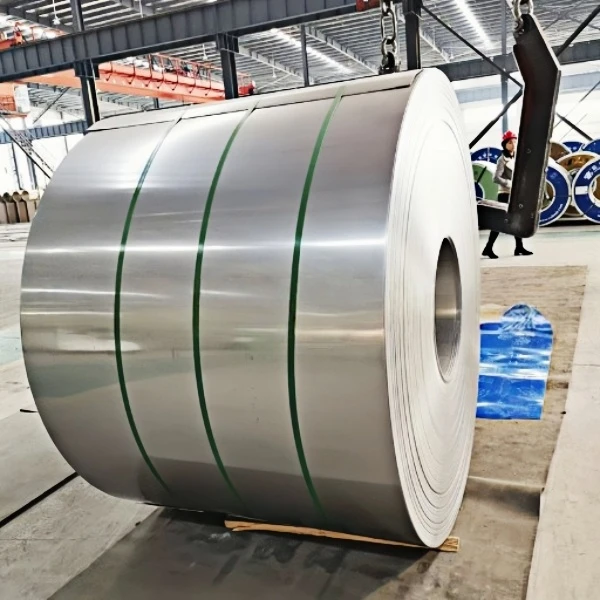
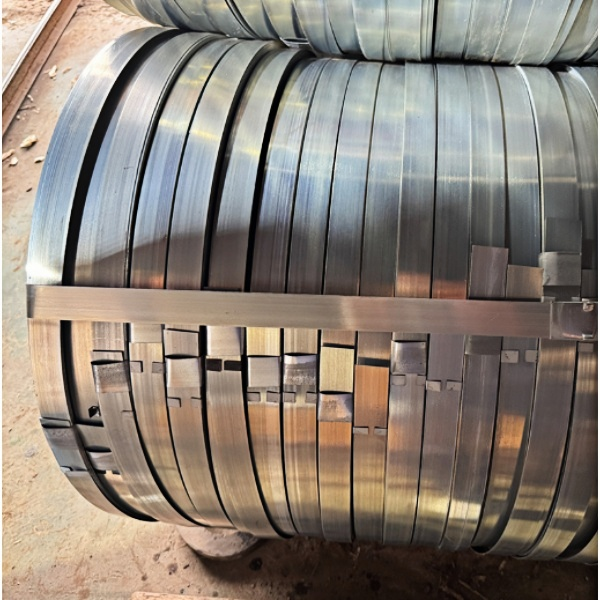
When comparing the pitting resistance of Hastelloy Alloy Coil with other types of coils, such as Duplex Steel Coil and Monel 400 ASTM Standard Steel Coil, it becomes clear that Hastelloy has some distinct advantages.
Duplex steel coils have a two - phase microstructure (ferrite and austenite), which gives them good strength and corrosion resistance. However, in highly corrosive environments, especially those with high chloride concentrations, Hastelloy Alloy Coil generally outperforms duplex steel coils in terms of pitting resistance. The high nickel and molybdenum content in Hastelloy alloys provides a more stable and protective passive layer, making them more resistant to pitting.
Monel 400 is a nickel - copper alloy that is known for its good corrosion resistance in various environments. But when it comes to pitting resistance in chloride - containing environments, Hastelloy Alloy Coil again shows better performance. The chromium and molybdenum in Hastelloy alloys play a crucial role in enhancing the pitting resistance, which Monel 400 lacks in the same degree.
Factors Affecting Pitting Resistance
Several factors can affect the pitting resistance of Hastelloy Alloy Coil. Temperature is one of the most important factors. As the temperature increases, the rate of corrosion generally increases, and the pitting resistance of the alloy may decrease. In high - temperature environments, the passive layer on the surface of the alloy can be more easily disrupted, leading to the initiation of pits.
The pH of the environment also has a significant impact. In acidic environments, the pitting resistance of Hastelloy Alloy Coil may be reduced. The acidic conditions can dissolve the passive oxide layer, making the alloy more susceptible to pitting. On the other hand, in alkaline environments, the pitting resistance is generally better.
The presence of other contaminants in the environment can also affect pitting resistance. For example, the presence of sulfur compounds can accelerate the corrosion process and reduce the pitting resistance of the alloy.
Applications and the Importance of Pitting Resistance
Hastelloy Alloy Coil is widely used in various industries due to its excellent pitting resistance. In the chemical processing industry, it is used in equipment such as reactors, heat exchangers, and pipes. These components are often exposed to highly corrosive chemicals, and the pitting resistance of Hastelloy Alloy Coil ensures their long - term durability and safety.
In the pharmaceutical industry, where the purity of the products is of utmost importance, the pitting resistance of Hastelloy Alloy Coil is crucial. Any pitting corrosion can lead to the contamination of the products, which is unacceptable.
In the marine industry, Hastelloy Alloy Coil is used in shipbuilding and offshore structures. The seawater is a highly corrosive environment, and the pitting resistance of the alloy helps to prevent the premature failure of the structures.
Conclusion
The pitting resistance of Hastelloy Alloy Coil is a critical property that makes it a preferred choice in many industries. Its unique composition, high PREN values, and ability to withstand harsh environments make it a reliable material for applications where corrosion resistance is essential.
If you are in need of high - quality Hastelloy Alloy Coil for your project, we are here to assist you. Our team of experts can help you select the most suitable grade of Hastelloy Alloy Coil based on your specific requirements. Contact us to start a discussion about your procurement needs and find the best solution for your application.
References
- ASM Handbook, Volume 13A: Corrosion: Fundamentals, Testing, and Protection.
- ASTM International standards related to corrosion testing, such as ASTM G48.
- Technical literature provided by Hastelloy alloy manufacturers.


