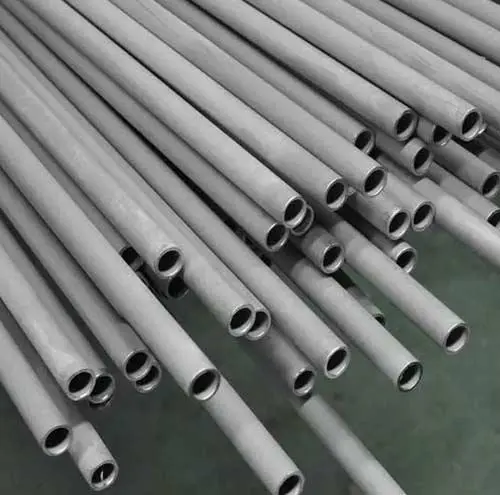
When a piping system must operate reliably at temperatures well below zero, material specification becomes the single most important engineering decision. While many carbon steel pipes perform adequately at room or elevated temperatures, low-temperature service introduces a critical failure mode: brittle fracture. A single Charpy impact test failure at design temperature can translate into catastrophic pipeline rupture, environmental contamination, and weeks of unplanned shutdown. For designers, procurement engineers, and quality managers facing the challenge of low-temperature piping, ASTM A333 Grade 6 seamless steel pipe has long been the default choice - and for good reason. This guide explains what makes Grade 6 different, where it should be specified, and how it compares with alternatives in today's global supply market.
1. What Is ASTM A333 Grade 6?
ASTM A333/A333M is the Standard Specification for Seamless and Welded Steel Pipe for Low-Temperature Service. The specification covers nominal-wall carbon and alloy steel pipe intended for use in low-temperature and other applications requiring notch toughness. Among the nine ferritic steel grades included in the standard, Grade 6 has emerged as the industry-preferred choice for general low-temperature pressure piping. It is a normalised low to medium-carbon steel with a tightly controlled chemical composition: carbon capped at 0.30 %, manganese in the 0.29 to 1.06 % range, and silicon at a minimum of 0.10 % to confirm killed steel practice. Phosphorus and sulfur are both limited to 0.025 % maximum to minimise the risk of cold and hot shortness. The corresponding ASME designation is SA-333 Grade 6, fully interchangeable in ASME code pressure piping applications.
What truly distinguishes Grade 6 from a general-purpose carbon steel pipe like ASTM A106 Grade B is the mandatory Charpy V-notch impact test at -45 °C (-50 °F), requiring a three-piece average of 18 J with no individual specimen below 14 J. This single requirement changes the entire character of the pipe: from commodity carbon steel to verified low-temperature component. Every heat, every size, every heat-treatment batch must be tested and documented. There is no opt-out clause, no alternative acceptance path. The standard forces the mill to demonstrate toughness, batch after batch, heat after heat.
2. The Three Performance Advantages That Matter
Advantage 1 - Verified -45 °C toughness, not assumed
Many pipe specifications mention impact testing but allow it to be omitted or substituted with alternative criteria. ASTM A333 Grade 6 makes the test non-negotiable. The Charpy result appears on every mill test certificate, traceable to a specific heat number. For buyers, this means no guesswork at receiving inspection: the MTC tells the truth about toughness in a way that simply specifying "low-temperature service" never can. When a pipeline operates at -30 °C or -40 °C in a refinery cold section or an LNG receiving facility, this verified toughness becomes the foundation of design confidence.
Advantage 2 - Balanced strength and weldability
Grade 6 delivers a tensile strength of at least 415 MPa and a yield strength of at least 240 MPa, more than sufficient for the majority of low-temperature pressure piping applications. The carbon cap at 0.30 % combined with the manganese range preserves weldability without compromising strength. Field welding, in-shop fabrication, and post-weld heat treatment all proceed under standard procedures. The pipe integrates smoothly with conventional piping components, fittings, and flanges rated for the same temperature class. There are no exotic preheating requirements, no special filler metals, no surprises during construction.
Advantage 3 - Comprehensive size availability and documentation
A333 Grade 6 is produced in outside diameters from NPS 1/8 inch up to NPS 24 inch, with wall thicknesses from SCH 10 through SCH XXS. Random lengths, cut-to-length, plain ends, beveled ends, and threaded ends are all routinely available. Length options include single random length (SRL), double random length (DRL), and project-specific cut lengths up to 16 metres. Equally important is the documentation chain: EN 10204 Type 3.1 mill certificate is standard, Type 3.2 third-party inspection is widely available, and supplementary certifications such as NACE MR 0175, IBR, and PED 2014/68/EU can be arranged for project-specific requirements. A buyer ordering Grade 6 receives not just a pipe but a complete traceability package aligned with international acceptance standards.
3. Where ASTM A333 Grade 6 Should Be Specified
The most common application areas span five major industries. In LNG and LPG infrastructure, Grade 6 is widely used for receiving station piping, storage tank inlet and outlet lines, and LNG loading arm connections where the design temperature is above -45 °C. Air separation units specify Grade 6 for liquid oxygen, liquid nitrogen, and liquid argon distribution lines. Chemical and petrochemical plants use it for ethylene, ethylene glycol, and ammonia synthesis process lines operating in the low-temperature range. Petroleum refineries deploy Grade 6 in hydrocracking, catalytic cracking, and ethylene cracking low-temperature sections. Marine engineering projects, including FPSO low-temperature modules and FLNG systems, rely on the verified toughness of Grade 6 for offshore safety-critical service.
Grade 6 is not a one-size-fits-all solution. For design temperatures below -45 °C, the specification family offers alternatives: Grade 7 and Grade 10 for medium-low temperature down to -75 °C, Grade 3 for -100 °C, and Grade 8 and Grade 11 for LNG-class cryogenic service down to -195 °C. Selecting the right grade is fundamentally a function of design temperature, pressure, and medium. When the design temperature is -45 °C or warmer, Grade 6 offers the optimal combination of availability, cost, and performance. Below -45 °C, the higher-nickel grades should be considered.
4. Heat Treatment: Why It Matters More Than People Realise
ASTM A333 Grade 6 is not sold in the as-rolled condition. The specification requires the pipe to be heat-treated under one of four schemes: normalising at a uniform temperature of at least 815 °C, normalising followed by tempering, controlled rolling with finishing temperature in the 845 to 945 °C range, or quenching-plus-tempering as an alternative. This mandatory heat treatment is what refines the grain structure and delivers the low-temperature toughness that Grade 6 promises. Without proper normalisation, a Grade 6 pipe may meet the chemistry and tensile requirements but fail the Charpy test - and that test is the one that matters at the job site. Buyers should always verify the heat treatment condition on the MTC and ensure it matches the project specification.
5. Selecting a Reliable Supplier
Not all A333 Grade 6 pipe is created equal. Three factors separate a reliable supplier from a risky one. First, documentation discipline: a serious supplier issues an EN 10204 Type 3.1 certificate with every shipment, clearly traceable to heat numbers, with chemistry, mechanical, impact, dimensional, and hydrostatic results all included. Second, testing frequency: a serious supplier tests every heat, every size, every heat-treatment batch for Charpy impact. Third, supply chain transparency: a serious supplier discloses the mill source, the manufacturing route, and the third-party inspection arrangements. Buyers evaluating suppliers should ask for recent MTC samples, project reference lists, and audit reports before placing orders.
6. Conclusion
ASTM A333 Grade 6 remains the workhorse of low-temperature carbon steel piping for good reason. It combines verified -45 °C impact toughness, balanced mechanical properties, excellent weldability, comprehensive size availability, and complete documentation in a single specification. For projects where the design temperature is at or above -45 °C and the medium is not exceptionally aggressive, Grade 6 represents the most cost-effective, low-risk specification choice available. By understanding its strengths and limitations, engineers and procurement professionals can specify Grade 6 with confidence and source it from suppliers who meet the standards the specification demands.