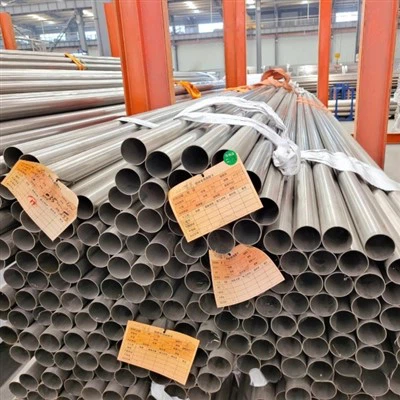
What Is Seamless Stainless Steel Pipe?
Seamless Stainless Steel Pipe is produced from stainless steel billets through processes such as heating, piercing, hot rolling or cold drawing, followed by sizing and heat treatment. Since there is no welded joint along the pipe body, the finished pipe provides a uniform structure and consistent mechanical performance.
Depending on the application, seamless stainless steel pipe can be manufactured from different stainless steel grades, including 304, 304L, 316, 316L, 321, 347 and 347H. The appropriate grade should be selected according to the operating temperature, corrosion environment and mechanical requirements.
Key Advantages of Seamless Stainless Steel Pipe
1. Excellent Corrosion Resistance
One of the major advantages of Seamless Stainless Steel Pipe is its resistance to corrosion. Stainless steel grades containing chromium form a passive oxide layer on the surface, helping protect the pipe from many corrosive environments.
For more demanding applications, grades such as 316 and 316L provide improved resistance to chloride-containing environments compared with standard 304 stainless steel.
2. High Strength and Pressure Resistance
The continuous structure of seamless pipe eliminates the longitudinal weld seam, making it suitable for applications where pressure resistance and structural reliability are important.
This makes Seamless Stainless Steel Pipe a preferred option for high-pressure fluid transportation, process piping and industrial systems.
3. Excellent High-Temperature Performance
Certain stainless steel grades maintain good mechanical properties and oxidation resistance at elevated temperatures. For example, 321H and 347H are commonly considered for high-temperature service because of their enhanced resistance to thermal exposure.
This makes seamless stainless steel pipe suitable for applications involving hot fluids, steam and high-temperature process systems.
4. Smooth Internal Surface
Seamless stainless steel pipes can provide a relatively smooth internal surface, which helps reduce flow resistance and facilitates fluid transportation.
For applications requiring high cleanliness, such as pharmaceutical, food processing and certain chemical systems, appropriate surface finishing and cleaning can further improve pipe performance.
5. Long Service Life
With appropriate material selection, seamless stainless steel pipe can provide long-term service in demanding environments. Its combination of corrosion resistance, strength and temperature performance helps reduce maintenance requirements and replacement frequency.
Where Is Seamless Stainless Steel Pipe Used?
The versatility of Seamless Stainless Steel Pipe makes it suitable for a wide range of industries.
Oil and Gas
Seamless stainless steel pipe can be used for process piping, fluid transportation and other systems where corrosion resistance and mechanical strength are required.
Chemical Processing
Chemical plants often handle corrosive fluids and high-temperature media. Stainless steel seamless pipe provides reliable corrosion resistance when the appropriate grade is selected.
Petrochemical Industry
In petrochemical facilities, seamless stainless steel pipes are commonly used in process lines, heat-transfer systems and other critical piping applications.
Power Generation
Steam, water and high-temperature fluids require piping materials with reliable strength and temperature resistance. Suitable stainless steel grades can be used in power plant piping systems.
Food and Pharmaceutical
Stainless steel is widely used in hygienic applications because of its corrosion resistance, cleanable surface and good durability. Seamless stainless steel pipe can be used where high cleanliness and reliable fluid transportation are required.
Seamless vs. Welded Stainless Steel Pipe
The choice between seamless and welded stainless steel pipe depends on the specific application.
| Feature | Seamless Stainless Steel Pipe | Welded Stainless Steel Pipe |
|---|---|---|
| Manufacturing | Produced from billet without a weld seam | Produced by forming and welding stainless steel strip or plate |
| Weld Seam | No longitudinal weld seam | Contains a welded seam |
| Pressure Performance | Excellent for demanding pressure applications | Suitable for many standard and moderate-pressure applications |
| Size Range | Commonly used for smaller and medium pipe sizes | Can be produced in a wider range of large diameters |
| Applications | High-pressure, high-temperature and critical piping | General industrial, structural and fluid transportation systems |
| Cost | Generally higher | Generally more economical |
Therefore, Seamless Stainless Steel Pipe is particularly attractive when pressure resistance, structural continuity and demanding service conditions are priorities.
How to Select the Right Seamless Stainless Steel Pipe?
Several factors should be considered before purchasing.
Material Grade: Select 304/304L, 316/316L, 321, 347H or another suitable grade according to the service environment.
Pipe Size: Determine the required outside diameter and wall thickness based on flow requirements and system design.
Pressure and Temperature: Confirm the design pressure and operating temperature before selecting the pipe specification.
Corrosion Environment: Consider whether the pipe will be exposed to chlorides, acids, alkalis, seawater or other corrosive media.
Standard: Common specifications may include ASTM A312, ASME SA312 and other applicable standards, depending on the project requirements.
Surface and Heat Treatment: For demanding applications, confirm the required heat treatment, surface condition, dimensional tolerances and inspection requirements.
Why Choose Seamless Stainless Steel Pipe?
The main value of Seamless Stainless Steel Pipe lies in its combination of corrosion resistance, strength, temperature capability and structural continuity. Compared with ordinary carbon steel piping, stainless steel provides better resistance to many corrosive environments, while the seamless manufacturing process makes it suitable for demanding pressure and temperature conditions.
For critical piping systems, selecting the correct stainless steel grade, dimensions, manufacturing standard and inspection requirements is essential to achieving reliable long-term performance.