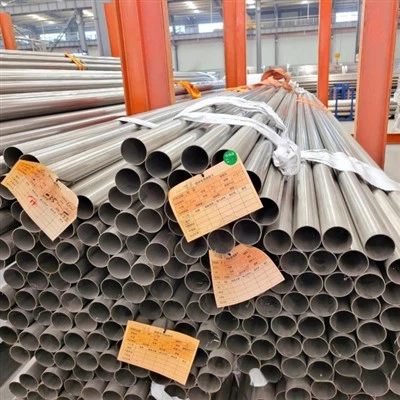
Stainless steel 17-4PH and 316L are two widely used stainless steel grades for industrial equipment, precision components, and demanding engineering applications. However, they offer different combinations of mechanical strength, corrosion resistance, heat treatment response, and fabrication characteristics.
17-4PH stainless steel is a precipitation-hardening stainless steel known for its high strength and hardness after heat treatment. 316L stainless steel is a low-carbon austenitic stainless steel valued for its corrosion resistance, weldability, and performance in many chemical and marine environments.
Understanding the differences between 17-4PH and 316L stainless steel helps engineers, manufacturers, and procurement professionals select the right material for their operating conditions.
What Is 17-4PH Stainless Steel?
17-4PH stainless steel, also known as UNS S17400 or Type 630, is a martensitic precipitation-hardening stainless steel. Its principal alloying elements include chromium, nickel, and copper, with niobium added to support precipitation hardening.
The material can achieve high tensile strength and hardness through controlled heat treatment. Its combination of strength, dimensional stability, and useful corrosion resistance makes it suitable for components that must withstand mechanical loads without using excessively large sections.
Key Properties of 17-4PH Stainless Steel
High mechanical strength: Suitable for load-bearing and high-stress components.
Heat-treatment capability: Mechanical properties can be adjusted through appropriate aging conditions.
Good corrosion resistance: Performs well in many industrial environments, although its resistance is generally lower than 316L in chloride-rich conditions.
Good machinability in the solution-treated condition: Components can often be machined before final aging.
Wear-resistant performance: Its achievable hardness can benefit selected components subject to mechanical wear.
What Is 316L Stainless Steel?
316L stainless steel, designated UNS S31603, is a low-carbon austenitic stainless steel containing chromium, nickel, and molybdenum. The molybdenum addition improves resistance to pitting and crevice corrosion in many chloride-containing environments compared with common 304 stainless steel.
The low carbon content helps reduce the risk of sensitization during welding, making 316L a popular choice for fabricated equipment, piping systems, tanks, and process components.
Key Properties of 316L Stainless Steel
Strong corrosion resistance: Particularly useful in many chemical-processing and marine environments.
Good weldability: Suitable for a wide range of welded fabrications.
Good formability: Can be formed into sheets, tubes, pipes, and complex components.
Good toughness and ductility: Offers reliable performance in applications involving deformation and mechanical loading.
Broad industrial availability: Commonly supplied in numerous product forms and finishes.
17-4PH vs. 316L Stainless Steel: Key Differences
| Property | 17-4PH Stainless Steel | 316L Stainless Steel |
|---|---|---|
| Material designation | UNS S17400 / Type 630 | UNS S31603 |
| Metallurgical type | Martensitic precipitation-hardening | Austenitic |
| Main alloying elements | Chromium, nickel, copper, niobium | Chromium, nickel, molybdenum |
| Heat treatment | Aging can substantially increase strength and hardness | Usually supplied in an annealed condition; not precipitation hardened |
| Mechanical strength | Very high strength achievable after aging | Generally lower strength than aged 17-4PH |
| Corrosion resistance | Good in many environments | Generally better in many chloride-containing environments |
| Weldability | Requires more careful procedure and heat-treatment consideration | Generally good |
| Ductility | Depends on aging condition; can be lower at high-strength conditions | Generally good |
| Magnetic behavior | Magnetic | Usually nonmagnetic in the annealed condition; may become slightly magnetic after cold working |
| Common applications | Shafts, precision parts, valve components, high-strength hardware | Piping, tanks, heat exchangers, chemical and food-processing equipment |
Corrosion Resistance: 17-4PH vs. 316L
Corrosion resistance is one of the most important considerations when comparing these stainless steel grades.
316L generally provides better corrosion resistance than 17-4PH in many chloride-containing environments. Its molybdenum content helps improve resistance to localized corrosion, particularly pitting and crevice corrosion.
17-4PH provides useful corrosion resistance in numerous industrial applications, but its performance depends on the aging condition, surface finish, and exposure environment. Some high-strength heat-treatment conditions may reduce its corrosion performance relative to other conditions.
-
When 316L Is the Better Choice
316L is often preferred for:
Chemical-processing equipment exposed to compatible corrosive media.
Marine and coastal equipment exposed to moisture and chloride contamination.
Food and beverage processing equipment requiring cleanable surfaces.
Piping systems handling fluids that are compatible with 316L.
Welded tanks, vessels, and process equipment.
-
When 17-4PH May Be Suitable
17-4PH may be appropriate for:
Pump and valve components requiring high strength.
Mechanical parts exposed to moderate corrosive conditions.
Precision components where strength and dimensional stability are important.
Industrial hardware that benefits from precipitation hardening.
Applications of 17-4PH and 316L Stainless Steel
-
17-4PH Applications
17-4PH is commonly used where high strength and useful corrosion resistance are required together.
Examples include:
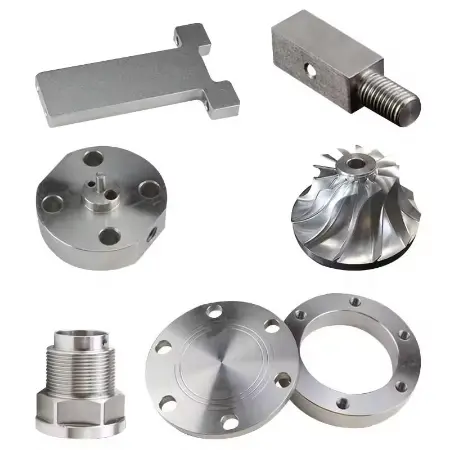
Pump shafts and mechanical drive components.
Valve stems and selected valve parts.
Aerospace and precision engineering hardware.
High-strength fasteners and industrial machinery parts.
Pressure sensor components and instrumentation parts.
-
316L Applications
316L is commonly used where corrosion resistance, cleanliness, and fabrication flexibility are essential.
Examples include:
Stainless steel pipes and tubes.
Chemical-processing tanks and pipelines.
Food and beverage processing equipment.
Pharmaceutical and sanitary process systems.
Heat exchangers and selected marine equipment.
Frequently Asked Questions
Is 17-4PH stainless steel better than 316L?
Neither material is universally better. 17-4PH is generally better when high strength and hardness are required, while 316L is often preferable for corrosion resistance, weldability, and ductility.
Is 17-4PH more corrosion resistant than 316L?
Generally, no. 316L usually offers better resistance to many chloride-containing environments. Actual performance depends on temperature, chloride concentration, surface condition, heat treatment, and exposure conditions.
Is 17-4PH stainless steel magnetic?
Yes. 17-4PH is generally magnetic because of its martensitic microstructure.
Is 316L stainless steel magnetic?
Annealed 316L is generally nonmagnetic or only weakly magnetic. Cold working can increase its magnetic response.
Can 17-4PH replace 316L?
It can replace 316L in certain components when higher strength is needed and the corrosion environment is suitable. It should not be treated as a direct substitute for 316L in corrosive piping or chemical-processing service without a proper engineering review.
Which material is better for industrial piping?
316L is commonly selected for corrosion-resistant piping and welded process equipment. 17-4PH is more often used for high-strength mechanical components than for general-purpose piping. The required product standard and service conditions should guide the final decision.
What standards are relevant to these materials?
17-4PH bars and shapes may be specified under ASTM A564/A564M, while other product forms may use different specifications. 316L products may be covered by standards such as ASTM A240 for plate, sheet, and strip, ASTM A312 for certain seamless and welded pipe products, or ASTM A276 for bars and shapes. Always verify the exact specification and product form before ordering.