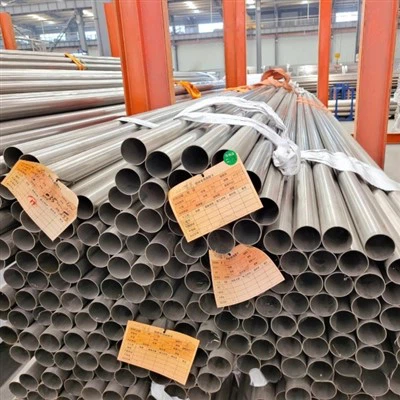
Why Steel Pipe Packaging Matters
Special Packaging Needs Due to Steel Pipe Characteristics
Steel pipe presents unique packaging challenges due to its length, weight, cylindrical shape, and susceptibility to damage. Unlike many industrial products that can be simply boxed or palletized, steel pipe requires specialized packaging solutions that address the risks of bending, denting, scratching, corrosion, and thread damage during handling and ocean transit. Proper packaging is not merely cosmetic - it directly affects whether pipe arrives at your warehouse in usable condition or requires costly rework and re-testing.
The financial impact of inadequate packaging can be severe. A single container of damaged pipe may represent USD 50,000-100,000 in material value, plus the cost of replacement, expedited shipping, project delays, and lost productivity. Investing in proper packaging - typically 1-3% of the product value - is one of the highest-return risk mitigation measures in steel pipe procurement.
Steel Pipe Packaging Standards and Methods
Hexagon Bundling
Hexagon bundling is the most common and efficient packaging method for steel pipe transport. Pipes are arranged in a hexagonal pattern (typically 7, 19, 37, or 61 pipes per bundle depending on diameter) and secured with steel strapping at multiple points along the length. This configuration maximizes bundle stability, prevents pipe-to-pipe movement during transit, and facilitates efficient handling by forklift or crane. The number of strapping bands should be adequate for the bundle length - typically 4-6 bands for standard lengths.
Bare vs Woven Bag vs Wooden Case Packaging
Bare packaging (hexagon bundles without individual wrapping) is suitable for carbon steel pipe destined for general construction or structural applications where surface appearance is not critical. Woven bag wrapping adds a layer of protection against scratches, moisture, and minor impacts, and is common for API 5L line pipe and higher-finish products. Wooden cases provide the highest level of protection and are typically used for stainless steel pipe, threaded and coupled pipe, small-diameter precision tube, and pipe for high-value applications. Wooden cases must comply with ISPM 15 (International Standards for Phytosanitary Measures) heat treatment or fumigation requirements for export.
Pipe End Protection
End protectors are critical for preserving pipe bevels and threads during handling and transit. Plastic caps (push-fit) are the most common and economical solution for plain-end and beveled pipe. Steel thread protectors (threaded or snap-on) are required for API threaded pipe to protect precision threads from damage. For large-diameter pipe, wooden end protectors nailed or strapped in place provide robust protection against impact damage to bevels.
Rust Prevention
Carbon steel pipe is susceptible to corrosion during ocean transit, particularly in the humid salt-laden environment of a ship's hold. Standard rust prevention for carbon steel pipe includes oiling (application of a rust-preventive oil coating) combined with VCI (Vapor Corrosion Inhibitor) film or paper wrapping. VCI materials release corrosion-inhibiting vapors that form a protective molecular layer on exposed metal surfaces. For stainless steel pipe, chloride-free packaging materials must be used to prevent crevice corrosion and stress corrosion cracking.
Container Loading Solutions
20ft vs 40ft Container Loading Capacity
A standard 20-foot container has internal dimensions of approximately 5.9m x 2.35m x 2.39m and a maximum payload of approximately 28 metric tons. For steel pipe, this means approximately 24-26 tons of net pipe weight can be loaded depending on density and packaging. A 40-foot container (12.03m x 2.35m x 2.39m, max payload approximately 28 metric tons) offers double the length capacity but the same weight limit, making it ideal for pipe lengths up to 11.8-12m. Pipe longer than 12m requires open-top containers, flat-rack containers, or break-bulk shipping.
Break Bulk Shipping
For large-diameter or heavy-wall pipe that exceeds container weight or dimension limits, break-bulk (conventional) shipping is the solution. Pipe is bundled and loaded individually into the ship's hold or on deck, secured with dunnage and lashing. Break-bulk shipping offers the advantage of handling larger individual pipe weights and lengths but involves higher handling costs, longer loading times, and greater risk of damage during loading operations.
Pipe Bundling and Securing Methods
Inside containers, pipe bundles must be secured to prevent movement during transit. Standard methods include wooden dunnage (spacers) between layers, inflatable dunnage bags to fill void spaces, steel strapping securing bundles to container anchor points, and friction mats under bottom bundles. For mixed-diameter loads, careful stowage planning is essential to prevent heavier pipe from shifting onto lighter pipe during vessel motion.
Steel Pipe Transport Method Comparison
| Mode | Transit Time to EU | Cost per Ton (China-EU) | Best For |
|---|---|---|---|
| Sea Freight FCL | 30-40 days | USD 60-120 | Large orders, container-load quantities |
| Sea Freight LCL | 30-40 days | USD 120-200 | Small orders, less than container load |
| China-Europe Railway | 15-20 days | USD 150-250 | Time-sensitive, inland EU destinations |
| Air Freight | 5-10 days | USD 3,000-5,000 | Samples and emergency small orders |
Sea Freight (FCL vs LCL)
Full Container Load (FCL) is the most cost-effective option when your order volume fills a complete container. For smaller quantities, Less than Container Load (LCL) consolidates your pipe with other cargo in a shared container, but involves higher per-ton costs, longer transit times due to consolidation delays, and greater risk of damage from mixed cargo. For regular orders, plan quantities to achieve full container loads for optimal cost efficiency.
Rail Transport (China-Europe Railway Express)
The China-Europe Railway Express offers a compelling alternative for time-sensitive orders to inland European destinations. With transit times of 15-20 days - roughly half the sea freight duration - rail is ideal for project deadlines and avoiding port congestion. Major departure stations include Chongqing, Chengdu, Xi'an, and Zhengzhou, with arrival points in Duisburg (Germany), Malaszewicze (Poland), and other European rail terminals. Cost is typically 50-100% higher than sea freight but significantly lower than air freight.
Export Documentation Preparation
Complete and accurate export documentation is essential for smooth customs clearance at both origin and destination. The commercial invoice and packing list are the core documents, providing product description, quantities, weights, and values for customs valuation and duty calculation. The Certificate of Origin (CO or Form F/E) is required for preferential tariff treatment under free trade agreements. The Bill of Lading serves as the document of title and receipt of goods. Insurance policies provide coverage against loss or damage during transit. Shipping advice notifies the buyer of vessel departure, estimated arrival, and container numbers for destination-side planning.
Risk Management During Transport
Cargo transport insurance is strongly recommended, even under CIF terms where the seller provides basic coverage. The standard ICC (C) clause covers major perils but may exclude specific causes of damage common to steel pipe such as rust, scratching, and bending. Consider upgrading to ICC (A) or (B) coverage, and add Institute Rust, Oxidation, and Corrosion clauses for carbon steel pipe. In the event of damage, document with photographs, notify the carrier and insurer within the prescribed timeframe (typically 3-7 days), retain damaged materials and packaging for inspection, and file a formal claim with supporting evidence including the B/L, packing list, survey report, and photographs.
ManufacturerPipe provides professional export packaging tailored to your product type and destination conditions. Our logistics team manages all documentation and coordinates with shipping lines to ensure timely, secure delivery. We offer FCL, LCL, and break-bulk solutions with comprehensive cargo insurance options.
Need a Shipping Quote for Your Steel Pipe Order?
Contact our logistics team for packaging recommendations and shipping cost estimates to your port of destination.
Our Products