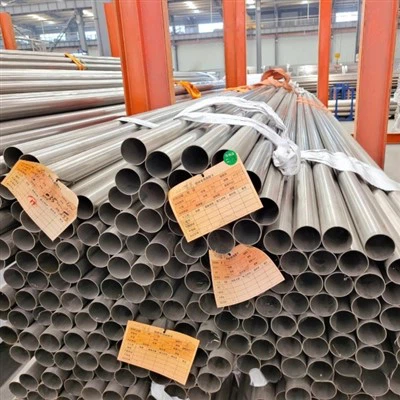
The 310 family occupies the top end of the standard austenitic stainless range. Its high chromium-nickel balance delivers oxidation resistance to roughly 1100 °C and useful strength well beyond what 304 or 316 can sustain. The three variants differ almost entirely in carbon content, and that single variable dictates weldability, sensitization resistance and high-temperature creep strength-the three factors that decide which grade fits a given thermal-processing duty.

Understanding ASTM A312 TP310, 310S, and 310H Stainless Steel Pipes
Chemical Composition and Material Foundations
All three grades share the same 24–26% chromium and 19–22% nickel base that gives the family its heat resistance. The differentiator is carbon: TP310 allows up to 0.25%, TP310S is capped at 0.08%, and TP310H is controlled to 0.04–0.10% specifically for high-temperature service. Lower carbon suppresses chromium-carbide precipitation at grain boundaries during welding (sensitization); the tighter band in 310H secures creep-rupture strength without pushing carbon so high that fabrication suffers.
Manufacturing Processes and Quality Standards
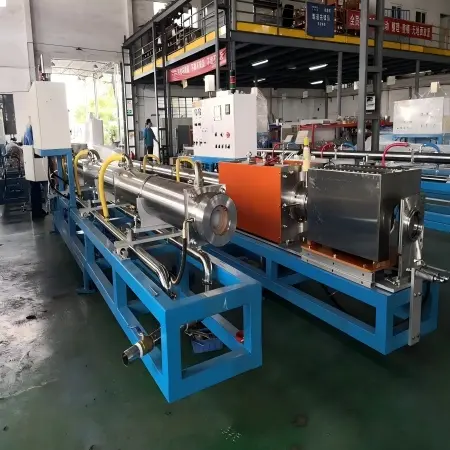
Pipe to ASTM A312 may be seamless or welded (ERW). Solution annealing-typically 1040–1150 °C followed by rapid quench-is mandatory to hold the austenitic structure and avoid sigma-phase embrittlement. Reputable mills supply PMI, MTRs and, where specified, hydrostatic or non-destructive testing, all consistent with ASTM A312 / ASME SA312 quality practice.
Grade Comparison Overview
TP310S is the fabrication-friendly choice: its low carbon minimises heat-affected-zone sensitization, making it ideal for complex fabricated systems and heat-exchanger bundles with extensive welding. TP310H trades some weldability for creep strength and is specified for superheater tubes, boiler components and pressurised systems running continuously above 600 °C. Standard TP310 sits between the two-balanced properties for moderate-temperature thermal duty where neither maximum weldability nor maximum creep strength is the governing design factor.
Performance Characteristics Critical for Thermal Processing Applications
Thermal Performance Capabilities
Oxidation resistance remains effective to roughly 1150 °C (2100 °F), while design strength is normally applied up to about 1100 °C in continuous service. The high nickel content stabilises the austenite against sigma-phase formation during long thermal cycles, so the grades resist the embrittlement that defeats lower-alloy steels in furnace environments.
Corrosion Resistance in Thermal Environments
Beyond pure heat, the 25/20 chemistry resists scaling, sulphidation in lean-sulphur flue gas, and carburisation in furnace atmospheres. In sulphur-bearing environments the high nickel level is decisive-unlike 300-series grades with lower nickel, 310 resists sulphide-scale spallation that would otherwise thin the wall.
Real-World Application Examples
Typical installations include radiant and convection tubes in heat-treatment furnaces, pyrolysis and reformer coils, boiler superheater and reheater sections, annealing and sintering furnace belts, and hot-gas ducting in incinerators and calciners. In each case the grade is chosen by the dominant failure mode-oxidation, creep or thermal fatigue.


Comparative Analysis: Selecting Between 310, 310S, and 310H Pipes
Mechanical Properties and Application Alignment
Room-temperature properties are similar across the three (tensile ≥ 515 MPa, yield ≥ 205 MPa), so selection is driven by service, not baseline strength. TP310S wins where thermal cycling dominates: low carbon limits grain-boundary stress and reduces crack initiation on heat-up and cool-down. TP310H justifies its premium in steady-state boilers above 600 °C, where higher creep strength extends life and lowers catastrophic-failure risk. Standard TP310 suits most thermal-processing equipment below 600 °C where cost, not peak creep, governs.
Commercial Considerations and Sourcing Strategy
310H and 310S typically carry a premium over commodity 304/316 because of nickel content and melt control. Buyers should weigh whole-life cost: a grade matched to duty avoids both over-specification (paying for creep strength never used) and under-specification (early replacement). Lock pricing against nickel indices and confirm lead time, which lengthens for non-standard schedules and NDE packages.
Selection Recommendations
Match grade to duty across temperature, pressure, atmosphere, weldability need and target life. TP310H for high-temperature boilers above 600 °C under internal pressure; TP310S where heavy field welding risks sensitization; standard TP310 for general thermal equipment below 600 °C on a budget. Validate the choice against prior successful installations and, where critical, a materials engineer's review.

Procurement Guide and Market Insights for ASTM A312 TP310 Series Pipes
Identifying Qualified Manufacturers and Suppliers
Qualified suppliers demonstrate ISO 9001, in-house chemical and mechanical testing, and traceable heat numbers. For thermal-service pipe, confirm the mill can hold the required carbon band-especially the 0.04–0.10% window for 310H-and provide PMI on delivered material.
Order Specification and Customization
Specify grade, process (seamless/welded), OD and schedule, length, end prep and any NDE (UT/RT, hydro). Non-standard sizes, tight tolerances and custom cut lengths add lead time that project schedules must absorb.
Quality Verification and Price Negotiation
Require ASTM A312-compliant MTRs with full chemistry and mechanicals, plus atmosphere-relevant certificates where the service demands them. Negotiate on nickel-indexed pricing with a validity window; request mill certificates, commercial invoice, packing list and Certificate of Origin for export.
Ensuring Long-Term Success with ASTM A312 TP310, 310S & 310H Pipes


Conclusion
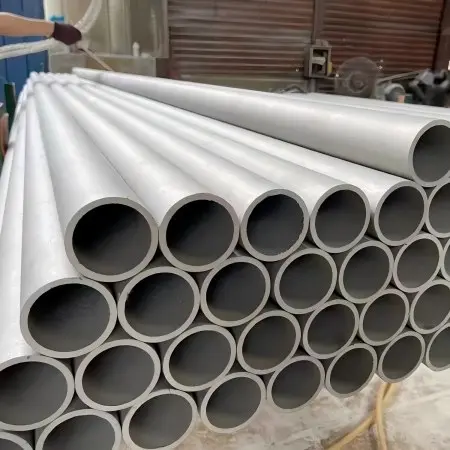
ASTM A312 TP310, 310S and 310H stainless steel pipes are purpose-built for demanding thermal-processing duty. Their high chromium-nickel content delivers oxidation resistance and mechanical stability to about 1100 °C. Understanding how carbon level governs weldability, sensitization resistance and creep strength lets specifiers match grade to application precisely. Sound procurement-balancing technical need with supplier qualification, QA and cost-unlocks the full service life these materials offer across petrochemical, power-generation and industrial-manufacturing sectors.
FAQ
What distinguishes TP310S from standard TP310 pipes?
TP310S caps carbon at 0.08% versus up to 0.25% for standard TP310. The lower carbon sharply reduces weld-heat-affected-zone sensitization and intergranular corrosion risk, making 310S the better choice where extensive fabrication or field welding is involved.
Can TP310H pipes withstand high-temperature boiler conditions?
Yes. With carbon controlled to 0.04–0.10% for high-temperature service, TP310H delivers the creep-rupture strength needed for superheater and reheater tubes and other pressurised boiler sections operating continuously above 600 °C.
What are typical delivery timelines for bulk orders?
Standard schedules in common sizes typically ship within a few weeks; non-standard dimensions, tight tolerances, custom lengths and added NDE or third-party inspection extend lead time, so bulk programmes should confirm mill lead time at quotation.
How do these pipes perform in sulfur-containing atmospheres?
The high nickel content resists sulphidation and sulphide-scale spallation in lean-sulphur flue gas and furnace atmospheres far better than lower-nickel austenitics, though highly reducing, high-sulphur conditions still call for grade and atmosphere review.