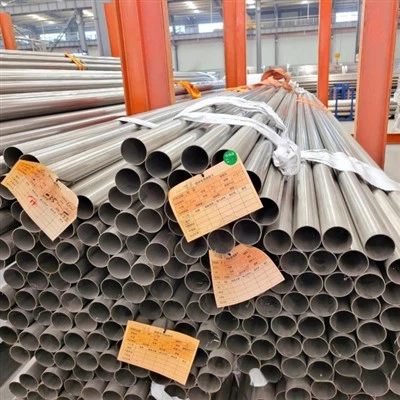
When specifying piping for the harshest process environments-sour-gas gathering, seawater injection and offshore topside systems-ASTM A790 S32760 super duplex stainless steel pipe has become a default shortlist option for engineers and procurement teams. Its balanced ferritic-austenitic microstructure, combined with tightly controlled chromium (24–26%), molybdenum (3–4%), nitrogen, tungsten and copper, delivers strong resistance to chloride stress-corrosion cracking, pitting and crevice corrosion. With a minimum yield strength of 550 MPa and tensile strength above 750 MPa, it outperforms both 316L and 2205 duplex in sour-gas and offshore-seawater duty, which is why it is favoured for demanding B2B projects.

Understanding ASTM A790 S32760 Duplex Steel Pipe
What Makes S32760 a Super Duplex Grade?
A material is classed as "super duplex" once its Pitting Resistance Equivalent Number (PREN) exceeds 40, and S32760-also known by the trade name Zeron 100-sits comfortably above that threshold. The grade's two-phase structure splits ferrite and austenite in roughly equal proportions; this balance is what gives the steel both high strength and good toughness at the same time, something standard austenitic grades cannot match without a substantial wall-thickness penalty.
A deliberate tungsten addition (0.5–1.0%) works alongside molybdenum to keep the passive film stable in oxidising acid environments, while copper slows active dissolution in sulphuric-acid streams. These are not arbitrary alloying choices-they target the specific corrosion mechanisms found in sour-gas wells and subsea chemical-injection lines.
Manufacturing Standards and Quality Controls
Pipe produced to ASTM A790 may be seamless or welded-and-drawn. Compliance depends on a full solution-annealing heat treatment, normally between 1,050 °C and 1,150 °C followed by rapid water quench, to dissolve and prevent the precipitation of harmful intermetallic phases such as sigma phase. Reputable mills routinely back every order with third-party inspection, Material Test Reports (MTRs) and Positive Material Identification (PMI), all of which are standard industry quality controls.
Performance Advantages of S32760 Pipes in Offshore and Sour Gas Environments
Superior Corrosion Resistance Compared to 2205 and 316L
Field data makes the performance gap clear. Conventional 316L shows a PREN of around 24; 2205 duplex (S31803) falls in the 34–38 range; S32760 exceeds 40. In North Sea-type seawater pumping above 25 °C, 2205 can develop crevice corrosion within months, whereas S32760 installations have logged corrosion-free service beyond 20 years under comparable conditions.
Procurement teams consistently cite the following reasons for specifying the grade:
Stress Corrosion Cracking (SCC) immunity: the ferritic fraction naturally resists chloride-induced SCC, the failure mode that rules out austenitic grades in H₂S service under NACE MR0175 / ISO 15156.
Fatigue resistance: at roughly twice the yield strength of 316L, S32760 tolerates the pressure-cycling loads seen in subsea risers without initiating fatigue cracks.
Erosion-corrosion tolerance: in desalination brine streams at 3–5 m/s, duplex 2205 walls thin noticeably while S32760 holds up under identical hydraulics.
The performance gain is economic, not just technical. Although the starting material cost is higher, S32760 typically pays back within two to three years of offshore operation through longer inspection intervals, fewer unplanned shutdowns and extended asset life.


Comparison and Selection Guide: S32760 vs. Other Stainless Steel Grades
Selecting the right grade means weighing corrosion resistance, mechanical load, budget and lead time together. The table below summarises the key differences.
|
Grade |
PREN |
Yield Strength (MPa) |
Suitable for Sour Gas? |
Relative Cost |
|
316L (S31603) |
~24 |
~170 |
No |
Low |
|
~35 |
~450 |
Limited |
Medium |
|
|
~43 |
~550 |
Yes |
High |
|
|
S32760 |
>40 |
~550 |
Yes |
High |
S32750 and S32760 share nearly the same mechanical strength, but S32760's tungsten and copper additions give it the edge in mixed acid environments-particularly phosphoric and sulphuric acid streams common in chemical processing. Where a project must meet NACE MR0175 and the process fluid carries chlorides above 1,000 ppm with an H₂S partial pressure above 0.3 kPa, S32760 is the engineer's preferred choice. For buyers with tighter budgets and milder duty-clean seawater cooling below 20 °C, for example-2205 can still be the better value. Always judge on whole-life cost, not price per metre.
Procurement Insights: Buying Certified S32760 Duplex Steel Pipe
Sourcing ASTM A790 S32760 takes more care than buying commodity stainless. Before issuing a purchase order, verify the following:
Certification verification: confirm the supplier holds ISO 9001 and can provide a traceable MTR proving chemistry and mechanical properties meet ASTM A790; NACE MR0175 documentation is mandatory for sour service.
Pipe dimensions and customization: S32760 is supplied from roughly 6 mm up to 600+ mm OD, schedules 5S–160. Radiographic/ultrasonic NDE packages, custom cut lengths and bevelled ends all add lead time that schedules must absorb.
Pricing variables: cost tracks nickel, molybdenum and tungsten markets. Quotes are usually bulk-based; small project lots carry a premium, and B2B buyers should request a formal quote with a validity window.
Export documentation: US-bound shipments need a mill certificate, commercial invoice, packing list and Certificate of Origin; Bureau Veritas or SGS third-party inspection may also be required on some contracts.

Choosing a Reliable S32760 Duplex Steel Pipe Supplier
A reliable S32760 supplier is not a commodity distributor. The differentiators that major chemical and offshore projects look for are incoming-material verification, dedicated in-house testing equipment, and responsive technical support across the project lifecycle. Capacity matters too: a mill with multiple production lines and documented annual output can protect delivery certainty for large programmes.
Long-term supplier relationships also lower sourcing risk. Consistent heat numbers, predictable lead times and a single technical contact for queries and warranty issues compound into real savings across multi-year project plans. [Your Company Name] supplies ASTM A790 S32760 duplex pipe with full material traceability, in-house inspection and both standard and fully customised solutions for chemical, hydrogen and offshore applications.
Conclusion
ASTM A790 S32760 duplex steel pipe earns its place at the top of the shortlist for sour-gas and offshore service. Its tungsten-copper alloying, PREN above 40 and compliance with ASTM A790 make it the right call whenever chloride corrosion, H₂S exposure and mechanical fatigue coincide. Procurement teams that evaluate total cost of ownership rather than unit price consistently find the grade pays for itself over its service life. Paired with a certified, high-capacity supplier, material quality and project schedule stay aligned from purchase order to handover.
FAQ
What is ASTM A790 S32760 duplex steel pipe used for?
It is used mainly in sour-gas injection systems, desalination piping, subsea oil-and-gas flowlines and chemical-process units handling strong acid streams. It meets NACE MR0175, so it is approved for H₂S-containing service.
How does S32760 differ from S32750?
Both are super duplex with similar yield strengths. S32760 adds tungsten (0.5–1.0%) and copper absent from S32750, giving better protection in mixed oxidising-reducing acid environments and a slight edge in some offshore chemical-injection duties.
What certifications should I request from an S32760 supplier?
Request ISO 9001, ASTM A790-compliant MTRs with full chemistry and mechanical results, NACE MR0175 compliance documents, and third-party inspection reports where the project calls for them.
Is S32760 suitable for hydrogen-production equipment?
Yes. Its chloride resistance and high mechanical strength suit it to electrolyser system piping and ancillary fluid lines where aggressive process media are present.