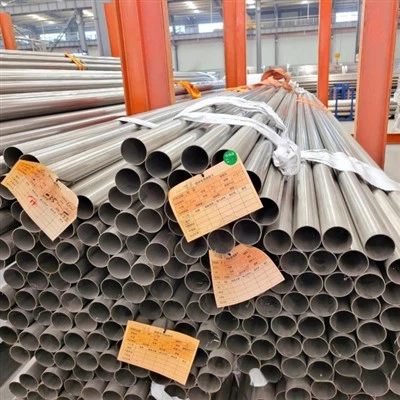
Why This Decision Is Harder Than It Looks
Both grades are high-chromium austenitic-ferritic stainless steels with a roughly balanced 50/50 phase structure, both are solution annealed at 1040–1100 °C and water quenched, and both carry similar minimum elongation and hardness limits on paper. Neither is susceptible to chloride stress corrosion cracking in the way 304 or 316L are.
The difference between them is concentrated in a narrow set of variables - pitting resistance, critical pitting temperature, allowable stress and weldability - and those variables only matter if your service condition actually pushes on them.
Over-specifying 2507 is common and expensive. Under-specifying 2205 into hot seawater is how pitting failures appear in year two of a twenty-five-year design life. The framework below is the one we apply when a buyer sends us a datasheet and asks: "can we drop to 2205?"
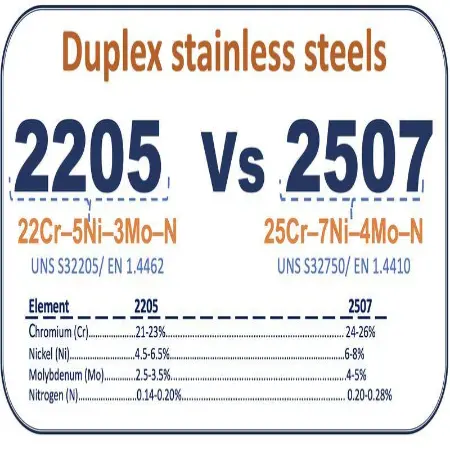
What the Chemistry Actually Buys You
|
Element (wt. %) |
2205 / UNS S32205 |
2507 / UNS S32750 |
Why it matters |
|
Chromium |
22.0–23.0 |
24.0–26.0 |
Passive film stability; base term in PREN |
|
Nickel |
4.5–6.5 |
6.0–8.0 |
Austenite balance and toughness |
|
Molybdenum |
3.0–3.5 |
3.0–5.0 |
Pitting and crevice resistance |
|
Nitrogen |
0.14–0.20 |
0.24–0.32 |
Austenite stabiliser, strength, PREN |
|
Carbon (max.) |
0.030 |
0.030 |
Weldability, intermetallic risk |
|
PREN = Cr + 3.3Mo + 16N |
approx. 34–35 |
approx. 41–43 |
The single most useful screening number |
Mechanical Properties and the Wall-Thickness Effect
|
Property |
316L (reference) |
2205 / S32205 |
2507 / S32750 |
|
Yield strength, min. |
170 MPa |
450 MPa |
550 MPa |
|
Tensile strength, min. |
485 MPa |
620 MPa |
795–800 MPa |
|
Elongation, min. |
40% |
25% |
15% |
|
Hardness, max. |
22 HRC |
32 HRC (typical ≤ 30) |
32 HRC (NACE: ≤ 28 HRC) |
|
Allowable stress, ASME B31.3 ambient (indicative) |
~115–120 MPa |
~138–158 MPa |
~166–186 MPa |
|
Density |
8.00 g/cm³ |
7.80 g/cm³ |
7.80 g/cm³ |
Corrosion Performance: Where the Decision Is Really Made
|
Metric |
316L |
2205 |
2507 |
|
PREN |
~24–26 |
~34–35 |
~41–43 |
|
Critical pitting temperature, ASTM G48 Method A (6% FeCl₃) |
< 20 °C |
~35–40 °C |
~70–80 °C |
|
Critical crevice temperature, ASTM G48 Method F |
Not suitable |
~20–25 °C |
~35–40 °C |
|
Chloride SCC resistance |
Limited above ~60 °C |
Good |
Very good |
|
Typical seawater service |
Not recommended |
Ambient to ~40–45 °C, low residual chlorine |
Hot, chlorinated, high velocity |
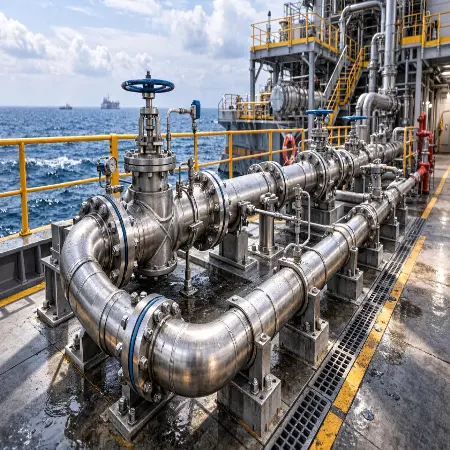
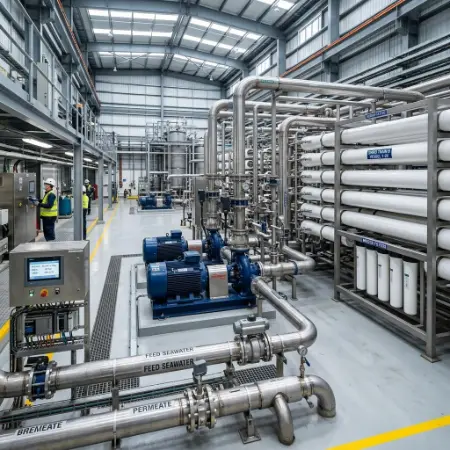
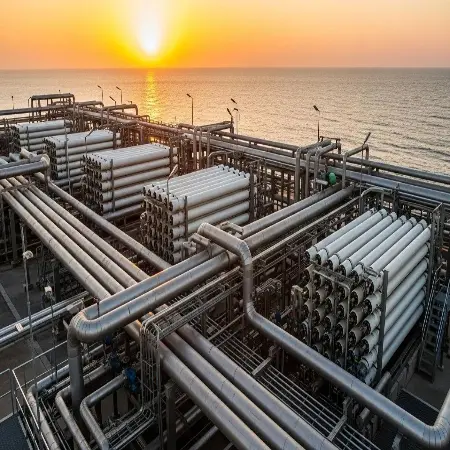
The 2205 sweet spot is brackish water, cooling water, process streams with moderate chloride, and seawater that stays cool and low in residual chlorine. Desalination pre-treatment, firewater systems in temperate climates and many refinery cooling circuits sit comfortably here.
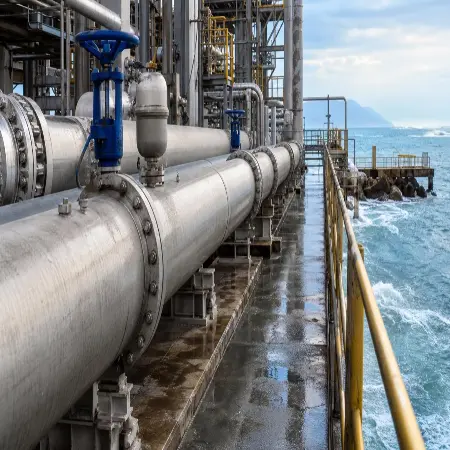
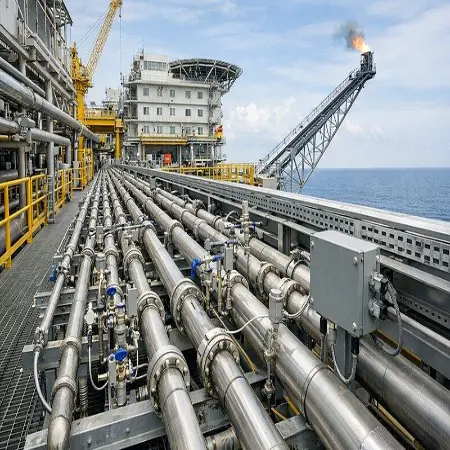
Where 2205 fails and 2507 earns its price is hot, chlorinated or stagnant chloride service: seawater cooling with 0.5–2.0 ppm residual chlorine, brine circuits above 50 °C, dead legs and gasket faces where crevices form, and high-velocity erosion-corrosion zones. These are the cases where a 30–35 °C CPT advantage is the difference between a 25-year life and pitting in two to three years.
Fabrication: The Hidden Cost Difference
|
Fabrication factor |
2205 |
2507 |
|
Filler metal |
ER2209 / E2209-16 |
ER2594 / E2594 |
|
Heat input |
0.5–1.5 kJ/mm |
0.5–1.5 kJ/mm (narrower window in practice) |
|
Interpass temperature |
≤ 150 °C |
≤ 150 °C, strictly enforced |
|
Shielding / purge |
Argon, or Ar + 2% N₂ backing |
Ar + 2–3% N₂ backing strongly preferred |
|
Ferrite balance target |
45–55% |
40–60%, tighter control typical |
|
Post-weld heat treatment |
Not required |
Not required |
|
Forming loads |
High |
Higher, with more springback |
A Six-Question Selection Checklist
Work through these in order. The first "yes" points you toward 2507.
- Q1. Is the chloride concentration above roughly 1,000 ppm at a temperature above 50 °C? - 2507.
- Q2. Is residual chlorine continuously present above about 0.5 ppm in a seawater line? - 2507, or 2205 with a qualified corrosion allowance and monitoring.
- Q3. Is the critical pitting temperature margin less than 15 °C at design condition? - 2507.
- Q4. Does the line see stagnant chloride-bearing fluid, or are there crevices that cannot be eliminated? - Prefer 2507, or redesign to remove the crevice.
- Q5. Is the service sour, with H₂S partial pressure above about 10 psi at high pressure? - 2507, checked against NACE MR0175 / ISO 15156 hardness limits.
- Q6. Is the design temperature above 250 °C, or does the line see repeated thermal cycling toward 300 °C? - Neither grade is ideal; evaluate 6Mo austenitics or nickel alloys.
If you answered "no" to all six, 2205 is almost certainly the right answer - and it will cost you materially less.
Frequently Asked Questions
Can I substitute 2205 for 2507 to save cost?
Only after checking the six-question list above. If your service is cool, low-chlorine and crevice-free, 2205 will perform. If it is hot seawater with residual chlorine, the substitution is a service-life risk that no material cost saving justifies.
Is 2507 a drop-in replacement for 2205?
No. It requires higher forming loads, a different filler metal (ER2594 instead of ER2209), tighter heat-input control and, usually, a new weld procedure qualification. Treat it as a re-qualification, not a substitution.
Which grade do I need for a seawater cooling system?
For ambient seawater with low chlorine, 2205 is widely used and cost-effective. As soon as the water is warm, chlorinated for biofouling control, or stagnant in dead legs, 2507 is the safer engineering choice - and it is what most offshore specifications call for.
Can both grades be used above 300 °C?
No. Both are limited by sigma-phase precipitation rather than by strength. Long-term service above roughly 300 °C is outside the intended envelope, and the ASME B31.3 allowable stress curves fall away in that region.
What documents should I expect with a duplex shipment?
At minimum an EN 10204 3.1 mill test certificate with heat-number traceability, hydrostatic or eddy-current test results and a ferrite content check. For sour service or critical seawater duty, add ASTM A923 Method C results and third-party witness (SGS, BV, TÜV) on request.