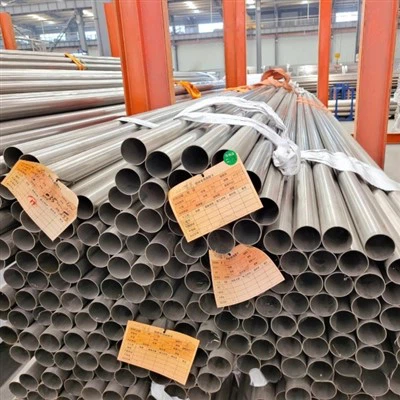
Offshore platforms operate among the most punishing environments on earth. Continuous exposure to seawater, salt spray and corrosive atmospheres steadily degrades conventional piping systems, and the consequences reach far beyond material cost. ASTM A789 duplex stainless steel tubes address this challenge at the metallurgical level: their dual-phase structure combines austenitic and ferritic properties, delivering roughly twice the yield strength of conventional austenitic grades together with outstanding resistance to chloride-induced stress corrosion cracking. When correctly specified and installed, these tubes materially extend maintenance intervals and reduce unexpected failures - protecting both operational continuity and personnel safety.

1. Understanding ASTM A789 Duplex Stainless Steel Tubes
1.1 What Makes the Microstructure Different
The defining characteristic of duplex stainless steel is not a single dominant phase but a deliberate balance: austenite and ferrite are present in roughly equal proportions. That balance produces a synergistic effect - austenite contributes toughness and ductility, while ferrite contributes strength and corrosion protection. The resulting material outperforms either phase operating alone.
|
Phase |
Contribution to Performance |
|
Austenite |
Toughness, ductility, weldability |
|
Ferrite |
High strength, resistance to chloride SCC |
1.2 Chemical Composition and Corrosion Performance
Grades such as 2205 (UNS S32205/S31803) draw their performance from elevated alloy content: chromium 21–23%, molybdenum 2.5–3.5% and nitrogen 0.14–0.20%. Acting together, these elements raise the Pitting Resistance Equivalent Number (PREN) above 34, substantially improving resistance to localized corrosion. For the most severe offshore conditions, super duplex grades such as 2507 (UNS S32750) push PREN above 40 - an additional margin that matters in warm seawater and sour service.
1.3 Manufacturing Process and Quality Control
For ASTM A789 duplex tubes, the Electric Fusion Welded (EFW) process delivers consistent wall thickness and dimensional accuracy across a diameter range of 114.3 mm to 2500 mm. After welding, solution annealing followed by rapid water quenching refines the microstructure and prevents the formation of harmful intermetallic phases that would otherwise compromise strength and corrosion resistance. This heat-treatment step is not optional - it is what locks in the material's performance properties.
2. Key Offshore Challenges and How Duplex Tubes Solve Them
Offshore operators understand that a material failure means more than the cost of a replacement system. Unplanned shutdowns cause lost production, create safety exposure and invite close regulatory scrutiny. Conventional materials frequently struggle to satisfy mechanical loading and corrosive exposure simultaneously.
2.1 Chloride Stress Corrosion Cracking
When austenitic stainless steels such as 316L are placed under tensile stress in chloride-rich conditions above 60°C, chloride stress corrosion cracking can occur - a failure mode responsible for numerous offshore incidents. The ferritic component of duplex stainless steel inherently resists this mechanism, enabling safe use in conditions where other grades crack within months. Because of their high yield strength (typically 450–550 MPa minimum), duplex grades also permit thinner wall sections, which reduces the number of stress concentration points.
2.2 Pitting and Crevice Corrosion Resistance
Seawater contains roughly 19,000 ppm of chloride ions - an ideal environment for pitting corrosion in susceptible materials. The high molybdenum and nitrogen content of ASTM A789 duplex tubes forms a protective passive film that remains stable even in stagnant seawater. This protection extends to crevice corrosion, which commonly initiates at flanged joints, valve seats and areas beneath deposits. Offshore owners report duplex seawater piping systems lasting more than 25 years, compared with only 5–10 years for carbon steel with protective coatings.
2.3 Mechanical Fatigue Under Cyclic Loading
Platforms in open water move constantly under wave, wind and machinery loads, and piping systems must endure millions of filling cycles without cracking. Duplex stainless steel resists fatigue better than carbon steel or single-phase stainless grades thanks to its higher tensile strength and favorable forming characteristics. The practical result is less frequent inspection and repair, and fewer component replacements.
3. Comparative Analysis: ASTM A789 Duplex Tubes vs Other Materials
Sound material selection requires looking beyond the initial purchase price to the total cost of ownership. Duplex stainless steel carries a higher upfront cost than carbon steel or standard stainless grades, yet life-cycle analysis frequently shows substantial long-term savings.
3.1 Performance Against Austenitic Stainless Steels
The contrast between 316L and duplex 2205 in offshore waters is striking. Duplex offers twice the yield strength, allowing wall thickness to be reduced by 30–40% at the same pressure rating. That weight reduction lowers installation cost and reduces structural load on the platform. Equally important, duplex eliminates the stress corrosion cracking risk that forces 316L system operators to carefully manage temperature and stress limits.
3.2 Super Duplex for Extreme Conditions
For the most demanding offshore applications, super duplex 2507 represents the next performance tier. With a PREN above 40, it performs reliably in warm seawater, sour gas environments containing H₂S, and systems handling acidic production fluids. Its material cost typically runs 40–60% above standard duplex 2205, but that premium is justified where standard duplex would require impractical wall thicknesses or where routine maintenance would be hazardous.
3.3 Carbon Steel Comparison
Carbon steel remains widely used offshore because it is inexpensive and easy to fabricate. However, it demands extensive corrosion protection - coatings, cathodic protection or corrosion allowances. These measures add complexity, require ongoing maintenance and still yield shorter service life than duplex stainless steel. When operators discount coating maintenance, corrosion monitoring and replacement cycles to present value, duplex stainless steel frequently delivers a better return over a 20–30 year platform life.
|
Material |
Approx. Seawater Piping Life |
Key Trade-off |
|
Carbon steel (coated) |
5–10 years |
Low first cost, high maintenance, frequent replacement |
|
316L austenitic |
Crack-prone >60°C in chlorides |
Good toughness, temperature/stress limits |
|
Duplex 2205 (A789) |
25+ years |
Higher first cost, best balance of strength and corrosion |
|
Super duplex 2507 |
Severe service |
40–60% premium over 2205, for extreme duty |

4. Procurement Considerations for ASTM A789 Duplex Tubes
Sourcing decisions influence project outcomes long after the material arrives. Procurement teams should evaluate more than the price quote when selecting suppliers.
4.1 Certification and Documentation Requirements
Genuine ASTM A789 duplex tube suppliers provide complete material traceability documentation:
Mill Test Certificates (MTC) to EN 10204 3.1 or 3.2, verifying chemistry and mechanical properties for each heat and lot;
Third-party inspection (TPI) reports confirming dimensional accuracy;
Welding documentation, including Welding Procedure Specifications (WPS) and Procedure Qualification Records (PQR), demonstrating process control;
Material Processing Specifications (MPS) documenting heat-treatment conditions;
Non-destructive testing results - ultrasonic (UT) or radiographic (RT) - confirming weld soundness.
A supplier unwilling - or only partially willing - to provide this documentation should raise immediate concern.
4.2 Manufacturing Capability Assessment
Production capacity matters when deadlines are tight. A supplier with dedicated duplex production lines and solution annealing equipment can maintain quality standards while meeting delivery commitments. Holders of ISO 9001, PED (Pressure Equipment Directive) and TÜV certifications demonstrate systematic quality management. An ISO 17025-accredited testing laboratory enables in-house property verification rather than relying on external testing that can introduce shipping delays.
4.3 Minimum Order Quantities and Delivery Logistics
Large offshore projects may require hundreds of tons of pipe, while retrofit or repair work may need only a few pieces. Suppliers able to serve both full production runs and single-tube sales offer valuable flexibility. Global shipping adds further complexity, and understanding order-to-port lead times helps project managers align procurement with construction schedules. Standard specifications can sometimes reach major ports in 7–14 days, whereas custom sizes or super duplex grades may require 8–12 weeks. Building these lead times into project planning prevents offshore delays that translate directly into cost.
5. Ensuring Long-Term Offshore System Reliability
Material selection is only the beginning. Whether tubes achieve their intended service life depends on how they are handled, installed and maintained.
5.1 Installation Best Practices
Duplex stainless steel requires disciplined fabrication and welding. Its high strength is valuable in service, but demands proper preparation and fit-up before welding. Controlling interpass temperature prevents excessive heat input that would upset microstructural balance. To offset dilution and match the corrosion resistance of the base metal, filler metals should be slightly over-alloyed relative to the parent material. Post-weld heat treatment is usually unnecessary, simplifying field fit-up compared with some alternative systems; solution annealing may, however, be required where welding was not properly controlled.
5.2 Inspection and Maintenance Protocols
Even highly corrosion-resistant materials merit periodic inspection. Offshore operators should establish monitoring covering: visual examination of external surfaces for coating damage or discoloration; ultrasonic wall-thickness measurement at representative locations to detect unexpected loss; and regular process fluid sampling to confirm operating conditions remain within design parameters. These checks typically coincide with platform maintenance shutdowns every two to five years. Longer inspection intervals are themselves a functional benefit of duplex stainless steel relative to materials requiring more frequent attention.
6. Future Trends in Offshore Duplex Applications
The offshore energy industry continues to evolve toward harsher conditions, deeper water and longer field-life standards - trends that favor duplex stainless steel. Subsea production systems increasingly specify duplex and super duplex grades for components formerly made of carbon steel with corrosion allowances. Duplex piping is now commonplace in the process systems of floating production platforms. As offshore wind capacity grows, builders are applying lessons from oil and gas by selecting duplex stainless steel for seawater cooling systems and hydraulic piping in turbine foundations. Metallurgical research continues on lean duplex grades with reduced nickel content, aiming to lower material cost while maintaining performance - a development that could open new applications in price-sensitive markets.
Conclusion
ASTM A789 duplex stainless steel tubes have proven effective in offshore applications where other materials fall short. Their distinctive microstructure enables both lighter components and the corrosion protection required for long-term service in marine environments. When procurement teams select qualified suppliers who provide the appropriate documentation and certifications, these products consistently deliver a lower total cost of ownership than alternatives. For offshore infrastructure expected to operate reliably for decades, duplex stainless steel is a sound choice - requiring less maintenance, lasting longer between replacements and making operations safer. Operators who follow proper construction and upkeep procedures capture the full value of their material investment.
FAQ
Q1: Why choose ASTM A789 duplex tubes over standard 316L stainless steel?
Duplex grades offer roughly twice the yield strength of 316L, allowing thinner walls and reduced weight. More importantly, they resist chloride stress corrosion cracking that quickly degrades austenitic grades in harsh marine conditions - eliminating the strict temperature and stress limits that constrain 316L.
Q2: How do I verify an ASTM A789 supplier's authenticity?
Genuine suppliers provide complete documentation sets including Mill Test Certificates (EN 10204 3.1 or 3.2), third-party inspection records, welding procedure qualifications and non-destructive testing results. Manufacturing facilities should hold ISO 9001, PED and TÜV certifications, and an ISO 17025-accredited testing laboratory signals strong quality commitment. Request fully traceable examples before placing a large order.
Q3: Can ASTM A789 tubes handle both welded and seamless applications?
Yes. ASTM A789 covers both configurations. Electric Fusion Welded (EFW) tubes serve applications with diameters from 114.3 mm to 2500 mm. After welding, the standard requires solution annealing and rapid quenching to refine the microstructure, ensuring welded tubes perform comparably to seamless products in high-pressure and corrosive service.